
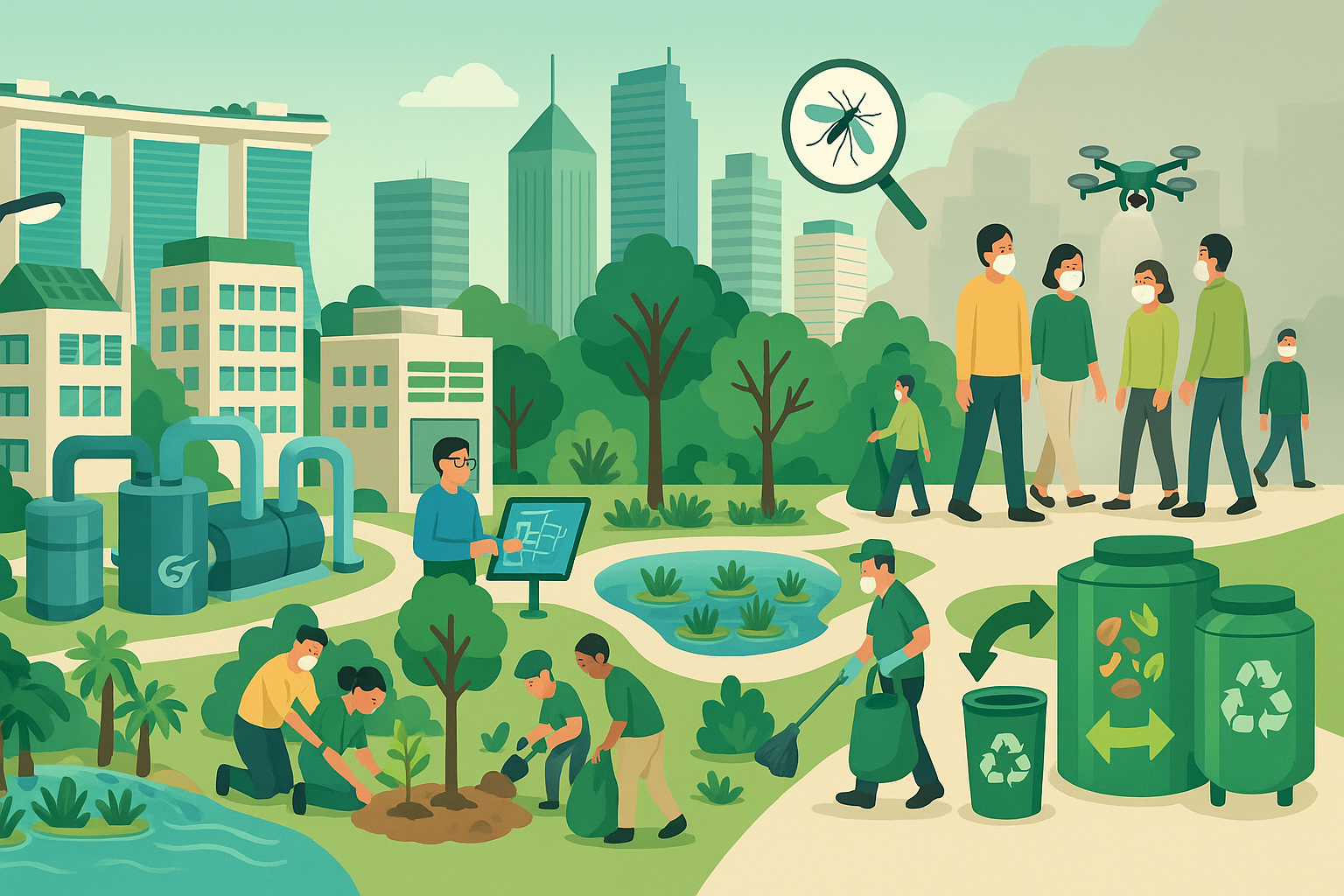
Singapore’s compact geography makes environmental health inseparable from urban planning. Managing pollution and protecting public well-being rely on a systems approach: strict regulation, real-time surveillance, infrastructure investment, and public participation.
Air quality is a perennial priority. Domestic emissions from transport and industry are tightly controlled through vehicle emissions standards, cleaner fuels, and congestion disincentives, while the government expands mass transit and walk-cycle networks to reduce tailpipe pollutants. Transboundary haze from regional land clearing remains an episodic threat; when the Pollutant Standards Index (PSI) rises, authorities issue advisories, distribute masks to vulnerable populations, and adjust outdoor activities. Health impacts range from eye irritation to exacerbations of asthma and chronic obstructive pulmonary disease, with elderly residents, children, and those with pre-existing conditions at higher risk.
Water safety is managed across the entire cycle. Advanced membrane technology underpins NEWater (high-grade reclaimed water), reducing reliance on imported sources and buffering climate variability. The Active, Beautiful, Clean Waters (ABC Waters) programme re-naturalises canals and basins with bio-retention features that improve water quality while providing cooling and recreation. Stringent monitoring for microbial and chemical contaminants protects public health from waterborne risks.
On waste, the Zero Waste Masterplan pushes resource recovery, producer responsibility, and food waste reduction to extend the life of Semakau Landfill. High incineration efficiency reduces volume and captures energy, while sorting and recycling systems divert paper, metals, plastics, and e-waste. Cleaner waste streams mean fewer vermin and vectors, which in turn lowers disease risks.
Vector-borne illness, notably dengue, demands continual vigilance in a tropical climate. The National Environment Agency (NEA) conducts source-eradication campaigns, community inspections, and enforcement against breeding sites. Digital mapping of dengue clusters and public alerts help residents remove stagnant water, repair gutters, and cover containers. Hospitals and primary care providers align on early diagnosis and hydration guidance to blunt severe outcomes during peak seasons.
Singapore also addresses urban heat—an environmental stressor that amplifies cardiovascular and respiratory risk. Tree-planting, high-albedo surfaces, shade corridors, and energy-efficient building standards (e.g., Green Mark) mitigate heat islands. District cooling and smart building management systems lower peak loads and improve indoor air quality.
Governance stitches these pieces together. Environmental health is advanced through clear standards, the polluter-pays principle (including a rising carbon tax), and transparent metrics available via public dashboards. Campaigns like SG Clean combine certification with behavior nudges—hand hygiene, surface disinfection, and cleanliness in food premises—reducing infectious disease transmission.
While Singapore’s baseline indicators are strong by global benchmarks, vulnerabilities persist: climate-driven rainfall extremes, regional fires, and aging infrastructure require continuous adaptation. The long game is resilience—reducing emissions, closing material loops, investing in nature-based solutions, and mobilizing citizens as co-producers of a safe, healthy environment.