Singapore, a melting pot of diverse cultures, has cultivated a rich and varied food scene that is a blend of Malay, Chinese, Indian, and Indonesian influences. Among the many culinary delights that Singapore offers, desserts play a prominent role, with each one telling the story of the island’s history and cultural tapestry. From the iconic Kaya Toast to the refreshing Chendol, here is a look at some traditional sweet treats that have stood the test of time.
Kaya Toast: A Simple yet Flavorful Delight
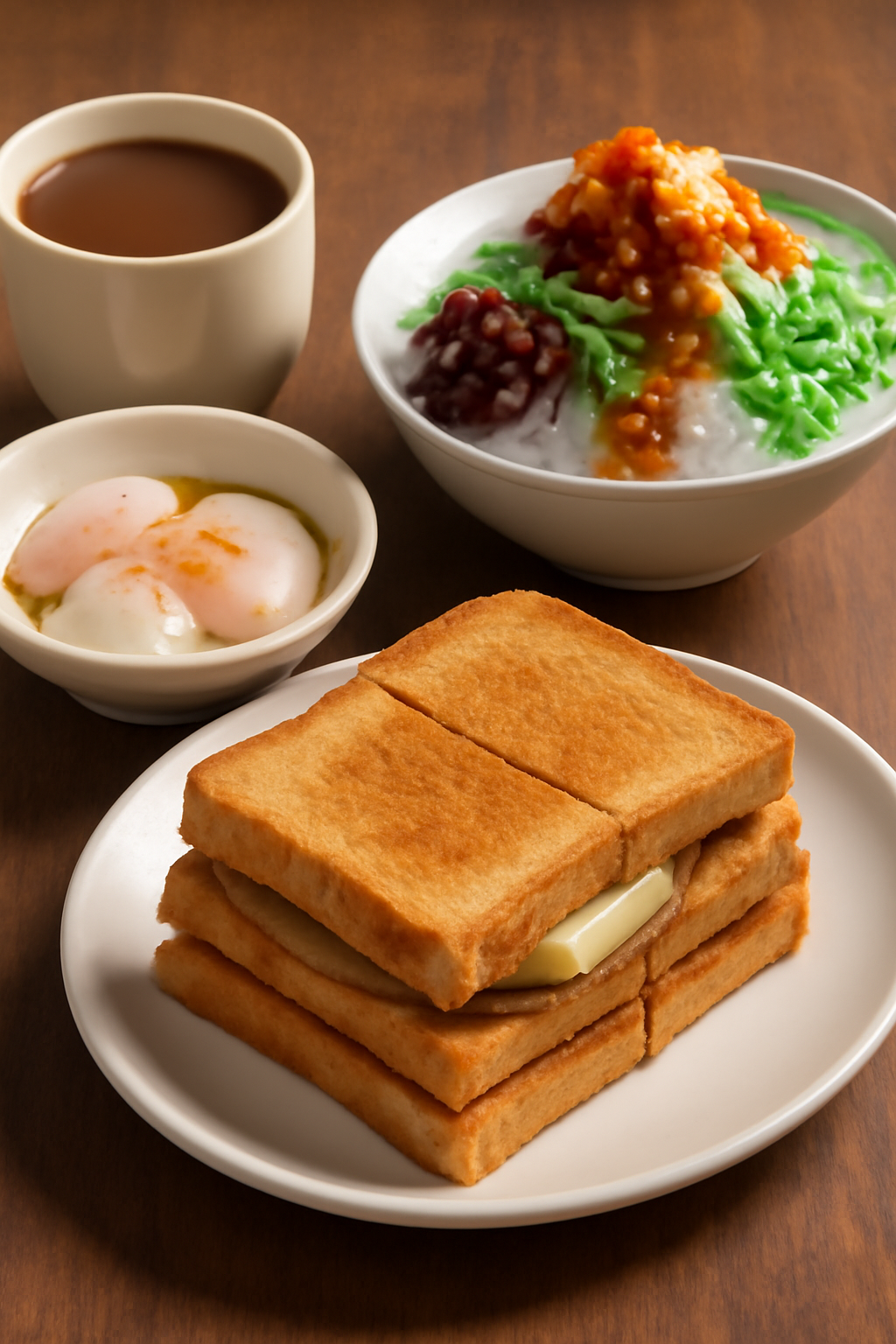
One of Singapore’s most beloved snacks, Kaya Toast, is a delicious combination of toasted bread, butter, and a sweet coconut and egg jam known as kaya. The bread is traditionally toasted over a charcoal fire, giving it a crisp, golden exterior while retaining a soft, chewy interior. Kaya, which is made by slowly simmering coconut milk, eggs, sugar, and pandan leaves, infuses the toast with a rich, fragrant sweetness that has made it a breakfast staple across Singapore.
Kaya Toast is often enjoyed with a hot cup of coffee or tea, and it is commonly accompanied by soft-boiled eggs that are seasoned with a dash of soy sauce and pepper. The contrast of textures—the crunchy toast, the smooth kaya jam, and the silky eggs—creates a satisfying balance of flavors.
Chendol: A Refreshing Dessert for Warm Days
Chendol is a favorite dessert, particularly in the hot and humid climate of Singapore. This icy treat features a delightful mix of shaved ice, green jelly noodles made from pandan, red beans, coconut milk, and palm sugar syrup. The combination of these ingredients creates a sweet, creamy dessert that is both cooling and indulgent.
The pandan jelly noodles, which give Chendol its characteristic green color, are made from rice flour and pandan juice. The dish is typically served in a bowl, with the ice shaved finely over the top. The palm sugar syrup is poured over the dessert, adding a rich sweetness that perfectly complements the coconut milk’s smooth texture.
Chendol can be found in hawker centers and dessert stalls throughout Singapore. Its combination of textures—from the chewiness of the jelly noodles to the smoothness of the coconut milk—makes it an enjoyable treat for people of all ages.
Other Notable Desserts:
While Kaya Toast and Chendol are perhaps the most iconic, Singapore offers many other desserts that are worth exploring. One such treat is Kueh Dadar, a type of rolled pancake filled with sweet coconut filling. The pancake, made with pandan juice, is bright green and adds a tropical flavor to the sweet coconut paste inside. Another popular dessert is Ice Kachang, a shaved ice dessert topped with a variety of colorful ingredients such as sweet corn, red beans, agar agar, and syrup.
Singapore’s desserts are also heavily influenced by Chinese traditions. Tau Suan, a sweet mung bean soup, is often served as a dessert and has a smooth, comforting consistency. Similarly, Orh Nee, a rich yam paste dessert, is often found during Chinese New Year celebrations.
A Blend of Cultures in Every Bite
The beauty of Singaporean desserts lies in their diversity, which reflects the island’s multicultural heritage. Each dish combines flavors and ingredients that were introduced by different ethnic communities and then transformed into something uniquely Singaporean. From the simplicity of Kaya Toast to the complex layers of Chendol, these traditional sweets continue to be an integral part of Singapore’s culinary identity, offering a sweet journey through its rich history.