Singapore is often recognized for its skyline, food culture, and efficient urban design, yet the city-state also offers a rich artistic landscape that deserves equal attention. For travelers who want more than shopping districts and iconic landmarks, art tourism in Singapore opens a deeper view into the country’s identity. Its museums, galleries, and live cultural performances reflect a blend of Asian heritage, colonial history, modern creativity, and global exchange. This combination makes Singapore an engaging destination for anyone interested in visual arts, history, design, and performing traditions.
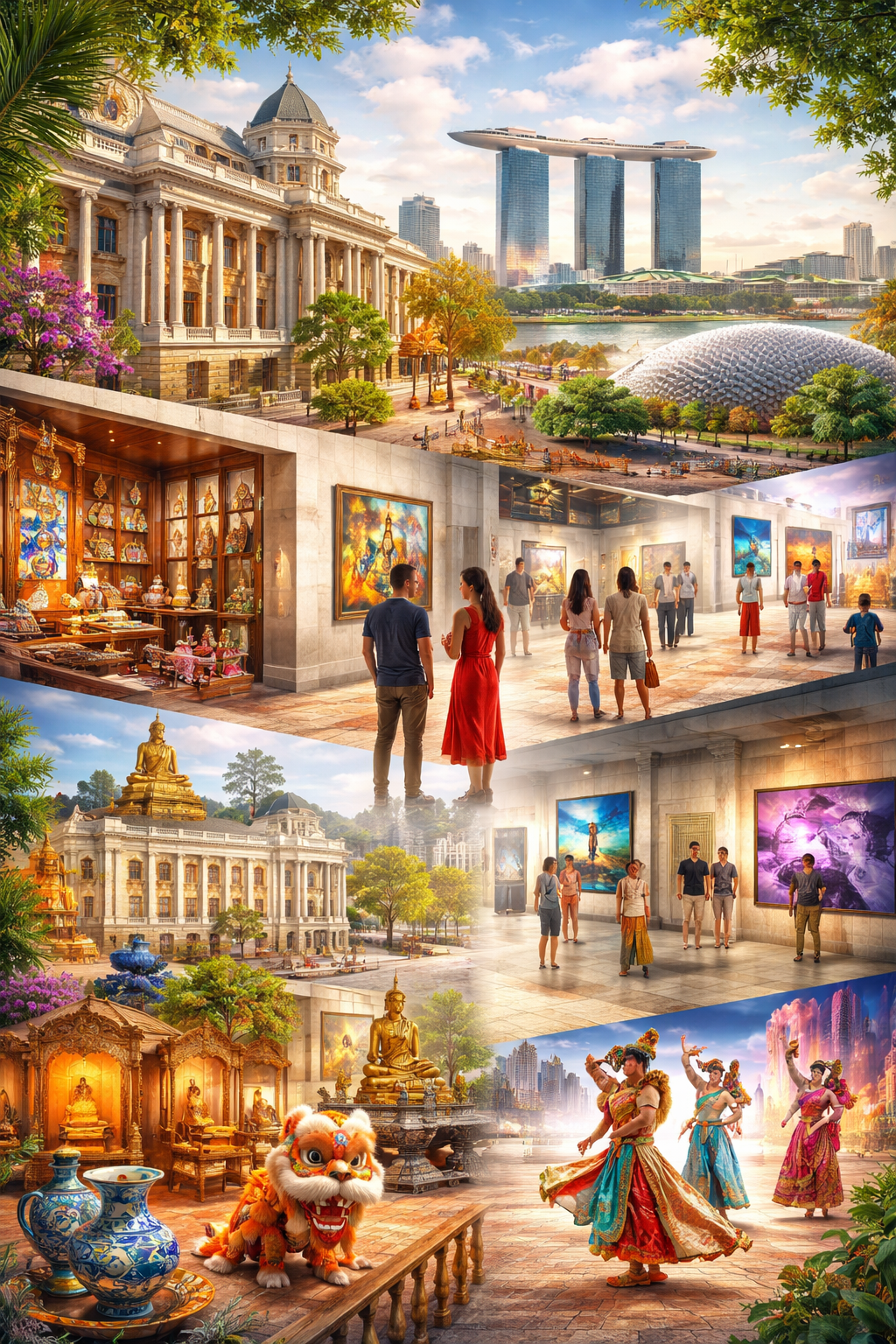
One of the most important places to begin is the National Gallery Singapore. Housed in two beautifully restored historic buildings, the gallery is not only impressive architecturally but also essential for understanding art in Singapore and Southeast Asia. Its collections trace the development of regional modern art, showing how local and neighboring artists responded to colonialism, nationalism, urbanization, and cultural change. Visitors can explore paintings, installations, and multimedia works that reveal both the diversity and shared experiences of Southeast Asian societies. The gallery also gives strong context, making it valuable even for travelers without an academic background in art.
Another major stop is the Asian Civilisations Museum, which offers a broader look at the cultures that shaped Singapore. Instead of focusing only on fine art, it presents religious objects, decorative arts, ceramics, textiles, and historical artifacts from China, India, Southeast Asia, and the Islamic world. This helps visitors understand Singapore as a historical meeting point of trade, migration, and ideas. For art tourists, the museum is especially rewarding because it connects aesthetics with social and cultural history. Rather than seeing objects as isolated masterpieces, travelers learn how they were used, valued, and exchanged.
The Peranakan Museum adds a more intimate layer to Singapore’s artistic story. It highlights the Peranakan communities, whose culture emerged through interaction between Chinese migrants and local Malay traditions, with influences from other regions as well. The museum presents embroidered garments, beadwork, porcelain, furniture, and jewelry that demonstrate refined craftsmanship and a distinctive visual identity. This is especially useful for travelers who want to understand how daily life, fashion, domestic design, and ritual can all be expressions of art.
For contemporary art, spaces such as Singapore Art Museum and independent gallery districts provide insight into current experimentation. These venues often showcase photography, conceptual art, digital media, and socially engaged works. They reveal how artists in Singapore respond to questions of technology, memory, urban life, sustainability, and personal identity. Smaller galleries also offer a more flexible atmosphere, where emerging artists and curators test new ideas outside large institutional settings.
Art tourism in Singapore is not limited to buildings filled with objects. The city also has a lively performance scene. The Esplanade – Theatres on the Bay is one of the best-known venues, presenting music, dance, theatre, and multicultural festivals throughout the year. Audiences may encounter Chinese opera, Indian classical dance, Malay musical traditions, contemporary theatre, jazz, and international collaborations. These performances show that Singapore’s culture is not static or preserved only in museums; it is active, evolving, and shared in public life.
What makes art tourism in Singapore especially rewarding is the way visual culture and performance work together to tell a larger story. Museums explain historical roots, galleries reveal contemporary expression, and live performances bring tradition and innovation into the present. For visitors seeking a meaningful travel experience, Singapore offers not just art to admire, but culture to interpret, compare, and remember.