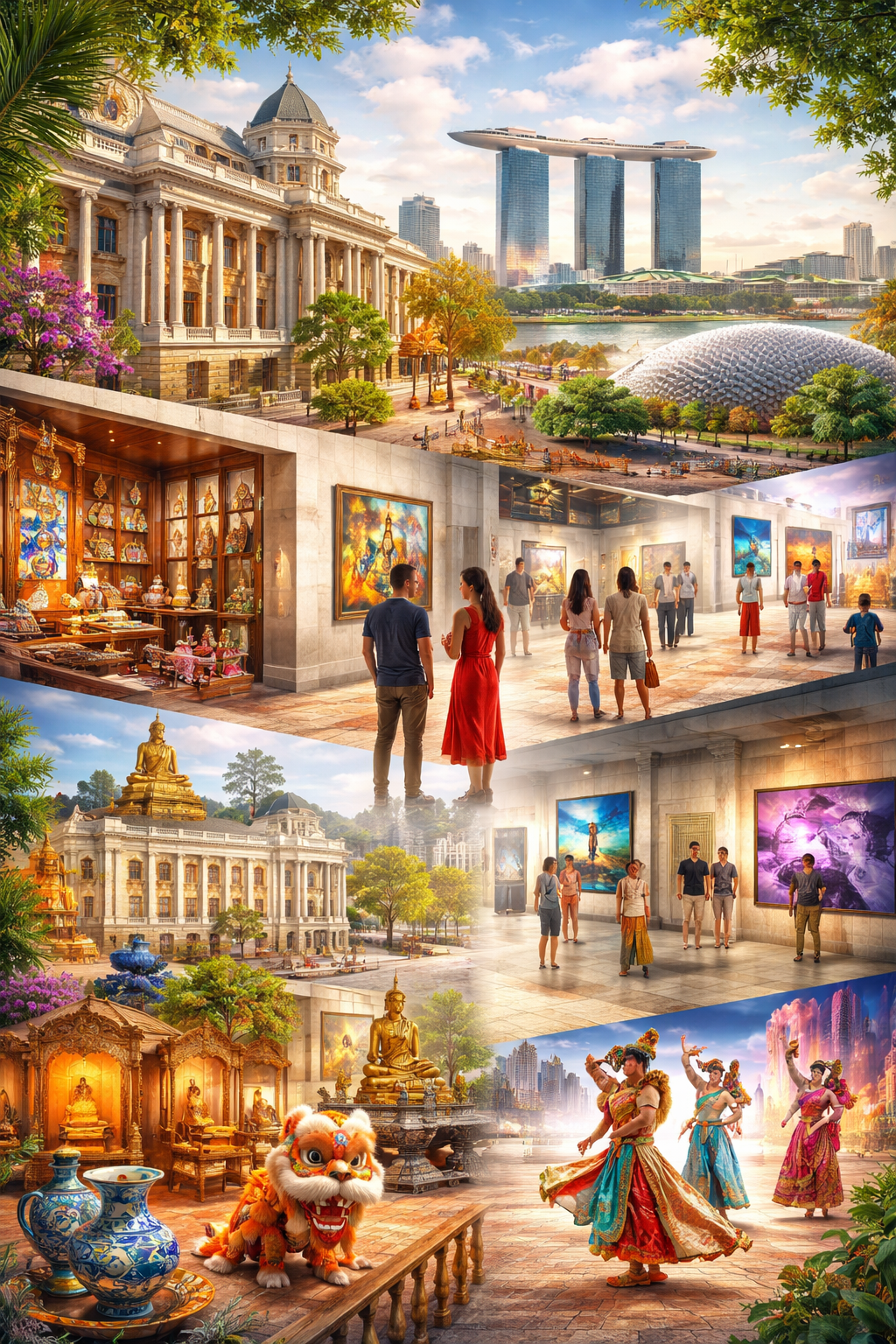

Singapore, a bustling city-state known for its modern skyline and multicultural heritage, offers a fascinating blend of the old and new. Among its most prominent historical landmarks are the Raffles Hotel and Kampong Glam, two sites that offer a glimpse into the nation’s colonial past and vibrant Malay heritage.
Raffles Hotel: A Symbol of Colonial Elegance
The Raffles Hotel, one of the most iconic luxury hotels in the world, is a key part of Singapore’s colonial history. Opened in 1887, it was named after Sir Stamford Raffles, the British founder of modern Singapore. The hotel’s grand architecture, with its colonial-style verandas and lush gardens, stands as a testament to the opulence and elegance of a bygone era.
Once a favorite retreat for British colonists, Raffles Hotel quickly became the preferred residence of influential figures, from writers to royalty. Its fame surged when legendary authors like Somerset Maugham and Rudyard Kipling stayed there, and it was in this very hotel where the Singapore Sling cocktail was first created in the early 20th century. Today, visitors can walk through its restored colonial halls and take in the beauty of its design, which still evokes the charm of the past while offering modern luxuries.
While at Raffles Hotel, guests can experience the rich history of the space, enjoying the tranquil atmosphere and indulgent services, such as traditional afternoon tea in the Tiffin Room. The hotel’s museum also provides a closer look into its storied past, showcasing artifacts and photographs that trace its evolution from a grand colonial residence to a world-renowned hotel.
Kampong Glam: The Heart of Malay Culture
A short distance from the Raffles Hotel is Kampong Glam, Singapore’s historic Malay and Muslim quarter. The area is steeped in rich cultural significance, and its name, Kampong Glam, refers to the glamit, or the aromatic tree, which once flourished here. The district was originally home to Malay royalty, with the Sultan of Johor establishing a palace in the area during the 19th century.
One of the key attractions in Kampong Glam is the Sultan Mosque, an architectural marvel that stands as the largest mosque in Singapore. Built in 1824, the mosque’s distinctive golden dome and large prayer hall are a major part of the area’s heritage. Visitors can explore its intricacies, admire the beautiful calligraphy, and even engage in community activities organized by the mosque.
Apart from the mosque, Kampong Glam offers an immersive experience in Malay history and culture. The area is home to vibrant street art, quaint boutiques, and bustling markets, where visitors can find traditional textiles, jewelry, and artisanal goods. The Malay Heritage Centre, housed in a former palace of the Sultan, is another must-visit attraction in Kampong Glam. It provides insight into the history and culture of Singapore’s Malay community through interactive exhibits and curated displays.
Kampong Glam’s blend of historical landmarks, colorful streets, and cultural treasures makes it a must-visit for anyone interested in Singapore’s past. The district serves as a living reminder of the multicultural makeup of the city-state and offers an authentic experience of its Malay heritage.
Experiencing Singapore’s Colonial and Malay Heritage
Exploring Raffles Hotel and Kampong Glam offers an enriching journey through Singapore’s history. Raffles Hotel provides a glimpse into the grandeur of the colonial era, while Kampong Glam brings to life the traditions and culture of the Malay community. Together, these landmarks showcase the multi-layered history of Singapore, from its colonial roots to its diverse cultural fabric. A visit to these sites is an opportunity to step back in time and understand the city’s rich and complex history.