Singapore’s vaccination story is, above all, a precision project in public health. High uptake in childhood and steadily improving adult coverage reflect a system designed for clarity, access, and trust. Two national schedules anchor the approach: the National Childhood Immunisation Schedule (NCIS) and the National Adult Immunisation Schedule (NAIS). These frameworks tell people what to get, when to get it, and where it’s available—removing guesswork that often stalls uptake elsewhere.
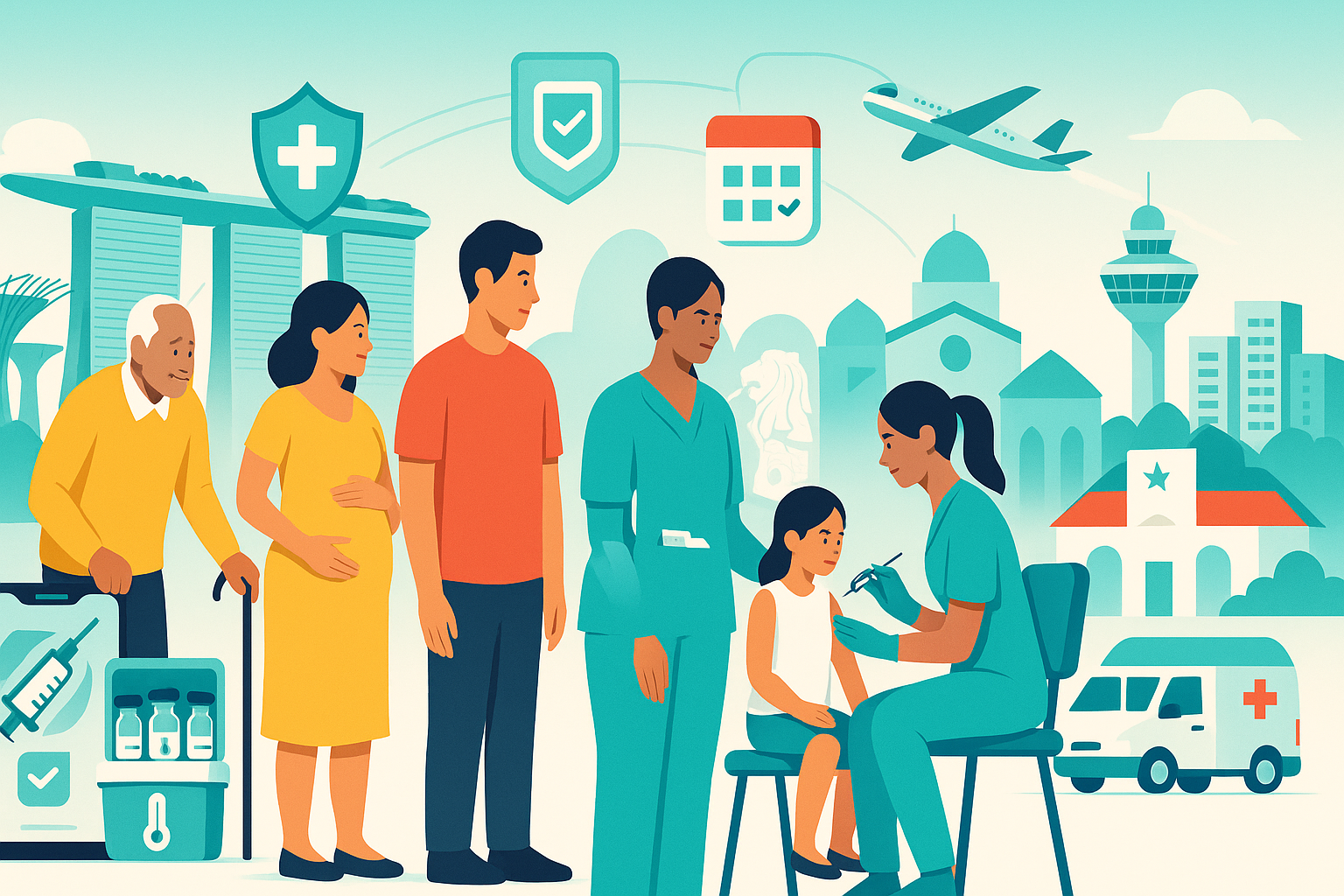
On the ground, delivery is simple and predictable. Polyclinics and a large network of private general practitioners provide routine shots; school-based teams run age-cohort programs so families don’t have to juggle appointments. Digital nudges via HealthHub and SMS reminders reduce missed doses, while the National Immunisation Registry (NIR) keeps official records centralised and portable. Parents can check status on a phone, and clinicians see real-time histories to avoid duplication.
Coverage is a product of policy plus financing. Subsidies at public polyclinics and CHAS-participating clinics trim out-of-pocket costs, and MediSave withdrawals are permitted for selected NAIS vaccines. This means influenza, pneumococcal, HPV, and other recommended shots become affordable for seniors and adults with chronic conditions. Clear price signals, paired with clear clinical guidance, keep the decision-making friction low.
Safety oversight is equally robust. The Health Sciences Authority (HSA) runs pharmacovigilance for adverse events following immunisation (AEFIs), with mandatory reporting by providers and transparent communication to the public. Cold-chain standards and audit trails keep vaccines within strict temperature ranges, while clinic playbooks cover screening, informed consent, and post-vaccination observation.
The system proved adaptable during COVID-19. Mega-centres, mobile teams, extended hours, and multilingual outreach broadened access; tools built for the pandemic now benefit routine immunisation. Data dashboards guided targeting, letting teams find neighborhoods or demographic groups with lower uptake and then place resources precisely where needed.
The NCIS covers the familiar pillars: vaccines against hepatitis B, diphtheria, tetanus, pertussis, polio, Haemophilus influenzae type b, pneumococcal disease, measles-mumps-rubella, and varicella. School-based HPV vaccination has normalised adolescent immunisation. The NAIS, meanwhile, advises adults on influenza, pneumococcal, Tdap booster, HPV for eligible ages, and other risk-based vaccines. Clinicians personalise timing for those with chronic disease, pregnancy, or occupational exposures.
Engagement is culturally and linguistically tuned. Public messages appear in multiple languages, religious and community partners host forums, and myth-busting materials emphasise benefits and acknowledged risks. The tone is consistent: vaccines are a social good, but also a personal health shield—both frames resonate in different audiences.
Equity remains a moving target, and Singapore tackles it head-on. Flexible venues, weekend sessions, workplace drives, and mobile outreach reduce time costs. Catch-up campaigns help late adopters or newcomers align with the schedules. The idea is simple: meet people where they are, with clarity, empathy, and convenience.
In the end, Singapore’s vaccination program succeeds because it mixes clinical excellence with service design. Standardised protocols reduce variation, financing removes affordability barriers, and digital tools keep everyone on the same page. The result is high coverage, low disease incidence, and a population accustomed to timely, evidence-based prevention.