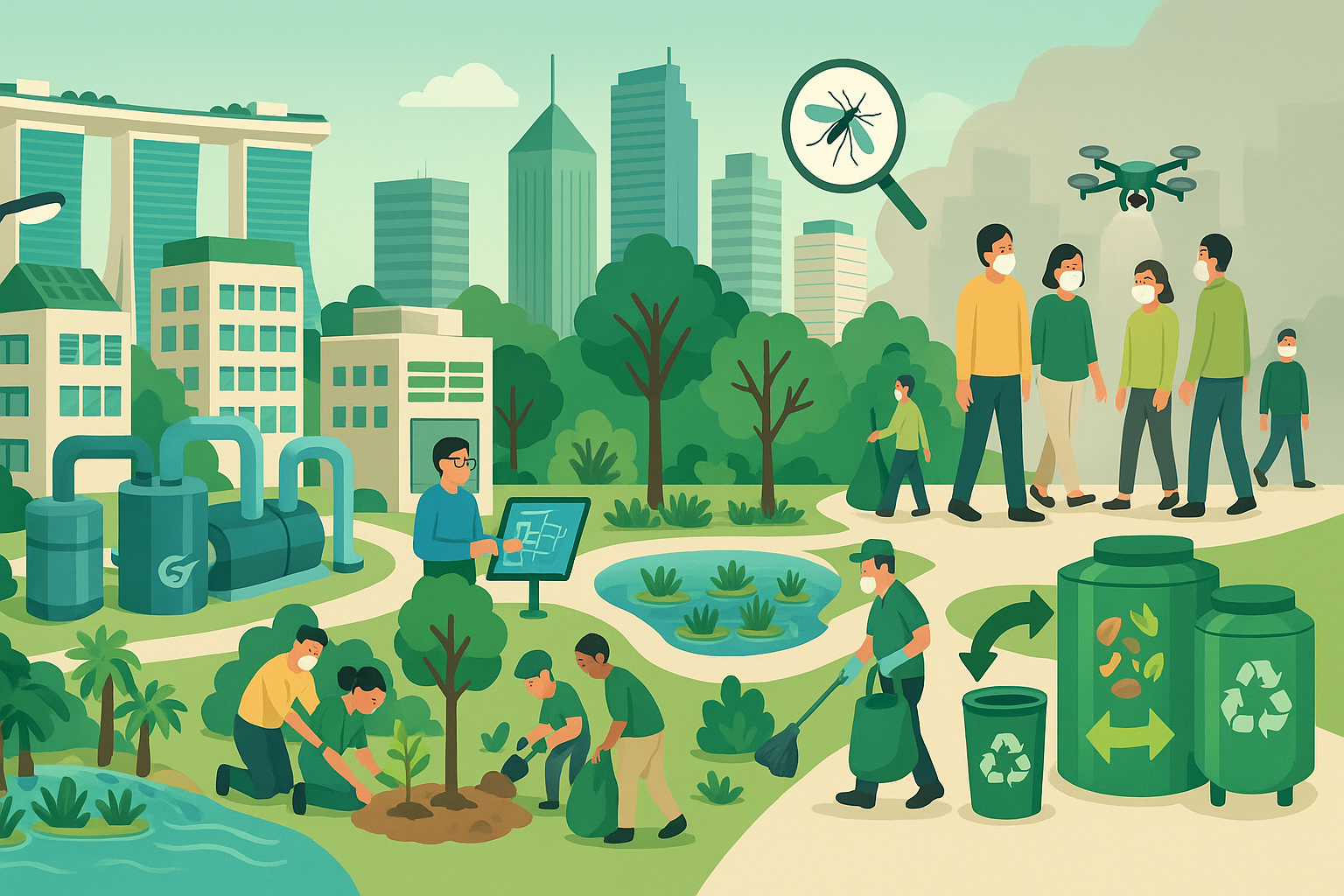

The government of Singapore plays a highly active and strategic role in shaping the health of its population. Rather than leaving health outcomes solely to individuals or the private sector, public institutions design policies, finance services, regulate providers, and promote healthy lifestyles. This coordinated approach is one of the reasons Singapore is often cited as having strong public health indicators despite limited natural resources and a dense urban environment.
A key pillar of Singapore’s public health system is strong governance. The Ministry of Health (MOH) sets national health priorities, drafts legislation, and oversees the performance of both public and private healthcare providers. Through national health plans and long-term roadmaps, the government defines targets for issues such as chronic disease management, ageing, and mental health. Agencies such as the Health Promotion Board (HPB) support MOH by focusing specifically on preventive health and health education.
Financing arrangements also reveal the depth of government involvement. Singapore uses a mix of personal responsibility and state support, often described as a “3M” framework: compulsory medical savings accounts, basic health insurance schemes, and safety-net funds for those who cannot afford care. Public subsidies are designed so that essential services—especially in public hospitals and polyclinics—remain accessible, while still encouraging individuals to be mindful of healthcare costs. This balance aims to prevent over-consumption of services, yet ensure that nobody is left without essential treatment.
Service delivery in public health is another important area of government responsibility. The state owns and manages a network of public hospitals, specialist centres, and polyclinics that provide primary care, vaccinations, screenings, and maternal and child health services. These institutions are frequently reorganised into regional health systems or clusters so that care can be better integrated, and community needs can be more effectively addressed. In recent years, the government has also tried to strengthen the role of family doctors in the community, encouraging long-term relationships between patients and primary care providers.
Preventive health and lifestyle interventions are highly visible in Singapore. The Health Promotion Board runs campaigns on healthy eating, physical activity, smoking cessation, and mental well-being. Schools, workplaces, and community organisations are enlisted as partners. Programmes might include step-count challenges, healthier canteen standards, or initiatives that make exercise more convenient in neighbourhoods. Behind these campaigns is the idea that preventing disease is far more sustainable than treating it after it appears.
In infectious disease control, the government has built a robust system of surveillance, contact tracing, and quarantine measures. Laws require certain diseases to be reported, and specialised centres support rapid diagnosis and treatment. Past outbreaks have pushed Singapore to enhance isolation facilities, stockpile essential supplies, and practise inter-agency coordination. Public communication—through press briefings, digital platforms, and community outreach—is often used to maintain trust and encourage cooperation during health crises.
Looking ahead, the government’s role in public health is increasingly focused on long-term challenges. An ageing population, rising rates of chronic conditions such as diabetes, and growing attention to mental health are reshaping priorities. Digital health tools, telemedicine, and data-driven planning are being expanded to support more personalised and community-based care. Throughout these changes, the government remains the main architect of policies, systems, and partnerships that influence how healthy Singaporeans are and how long they can enjoy good quality of life.