Singapore is a melting pot of cultures, where traditions from various ethnic groups intertwine and contribute to the nation’s unique identity. The clothing traditions of Singapore reflect the multicultural society it is today, and while modern fashion trends dominate, traditional attire continues to be an important symbol of cultural heritage. From the colorful kebaya to the elegant saree, Singapore’s traditional clothing plays an important role in maintaining the cultural fabric of the nation, bridging the past with the present.
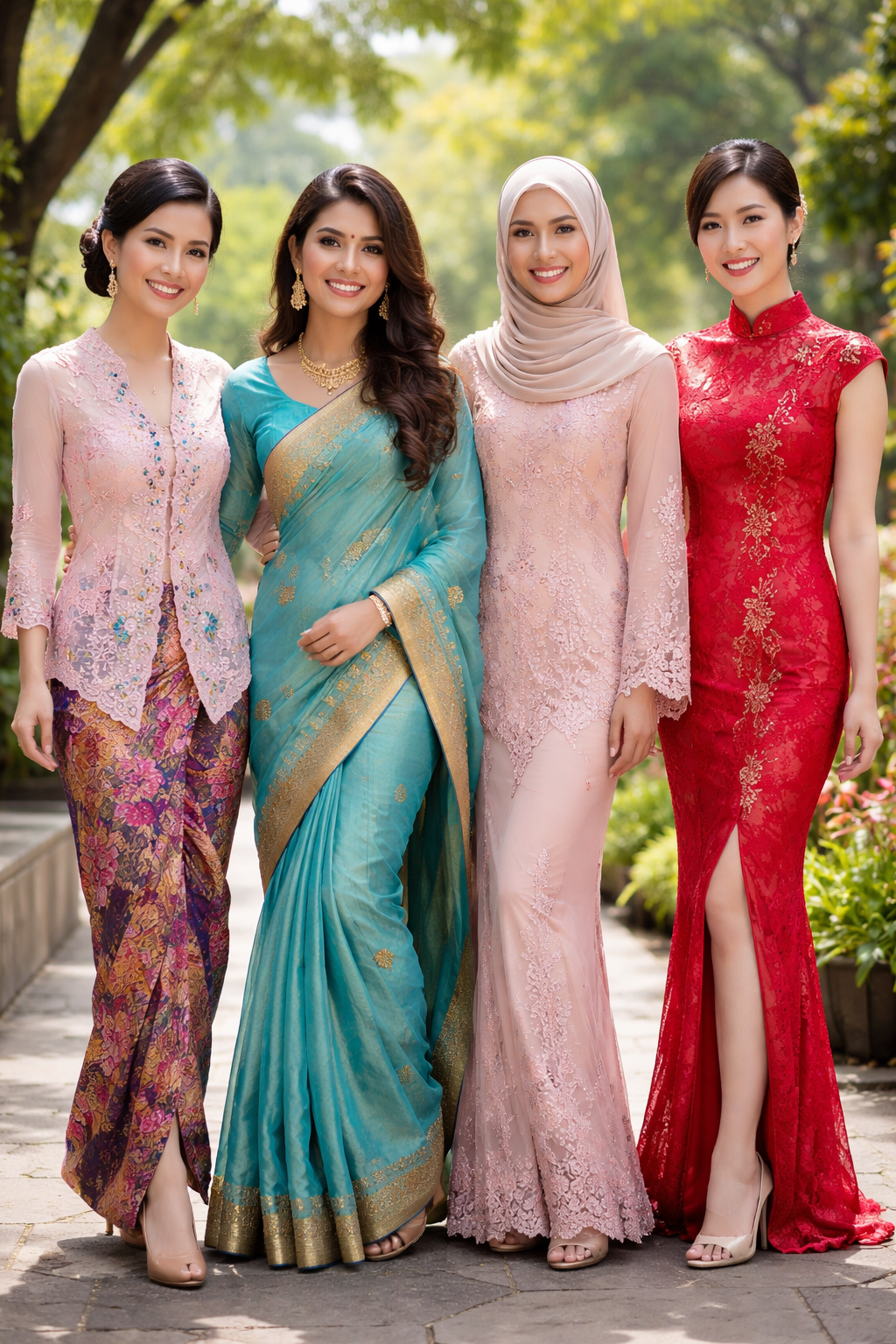
The kebaya, a traditional dress worn by the Peranakan or Straits Chinese community, is a prime example of this integration of cultural heritage into modern fashion. Known for its intricate embroidery and delicate fabric, the kebaya has evolved from a traditional garment to a fashionable statement piece. In the past, the kebaya was worn with a sarong, a colorful wraparound skirt. Today, it is still worn for formal occasions, especially weddings and cultural festivals, but has also been adapted into contemporary designs, incorporating modern cuts and fabrics. Designers have introduced creative twists such as shorter blouses and combination outfits that blend tradition with a modern touch, making the kebaya a popular choice among younger generations.
Another iconic traditional attire that remains relevant in Singapore is the saree, worn by the Indian community. The saree is a versatile and timeless piece of clothing that consists of a long piece of fabric draped elegantly around the body. In Singapore, the saree is often worn during religious celebrations, weddings, and festivals such as Diwali and Thaipusam. Over time, designers have adapted the saree by introducing new styles of draping and using lighter fabrics like chiffon and georgette, making it more comfortable for daily wear while still preserving its traditional appeal. The saree’s versatility also lies in the wide variety of colors, patterns, and fabrics that can be used, allowing it to be customized for modern tastes without losing its cultural significance.
For the Malay community, the baju kurung and baju melayu are quintessential traditional garments. The baju kurung, a long tunic worn by women, is known for its modesty and elegance. It is typically paired with a matching skirt or sarong, and it is commonly worn during festivals such as Hari Raya Puasa. While the traditional baju kurung was made from heavier fabrics like silk or cotton, modern interpretations use more lightweight and breathable materials like chiffon or satin, making the attire suitable for various occasions. Similarly, the men’s baju melayu, often worn with a samping (a cloth wrapped around the waist) and a songkok (a traditional hat), has undergone modifications to suit contemporary tastes. Many modern baju melayu designs feature slimmer cuts and brighter, more vibrant colors, making it a popular choice for weddings and other cultural events.
In addition to these garments, the cheongsam is a symbol of Singapore’s Chinese heritage. This tight-fitting dress, often characterized by a high collar and a straight cut, has undergone significant changes throughout the years. Originally worn as daily attire by Chinese women, the cheongsam is now primarily worn for formal occasions such as weddings or Chinese New Year celebrations. Designers have made the cheongsam more accessible by incorporating modern fabrics and patterns, while still retaining its traditional silhouette. Some variations include designs with more relaxed fits and shorter lengths, making them more suitable for the younger generation.
While each ethnic group in Singapore has its own distinct traditional clothing, there has been a growing trend in recent years of blending modern fashion with traditional elements. Local designers are experimenting with traditional textiles and patterns, creating collections that celebrate Singapore’s multiculturalism. By fusing traditional styles with contemporary designs, they not only preserve these cultural garments but also make them relevant and fashionable in the modern world.
Ultimately, traditional clothing in Singapore serves as a constant reminder of the country’s rich history and diverse cultural heritage. These garments not only carry significant meaning for their respective communities but also serve as symbols of pride and identity. As modern fashion continues to evolve, it is heartening to see that traditional clothing remains an essential part of Singapore’s fashion scene, and designers are continuously finding ways to integrate these timeless pieces into everyday life.