
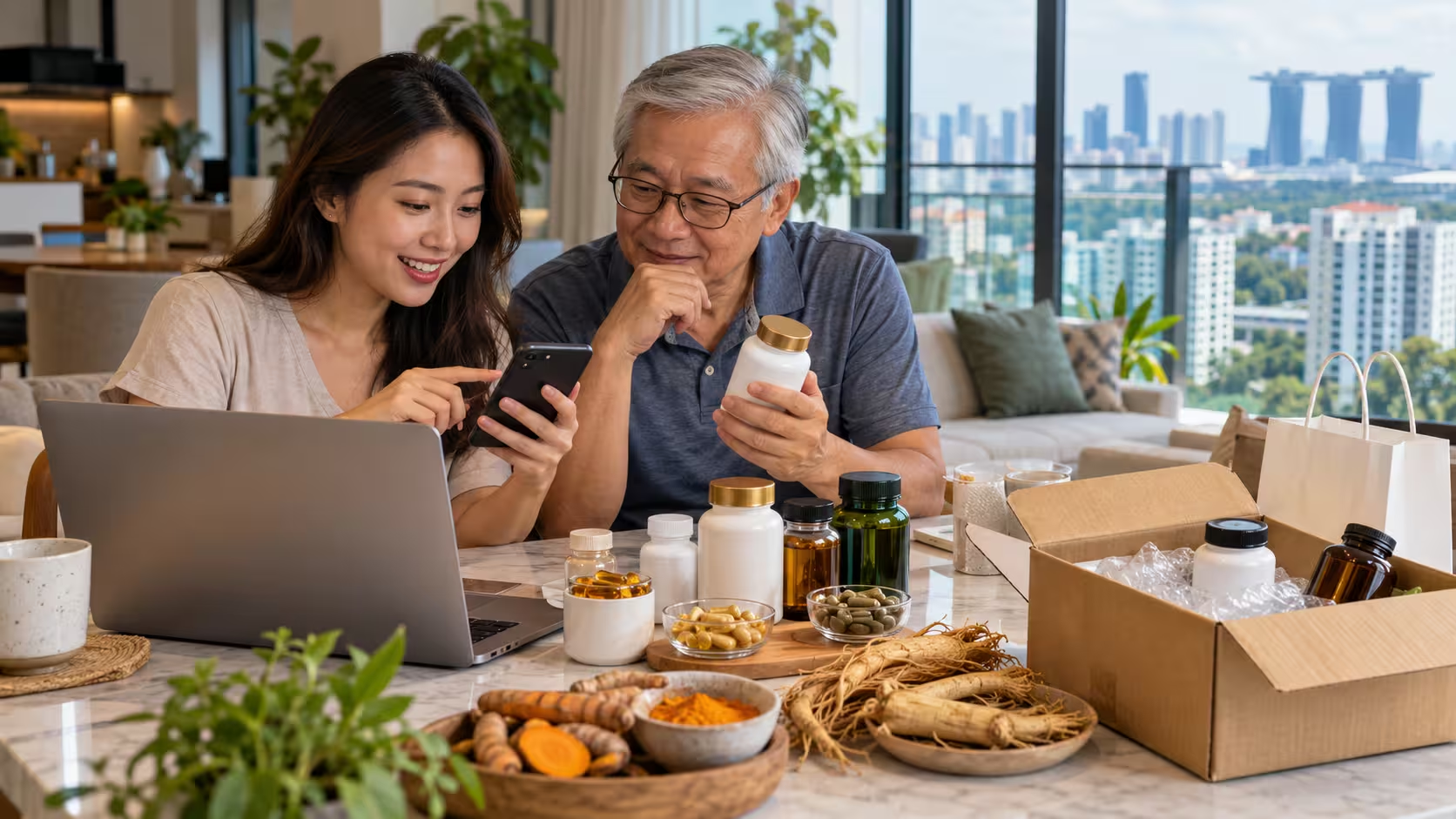
A Market Defying Global Trade Headwinds
Singapore’s herbal supplement industry is experiencing a paradox. While import volumes for herbal products contracted sharply between 2023 and 2024—posting a -21.37% growth rate—domestic value sales have continued their upward trajectory, signalling a market that is consolidating, premiumising, and maturing rather than retreating.
According to Deep Market Insights, the Singapore herbal supplements market was valued at USD 235.05 million in 2024 and is forecast to expand to USD 490.02 million by 2033, representing a compound annual growth rate of 8.53% across the 2026–2033 forecast period. That growth rate positions Singapore as the fastest-growing herbal supplements market in Asia Pacific.
Turmeric Leads, Echinacea Accelerates
Within the herb-type segmentation, turmeric held the leading position in 2024 by market size, buoyed by sustained consumer demand for its anti-inflammatory and antioxidant properties. Turmeric’s dominance reflects a broader trend: Singaporean consumers are gravitating toward botanicals with clinically documented benefits rather than folkloric remedies alone.
Echinacea, meanwhile, is projected to post the fastest growth rate through 2033, sustaining its position as the most attractive herb-type segment. The herb’s immune-supporting positioning aligns with post-pandemic health priorities, particularly among urban professionals seeking preventive solutions for seasonal illnesses.
The Cultural Engine Behind the Numbers
The structural driver behind this growth is not purely commercial. Euromonitor International’s October 2025 report notes that Singapore’s majority Chinese population continues to influence category strength, maintaining steady demand for traditional tonics, remedies and supplements. Value sales of herbal and traditional products are projected to rise steadily, driven by “deep-rooted cultural preferences and the widespread perception of natural remedies as safe and effective”.
This cultural foundation creates a unique market dynamic. Unlike Western markets where herbal supplements often compete against pharmaceutical alternatives, in Singapore, traditional remedies occupy a complementary space—used alongside, not instead of, conventional healthcare. The ageing population amplifies this: seniors managing chronic conditions frequently incorporate herbal tonics into their wellness routines, while younger consumers embrace adaptogens for stress and energy support.
Format Innovation Meets Fast-Paced Lifestyles
Manufacturers are responding to Singapore’s urban rhythm with format innovation. Euromonitor highlights that companies are focusing on “packaging and format innovation to meet the needs of Singapore’s fast-paced, urban consumers,” with compact and travel-friendly designs becoming more prevalent. Traditional remedies that once required brewing or decoction are now available as sachets, capsules, and ready-to-drink functional beverages—products designed for the MRT commute or the office desk.
Aggressive new product launches are expected to drive overall category expansion, with manufacturers introducing products featuring “naturally derived ingredients and clinically backed health claims to enhance differentiation and consumer trust”. The shift toward clinical substantiation marks a maturation of the market: consumers are no longer satisfied with vague promises of “balance” or “vitality.”
The Premiumisation Signal
The divergence between declining import volumes and rising value sales tells a story of premiumisation. Lower-cost, commoditised herbal products are losing shelf space to higher-margin, branded formulations with documented sourcing, standardised extracts, and third-party testing. Singaporean consumers—among the most educated and digitally connected in Southeast Asia—are willing to pay for transparency.
For industry stakeholders, the message is clear: Singapore’s herbal supplement market is not simply growing; it is transforming. The winners will be those who can bridge traditional wisdom with modern scientific validation, delivered in formats that fit the pace of urban life.