The Meteoric Rise of Livestream Shopping in the Lion City
Singapore’s fashion retail landscape is undergoing a seismic transformation. What was once a niche experiment during the pandemic has evolved into a multi-billion-dollar sales engine, with live commerce emerging as the primary revenue channel for a growing number of homegrown fashion labels. According to a landmark DBS research report, Singapore’s live commerce market is projected to generate up to US$1.3 billion in sales in 2025, accounting for approximately 40% of the nation’s total social commerce market.
This trajectory shows no signs of slowing. The broader social commerce sector is expanding at a compound annual growth rate of 15.6%, with projections indicating that by 2030, social commerce sales will double to US$6.6 billion—and live commerce is expected to account for more than a third of that figure.
From Search-Driven to Discovery-Led Shopping
The fundamental mechanics of how Singaporean consumers shop for fashion have shifted. Traditionally, a shopper would identify a need, search for options, compare alternatives, and finally make a purchase. Today, that journey has been inverted. As Leon Koh, Fashion Lead at TikTok Shop Singapore, explained at the Retail Asia Summit 2026, consumers now begin with discovery in content feeds, make a decision, and then purchase—often within the same session.
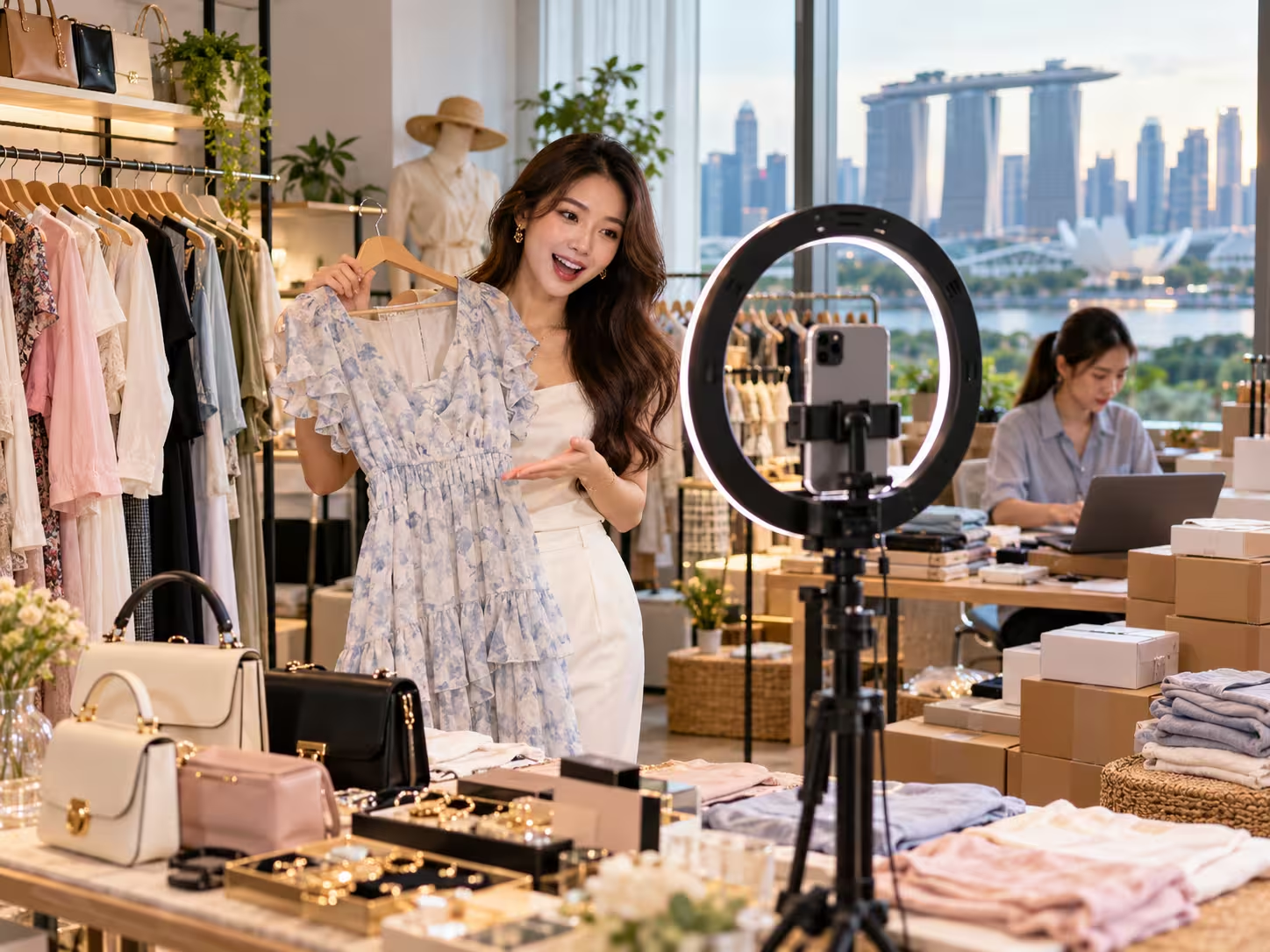
This “discovery commerce” model has proven particularly potent for fashion, where visual demonstration, real-time styling advice, and immediate audience feedback create a shopping experience that static product pages cannot replicate. TikTok Shop Singapore reported that its seller base expanded over 125% year-on-year to approximately 80,000 sellers, while live commerce sales climbed more than 70% year-on-year.
Why Fashion Leads the Charge
Fashion and apparel captured approximately 34% of Singapore’s live commerce market revenue in 2026, making it the dominant category. The reasons are both practical and psychological. Fashion is inherently visual, and livestreams allow hosts to model garments, explain fabric textures, demonstrate sizing on real bodies, and answer questions instantly—solving the trust deficit that has historically plagued online apparel shopping.
The conversion economics are compelling. DBS research indicates that live commerce conversion rates are approximately ten times higher than traditional e-commerce. This is because shoppers can discover, interact with, and purchase a product within a single platform, dramatically shortening the path from awareness to transaction.
The Platform Ecosystem
TikTok Shop has emerged as the most disruptive force in Singapore’s live commerce fashion arena, but the ecosystem is diverse. Shopee Live and Lazada Live leverage their deep integration with established marketplace infrastructure, offering sellers in-stream vouchers, flash deals, and product pinning capabilities that facilitate real-time sales. Shopee Live, in particular, dominates price-sensitive segments, while TikTok Shop excels in discovery-driven, content-first selling. Facebook Live and Instagram Live continue to serve as secondary channels for community-focused brands.
What This Means for Local Fashion Brands
For Singapore’s local fashion labels, live commerce represents both an unprecedented opportunity and a demanding operational shift. Brands that treat livestreaming as an occasional marketing stunt quickly lose ground to digital-native merchants who broadcast daily. Success requires sustained investment in hosting teams, video production, inventory management systems capable of handling order spikes, and data analytics to continuously refine content strategy.
The key insight, as Koh succinctly put it, is that “content commerce is an ongoing cycle, not a one-off campaign”.