The Rise of a Parallel Ticketing Workforce
When a major concert is announced in Singapore, the official ticketing page is no longer the only battlefield. A growing number of fans are outsourcing the fight altogether. Help-to-Buy (HTB) services, operated by independent providers and small teams, have turned the anxiety of virtual queues into a paid convenience. For a fee, these providers log in on behalf of customers, navigate Ticketmaster’s waiting rooms, select seats, and complete payment. If they fail, clients typically receive a full refund. The model sounds simple, but it has spawned a competitive micro-economy that sits alongside official ticketing channels.
CNA Lifestyle reported in June 2026 that HTB services have become a booming business in Singapore’s ticketing space, particularly during BTS’s Arirang concert sales. The appeal is not only access but also speed and certainty in a system where five-digit queue numbers can stall for hours. Fans describe the official process as psychologically draining: refreshing pages, losing seats, and being returned to the back of the queue after payment errors. HTB providers absorb that stress and sell the outcome.
How the Business Model Actually Works
Fees, Refunds, and Seat Tiers
HTB pricing is not fixed. Providers quote according to artist popularity, seat category, and the perceived difficulty of the sale. For BTS, one fan was quoted more than S$900 for a VIP ticket through an HTB service, even though the official VIP price was S$388. For less extreme cases, fees can range from S$30 to S$85 per ticket, depending on the event and the provider’s track record.
The refund clause is central to the value proposition. Customers pay upfront, but if the provider cannot secure the requested category, the service fee and ticket cost are returned. This reduces the financial risk for fans, although it does not eliminate the risk of dealing with unregulated operators.
The Cost Structure Behind the Fee
Running an HTB operation is not merely a matter of clicking faster. Providers invest in multiple devices, stable internet connections, and sometimes automated monitoring tools to track queue movements. They also absorb the opportunity cost of failed attempts. For high-demand shows such as BIGBANG’s October 2026 National Stadium date, some providers charged between S$110 and S$750 on top of official ticket prices, citing technological infrastructure and intense competition.
Why Fans Keep Coming Back
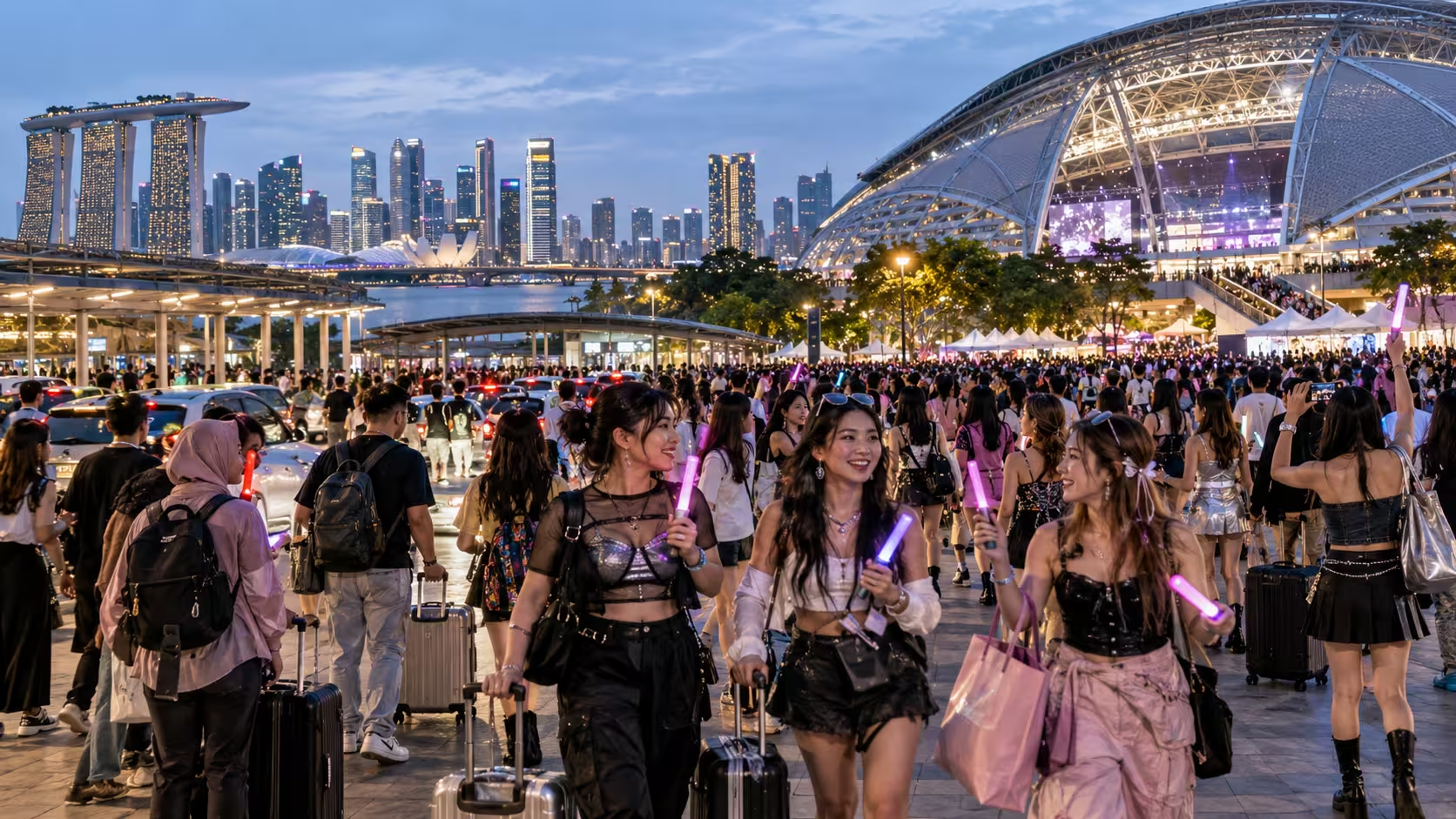
The HTB market thrives on a mismatch between supply and fan expectations. Singapore has become a regional concert hub, drawing fans from across Southeast Asia. That cross-border demand intensifies queue competition and makes desirable seats scarcer. For working adults and overseas fans, paying a premium for someone else to manage the process is a rational trade-off between time, stress, and money.
There is also a social dimension. HTB providers often build reputations through Carousell ratings and Telegram communities, creating trust in an otherwise informal market. Repeat customers return not because they cannot use the official site, but because they believe the provider has a better chance of beating the queue.
A Market Without a Formal Licence
Unlike ticket resale, HTB is not explicitly prohibited in Singapore. Providers are not selling tickets they already own; they are selling a service. This distinction has allowed the sector to grow without a dedicated licensing framework. Carousell has stated that pre-orders and help-to-buy services are not prohibited on its platform, provided they are not fraudulent.
That regulatory gap is both an opportunity and a vulnerability. On one hand, it lowers barriers to entry and encourages competition. On the other, it leaves consumers to verify providers on their own. The HTB economy is, in effect, a trust market: reputation is the only real currency, and a single failed sale can end a provider’s business.
The Bigger Picture
HTB services are a symptom of a ticketing system that has become too complex and too competitive for many fans to navigate alone. They are not going away as long as major concerts generate overwhelming demand. The question is not whether HTB will survive, but how it will professionalise. As more players enter, pricing transparency, refund reliability, and customer reviews will become the differentiators that separate sustainable operators from opportunistic ones.