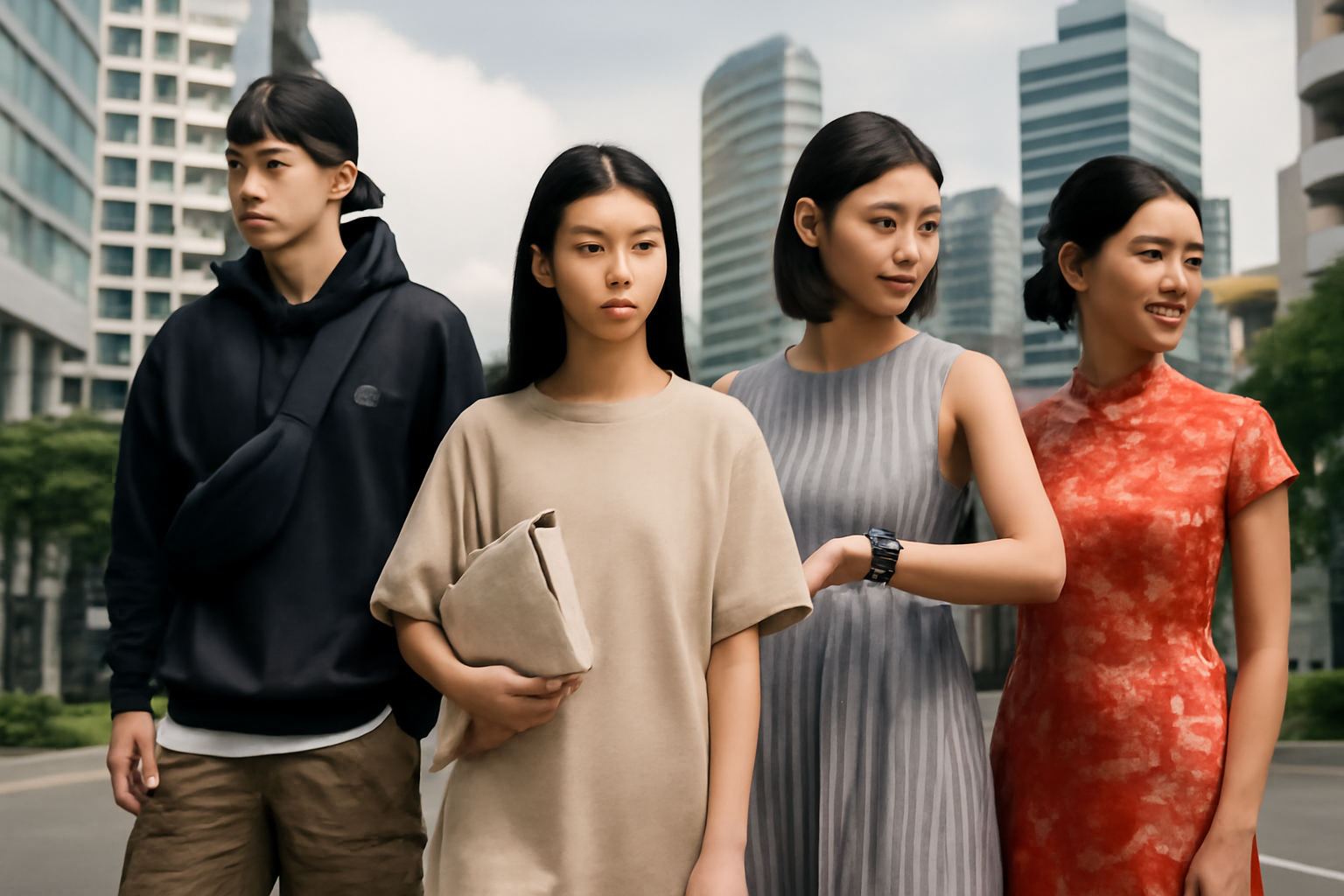

Singaporean designers have carved out a distinctive role on the world stage by blending cosmopolitan polish with Southeast Asian heritage. What makes their contribution stand out is an instinct for synthesis: precision-cut silhouettes and pragmatic detailing meet batik echoes, Peranakan color sensibilities, and reimagined cheongsam and kebaya lines. This hybrid fluency travels well, which is why labels from the city-state punch above their weight at international showrooms and on major fashion weeks.
The diaspora has been a force multiplier. Paris-based Andrew Gn brings couture-level craftsmanship and ornamentation to European buyers, while Ashley Isham’s London showings showcase red-carpet glamour with structure-forward draping. At home, designers like Lai Chan have modernized the cheongsam, and Priscilla Shunmugam (Ong Shunmugam) has turned Asian tailoring and textiles into contemporary conversation pieces. The cumulative effect is a recognizable yet varied “Singaporean clarity”—clean lines, studied restraint, and meticulous construction.
Ecosystem matters. Training pipelines through LASALLE College of the Arts and Nanyang Academy of Fine Arts have normalized CAD patterning, 3D prototyping, and fashion entrepreneurship. The Singapore Fashion Council, incubators, and spaces like Design Orchard provide a platform that connects young labels to mentors, merchandisers, and international buyers. The city-state’s logistics strengths—reliable ports, cross-border payments, and e-commerce rails—help small studios ship globally without maintaining unwieldy warehouses.
Another pillar is material innovation and sustainability. Local studios frequently adopt small-batch production, fabric upcycling, and pre-order models to reduce inventory risk. Partnerships across the region allow Singaporean brands to access specialized mills and ateliers in Malaysia, Indonesia, Thailand, and Vietnam while keeping QC centralized. Many embrace digital sampling tools such as CLO3D or Browzwear to cut waste in the prototyping phase and accelerate development for wholesale calendars.
Internationalization typically progresses through trade shows and curated multi-brand stores in Paris, Shanghai, and Tokyo, combined with pop-ups in travel retail and resort destinations. Some labels move into accessories and footwear—where Singapore’s Charles & Keith demonstrated how design-centric branding and data-led merchandising can travel from Orchard Road to global high streets. Others scale through capsule collaborations with hotels, galleries, and airlines, using hospitality and culture as runways of their own.
Storytelling remains a comparative advantage. Singapore’s multicultural backdrop offers designers credible narratives around hybridity, modest dressing, craft preservation, and urban utility. This gives them an edge in editorial features and social video, where audiences respond to specificity. It also opens doors in markets looking for refined occasionwear that is comfortable in tropical climates and conservative environments.
The challenges are real: limited domestic market size, higher operating costs, and an absence of large-scale garment manufacturing. Yet designers mitigate these with modular collections, seasonless drops, and sharp wholesale discipline—tight SKU counts, repeatable bestsellers, and fabric continuity. In doing so, they model a “small studio, global footprint” approach: thoughtful design, disciplined operations, and borderless storytelling. That combination explains why Singaporean designers have moved from regional promise to credible, recurring presence on the international fashion calendar.