Singapore, a vibrant cosmopolitan city, is home to a rich and diverse cultural landscape. The country’s performing arts scene is a blend of traditional and contemporary forms, showcasing its multicultural heritage while embracing global trends. This dynamic fusion is evident in Singapore’s dance culture, which spans from traditional dances rooted in Southeast Asian, Chinese, and Indian cultures to innovative contemporary performances that push creative boundaries.
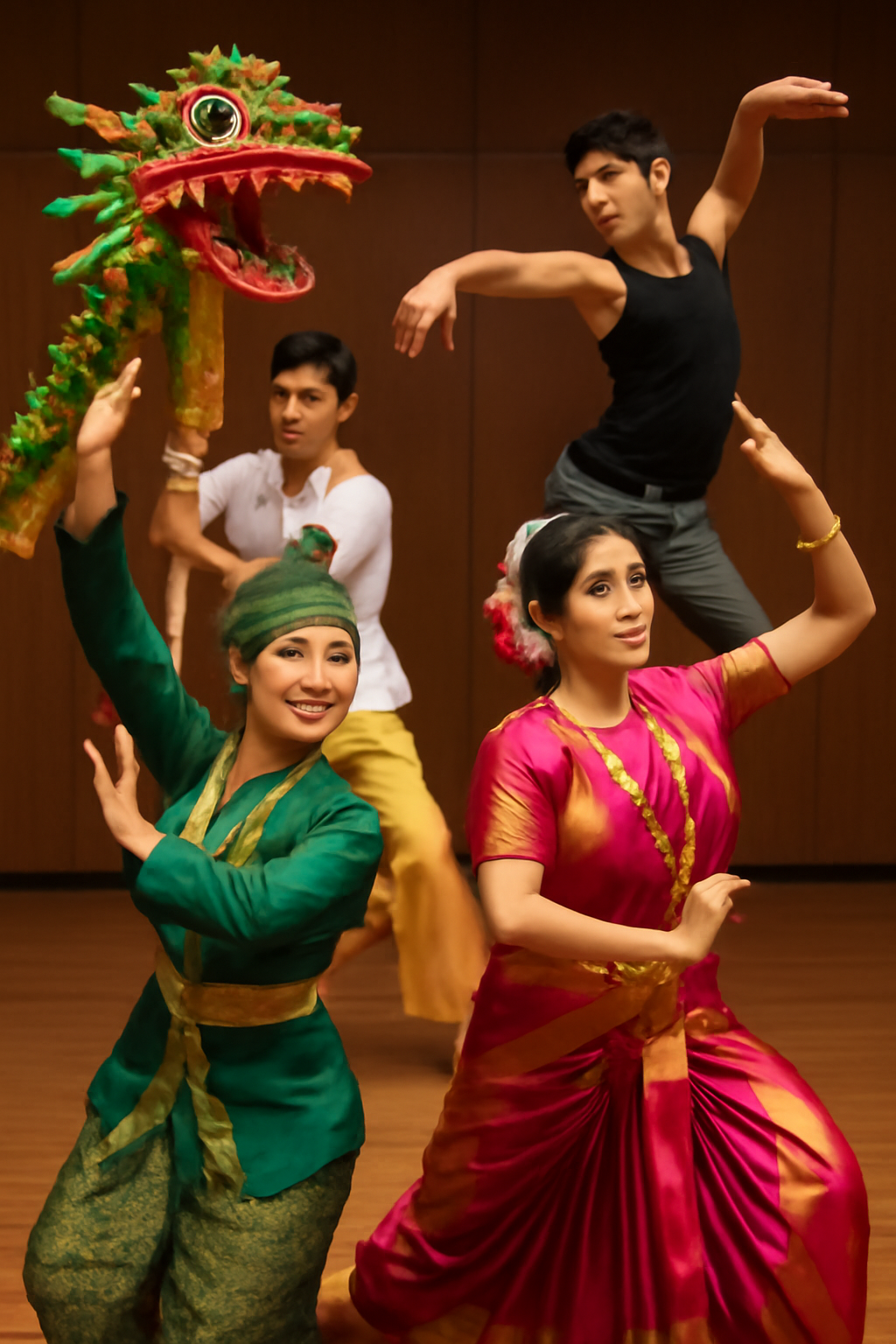
Traditional dance in Singapore has deep roots in the diverse ethnic groups that call the island home. Among these, Malay, Chinese, and Indian dance forms are prominent. For instance, Malay traditional dance is heavily influenced by court dances and ritualistic movements, such as the graceful “Zapin” and the lively “Joget,” both of which are performed during celebrations and ceremonies. Chinese traditional dance, on the other hand, often accompanies Chinese opera and features movements that mimic the stories from ancient folklore. The Indian classical dance forms such as Bharatanatyam and Odissi showcase elaborate gestures and storytelling techniques, with vibrant costumes and intricate footwork.
While these traditional forms remain significant, the rise of contemporary dance in Singapore has reshaped the performing arts scene. Contemporary dance in Singapore is characterized by innovation and experimentation, often incorporating elements from ballet, modern dance, and even hip-hop. A notable example is the Singapore Dance Theatre, which blends classical ballet with contemporary choreography to create performances that are both visually captivating and intellectually stimulating.
Singapore also fosters numerous contemporary dance companies, such as the T.H.E Dance Company and the Arts Fission Company, that actively push the boundaries of the genre by incorporating multimedia, technology, and diverse cultural influences into their work. This evolution has created a distinctive “Singaporean” style of contemporary dance that blends local heritage with global influences, establishing the city as a cultural hub for the performing arts in Southeast Asia.
With this vibrant mix of traditional and contemporary dance, Singapore has created a platform for cross-cultural exchanges, where global and local dance forms coexist and continuously evolve. This transformation reflects the nation’s ability to honor its traditions while embracing innovation in the arts.