Singapore’s drink culture is a living snapshot of its multicultural roots. Step into any hawker centre or old-school kopitiam (coffee shop), and you’ll see Chinese, Malay, Indian, and Peranakan influences served in cups, glasses, and plastic bags tied with string. While trendy cafés are everywhere, traditional beverages remain daily essentials—affordable, flavorful, and tied to routines like breakfast sets, late-night supper runs, and midday heat relief.
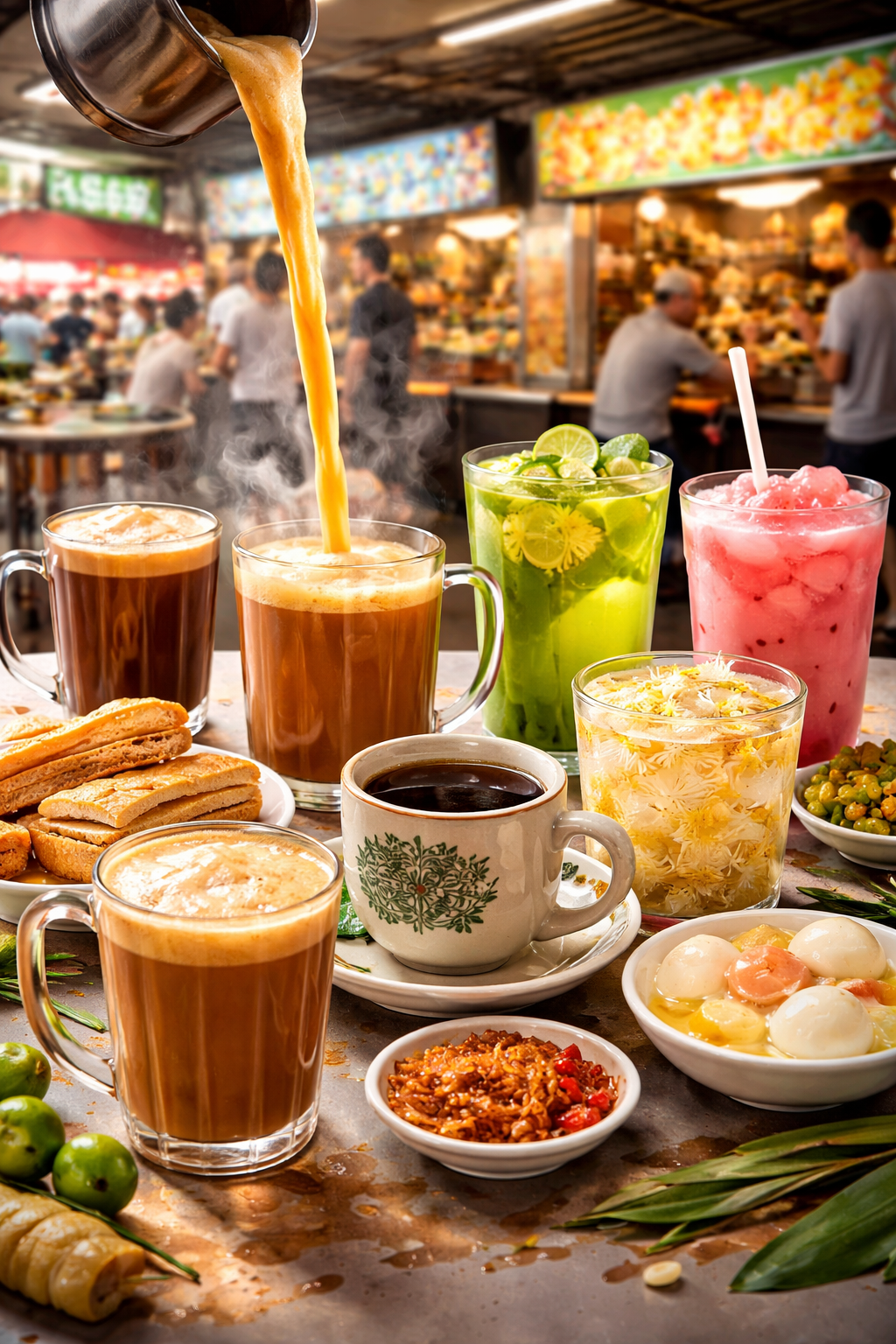
Teh tarik is one of the most iconic. The name literally refers to the “pulling” action: hot tea is poured back and forth between two containers from a height, creating a frothy top and cooling the drink slightly. In Singapore, it’s commonly built on strong black tea mixed with sweetened condensed milk and sometimes evaporated milk for extra body. The pull isn’t just showmanship—it aerates the tea, softens bitterness, and gives it a creamy, velvety mouthfeel. You’ll also find variations such as teh halia (ginger tea), which adds a warming spice, and less-sweet styles for modern preferences.
On the coffee side, kopi in Singapore is its own category, distinct from espresso-based café coffee. Traditional kopitiam coffee often uses robusta beans roasted with sugar and sometimes margarine or butter, creating a dark, aromatic profile with caramelized notes. Brewing is typically done using a cloth “sock” filter, producing a strong concentrate that’s customized with milk and sugar. The menu may look short, but the combinations are many:
- Kopi: coffee with condensed milk (sweet, creamy, classic)
- Kopi C: coffee with evaporated milk (lighter sweetness)
- Kopi O: black coffee with sugar
- Kopi O Kosong: black coffee with no sugar
You might also hear intensity cues like “gao” (stronger) or sweetness adjustments like “siew dai” (less sweet).
Tea culture goes beyond milk tea. Many stalls serve Chinese herbal teas (liang cha), brewed from roots, flowers, and botanicals. These are traditionally enjoyed for “cooling” properties in hot weather—common options include chrysanthemum tea, self-heal herb (xia ku cao) blends, and tortoise jelly served with syrup for a bittersweet herbal hit. Another favourite is barley water, usually lightly sweetened and served cold; it’s simple but deeply associated with Singapore’s humid afternoons.
For fruit-based refreshment, sugarcane juice stands out. Fresh stalks are crushed through a press, producing a pale green drink that tastes grassy, sweet, and ultra-hydrating. Some vendors add lime for brightness. Alongside it, you may spot bandung—a nostalgic pink drink made with rose syrup and milk—popular at Malay eateries and during festive seasons. It’s perfumed, sweet, and unmistakably retro.
Traditional drinks are closely tied to food habits. A typical local breakfast pairing is kopi or teh with kaya toast and soft-boiled eggs, where the sweetness of coconut jam balances the bitterness of coffee or tea. At lunch, sugarcane juice and barley water cut through spicy dishes. Late at night, teh tarik and kopi appear again at prata shops, where the drinks are part of the social ritual as much as the meal.
To experience these beverages properly, skip the fancy café menu once in a while and order from a neighbourhood kopitiam or hawker stall. Watch the pulling of teh tarik, smell the smoky roast of kopi, and try a herbal tea you’ve never heard of. In Singapore, traditional drinks aren’t museum pieces—they’re everyday comfort, served fast, sipped slowly, and remembered for life.