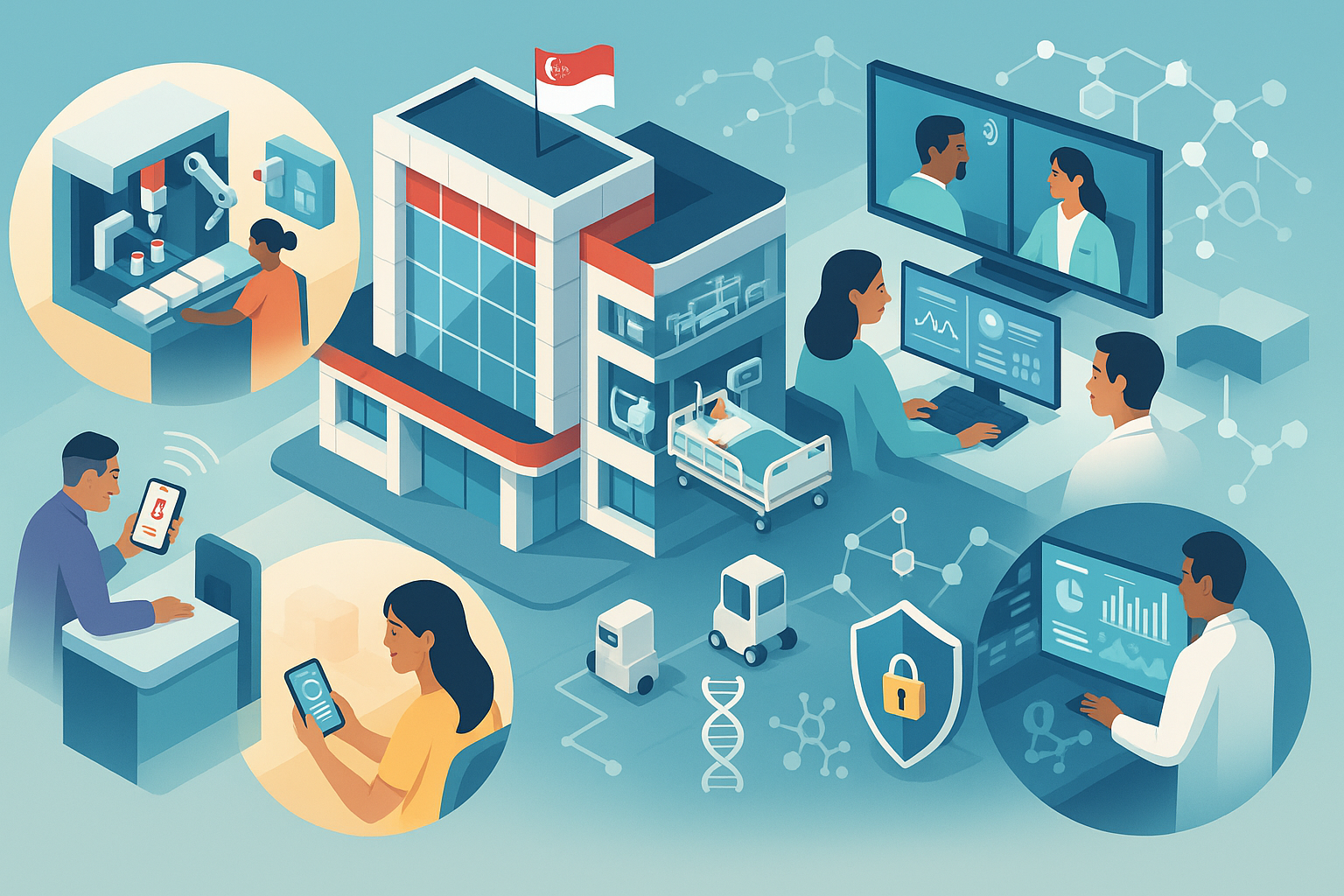
Singapore’s healthcare system has spent the past decade wiring its hospitals and clinics with a digital backbone designed for speed, safety, and scale. At the core sits the National Electronic Health Record (NEHR), an evolving platform that lets clinicians access a patient’s history across public and private settings. When a resident visits a GP, then a specialist, and later an emergency department, critical information—medications, allergies, lab results—travels with them. That seamless handoff reduces duplicate tests and cuts the risk of adverse events.
The patient-facing side is equally visible. Through HealthHub, residents can view immunisation records, pay bills, manage appointments, and even track family members’ health permissions. The “digital front door” reduces queues while nudging people toward preventive care. In parallel, a rapidly maturing telemedicine ecosystem—ranging from established providers to hospital-run virtual clinics—brings chronic care check-ins, mental health consults, and dermatology reviews to phones and laptops. For busy caregivers and older adults, the ability to consult from home is more than convenience; it’s access.
Inside hospitals, automation hums quietly. Automated dispensing cabinets, pharmacy robots, and barcode medication administration systems standardise the last mile of drug delivery. Some institutions employ autonomous mobile robots to ferry linens and supplies through service corridors, freeing staff for patient-facing tasks. Smart wards deploy wearable sensors and bed-integrated monitoring so nurses can catch deteriorations early, while electronic observation charts feed analytics that flag risk.
On the diagnostic front, artificial intelligence supports clinicians rather than replaces them. Radiology AI helps triage chest X-rays for pneumothorax or prioritise CT scans with suspected stroke, reducing turnaround times for time-critical conditions. In pathology, algorithms assist with slide screening, pushing likely positives to the top of the queue. Importantly, tools are validated locally and supervised by specialists, reflecting Singapore’s emphasis on safety and accountability.
Precision medicine initiatives and genomics pipelines are gaining traction, particularly in oncology and rare disease diagnosis. Tumour sequencing guides targeted therapies; pharmacogenomics helps clinicians avoid adverse drug reactions. Meanwhile, remote monitoring kits—blood pressure cuffs, glucometers, and pulse oximeters—integrate with clinics via secure APIs, enabling team-based care for diabetes, hypertension, and heart failure. Data flows matter; interoperability standards such as HL7 FHIR are gradually standardised to reduce vendor lock-in and speed innovation.
All of this requires robust governance. Cybersecurity is treated as clinical safety: segmented networks, role-based access, multi-factor authentication, and continuous threat monitoring are table stakes. The technology operator for public healthcare, IHiS, coordinates risk management and recovery drills across clusters. At the same time, clinicians receive digital upskilling: order sets, decision support, and simulation-based training ensure that tools fit workflows rather than the reverse.
Equity is a recurring theme. Subsidies, public kiosks, and assisted digital services help those with limited tech literacy. Bilingual interfaces and caregiver access reduce friction for multi-generational households. The system’s success isn’t measured only by terabytes processed, but by fewer missed follow-ups, earlier detection of complications, and shorter hospital stays.
Singapore’s results stem from an ecosystem approach—policy alignment, standards, clinical leadership, and vendor partnerships—rather than isolated pilots. The direction of travel is clear: data that moves where the patient goes, automation that removes repetitive work, and analytics that amplify clinical judgment.