
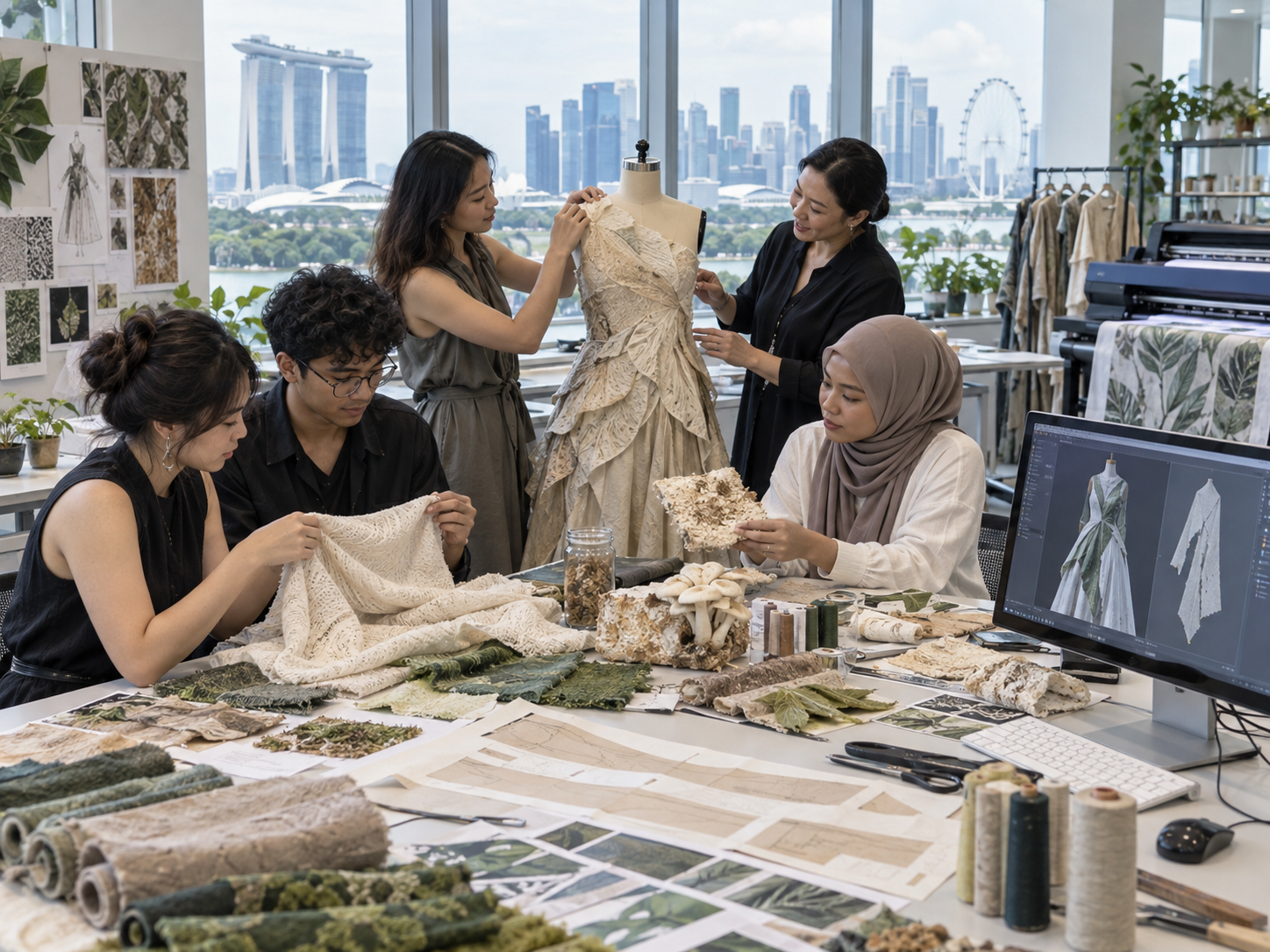
The global fashion industry is undergoing a seismic shift, moving away from fast fashion towards a model rooted in environmental stewardship. At the forefront of this transformation are Singapore’s elite fashion academies, which have redefined their pedagogical approaches to prioritize sustainability not as a trend, but as a fundamental pillar of modern design.
The Rise of the Eco-Conscious Curriculum
Historically, fashion education focused heavily on aesthetics and construction. Today, institutions like the Textile and Fashion Federation (TaFF) and LASALLE College of the Arts are embedding material science and lifecycle analysis directly into their foundational courses. Students are no longer just asking, “How does it look?” but “Where does it come from, and where does it go when discarded?”
This shift is largely driven by Singapore’s national agenda, specifically the Singapore Green Plan 2030. The government’s push for a zero-waste nation has compelled educational bodies to align with future industry regulations. Students now engage in deep research on bio-fabricated textiles, such as those derived from pineapple leaves or mycelium (mushroom roots), and learn to design with minimal seam waste using advanced 3D prototyping software.
Industry Integration and Real-World Application
A key distinction of Singapore’s fashion education ecosystem is its seamless integration with the commercial sector. Schools do not operate in a vacuum; they function as incubators. The partnership between academic institutions and the TaFF’s Bridge Fashion Incubator allows students to pilot their sustainable collections in a real retail environment. This direct market feedback loop ensures that graduates are not merely theorists but are ready to solve the industry’s most pressing pollution problems.
Furthermore, the curriculum includes mandatory modules on supply chain transparency. Students learn to audit factories virtually and understand the carbon footprint associated with shipping raw materials from one continent to another. By understanding the economics of “greenwashing” versus genuine ethical production, graduates are equipped to lead brands that are commercially viable and ecologically responsible.
For prospective students looking to enter this vital sector, understanding the intersection of technology and textiles is paramount. Singapore’s schools are investing heavily in labs where students can experiment with digital printing techniques that use 90% less water than traditional dyeing methods. This technological fluency is what sets a Singapore-trained designer apart in the competitive global job market, positioning them as future Chief Sustainability Officers for luxury houses as much as creative directors.
As reported by industry watchdogs, the demand for professionals skilled in circular fashion logistics is outpacing supply. Singapore’s institutions are answering this call by producing graduates who view waste as a design flaw, not an inevitability. This philosophical shift, backed by rigorous technical training, ensures that the Lion City will continue to export not just garments, but groundbreaking ideas that redefine the future of fashion.