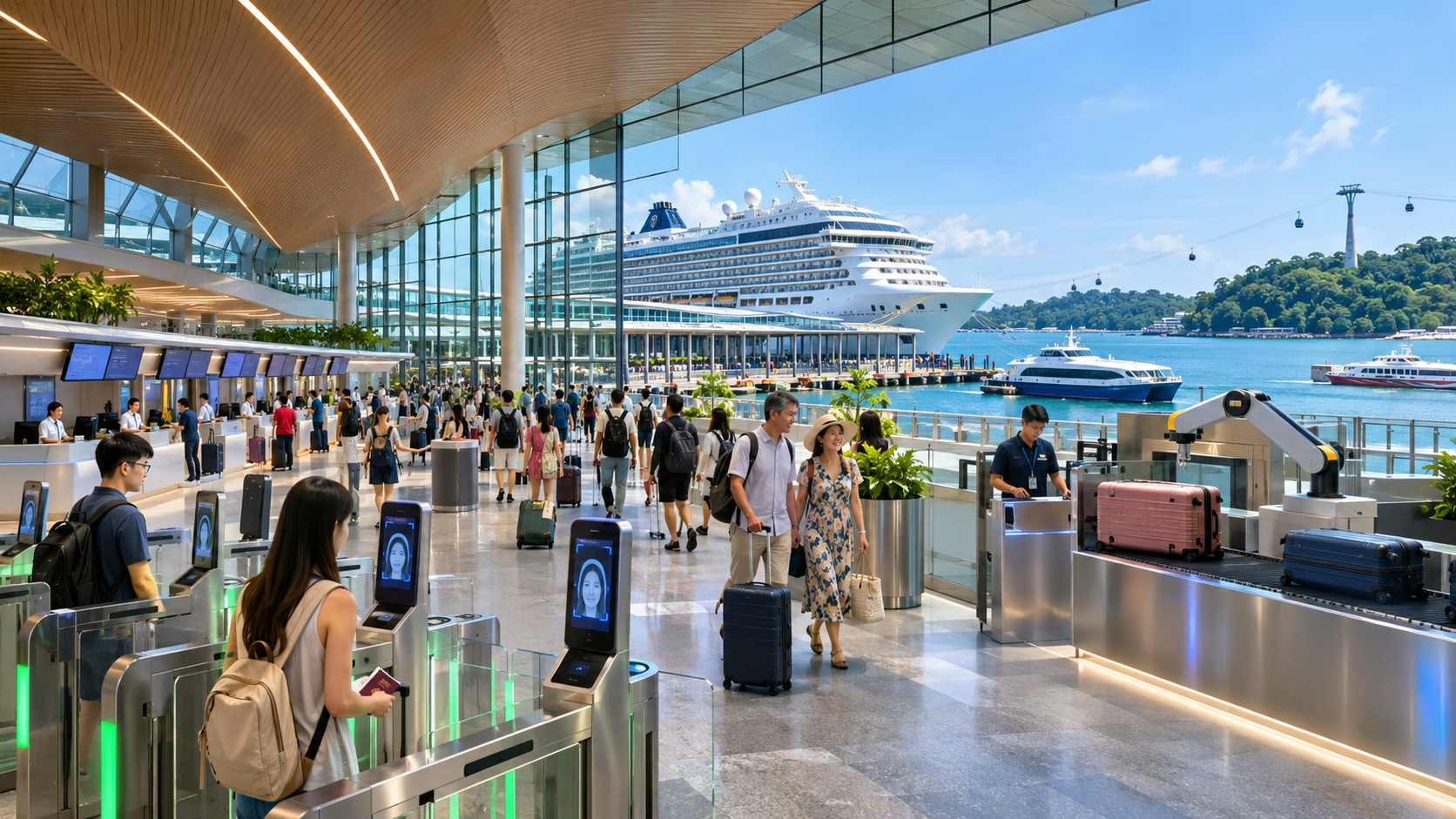
Singapore has thrown down a technological gauntlet to the rest of Asia’s cruise industry. The newly opened Singapore Cruise Centre at HarbourFront is not merely an upgraded facility; it is a statement of intent. Officially inaugurated in September 2026 after a 24-month development phase, the terminal is designed to process up to 18,000 departing passengers daily, a staggering capacity that redefines operational scale for the region. This isn’t just about size—it is about seamlessness. By integrating biometric immigration lanes, self-service kiosks, and automated baggage drop-off, Singapore is effectively engineering out the friction traditionally associated with large-scale cruise embarkation.
The Architecture of Efficiency
The terminal’s layout itself is a strategic tool. All ferry operators and check-in counters are now consolidated on a single level, a design choice that eliminates the confusing multi-floor navigation that previously plagued passengers. This physical simplification is backed by a sophisticated digital backbone. The centre utilizes a new interoperable departure control system, developed in partnership with Sqiva, which brings ferry and cruise operations onto a common platform. This allows operators to track passenger flows from curb to gangway in real-time, enabling rapid response to demand surges. Since becoming fully operational in July 2026, the terminal has already processed over 720,000 travellers, a figure that underscores the pent-up demand for efficient regional travel.
A Strategic Gateway for the Region
The significance of HarbourFront extends beyond the cruise passenger. It serves as a critical gateway for regional ferry traffic to Indonesia’s Riau Islands and Johor, effectively functioning as a dual-purpose maritime hub. By successfully merging high-volume cruise operations with essential ferry connectivity, Singapore is demonstrating a model of integrated transport infrastructure that few competitors can match. The facility handles more than 100 cruise calls annually, spanning homeported services, luxury voyages, and expedition sailings, further cementing its role as a versatile and indispensable node in the Asian travel network. For industry observers, the message is clear: Singapore is not just participating in the cruise boom; it is building the infrastructure to control its flow.