From Niche to Daily Wear: The Quiet Normalisation of Modern Chinese Aesthetics in Singapore Malls
When a Hangzhou-born womenswear label sells more than 100,000 garments to Singapore in a single year, the story is no longer about novelty. It is about a structural shift in how Chinese fashion brands read—and remake themselves for—Southeast Asia’s most demanding consumer market. The “new Chinese style” (新中式) wave entering Singapore is not a simple export of mainland trends. It is a ground-up recalibration of silhouette, fabric and cultural signalling for a tropical, multicultural city-state where tradition must earn its place in the daily commute.
The Climate Test That Reshapes Design
Singapore’s year-round heat and humidity have become an unexpected design filter. Heavy hanfu-inspired layers and dense embroidery do not survive a 32°C afternoon on the MRT. Chinese brands that have gained traction have responded by swapping structural stiffness for Tencel, linen and lightweight blends, while retaining signature Chinese details such as frog buttons, stand-up collars and subtle traditional motifs in scaled-down form. The result is a product that reads as culturally rooted without feeling costume-like. One Hangzhou label built its Singapore business by pairing Mandarin-collar tops with relaxed trousers and using breathable fabrics that suit both office air-conditioning and outdoor humidity. That translation work—keeping the aesthetic DNA but engineering for local bodies and local weather—is the real entry ticket.
Livestreaming as a Cross-Border Fitting Room
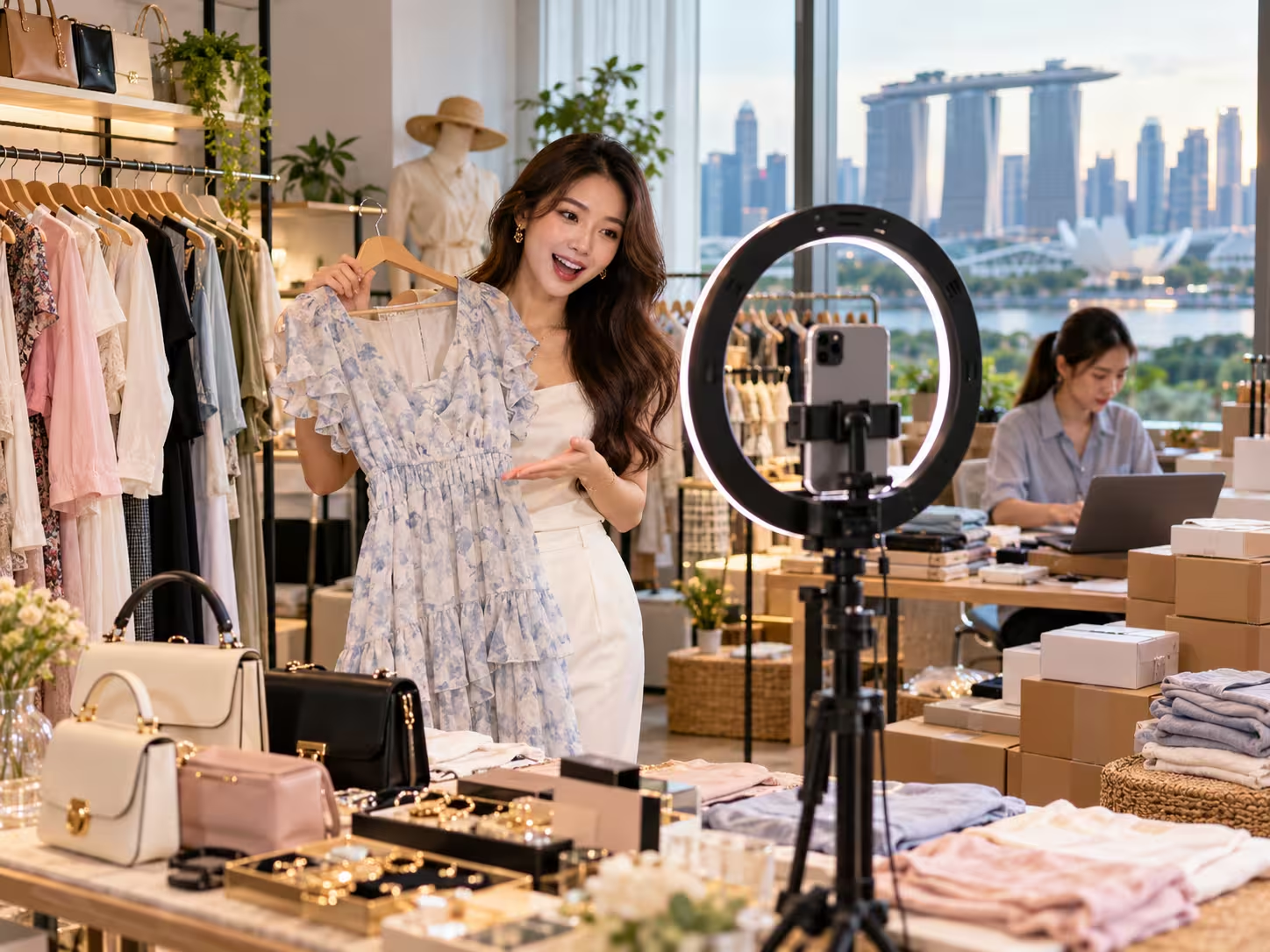
The distribution model is equally instructive. Rather than relying solely on wholesale or franchise partners, Chinese labels are using cross-border livestreaming to explain fabric texture, the cultural meaning of patterns and styling logic in real time. A 14-hour livestream cited by Chinese state media generated 210,000 yuan (about US$29,500) in sales, while the same brand accumulated a repeat-purchase base in Singapore. The livestream format solves a trust problem: Singaporean shoppers cannot touch the fabric through a screen, so hosts act as cultural and material interpreters. That layer of explanation—why a particular collar sits a certain way, how a print references a specific regional craft—turns a transaction into a learning moment. It also gives brands immediate feedback on fit and preference, compressing the design iteration cycle from seasons to weeks.
The Multicultural Affinity Factor
Singapore’s consumer response is not driven by a generic “China fever”. The local Chinese community provides a baseline of aesthetic familiarity, but younger buyers are also arriving through Chinese television dramas, social media content and travel experiences that normalise contemporary Chinese style as part of a broader Asian pop-cultural vocabulary. At the same time, Malay and Indian consumers are engaging with the category selectively—drawn to the clean lines and fabric quality rather than the ethnic signalling. That selectivity matters. It forces brands to separate “Chinese aesthetics” from “Chinese costume”, positioning the product as modern womenswear with an Eastern design lineage rather than as heritage wear for festivals.
What the Mall Data Suggests About Staying Power
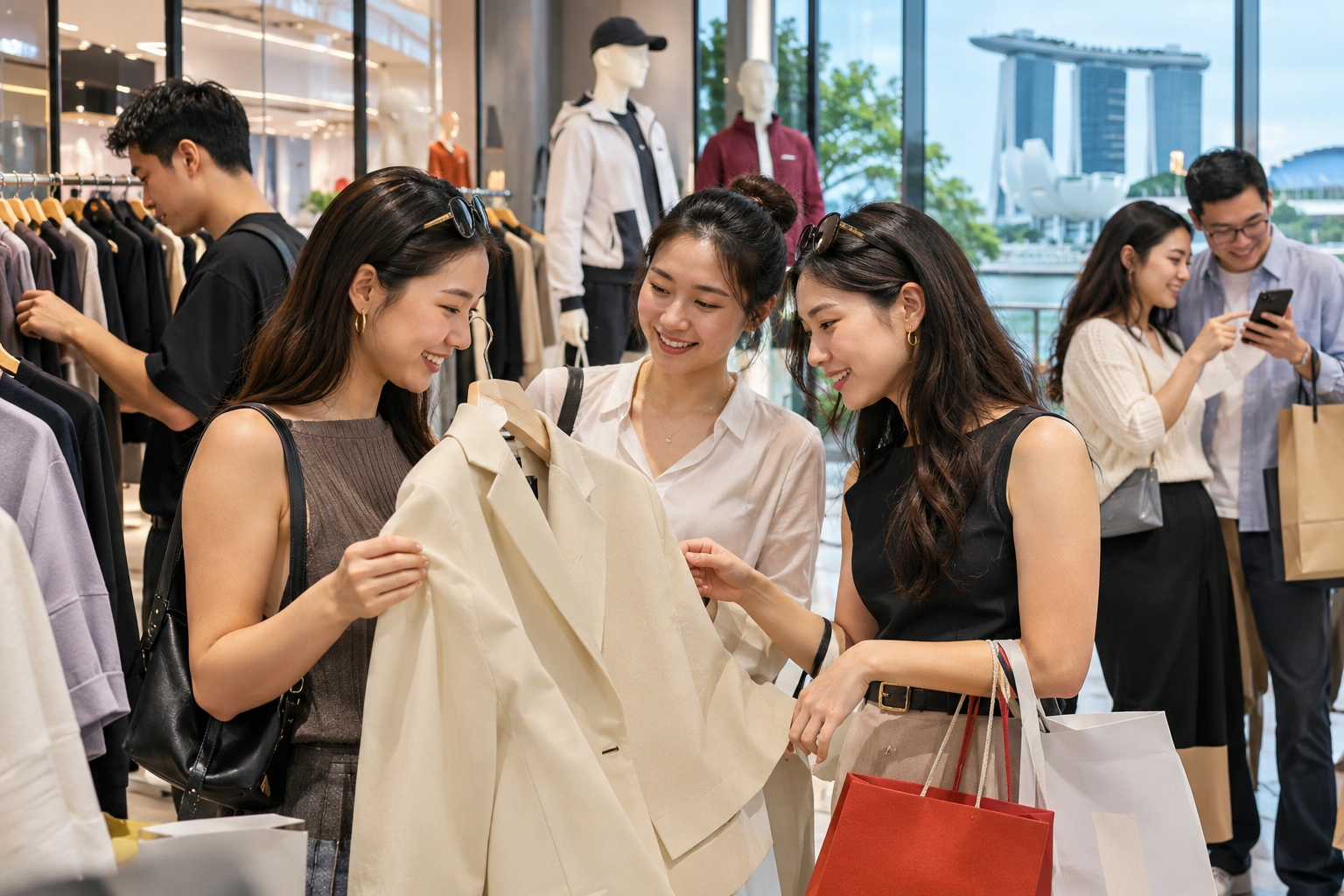
The broader retail footprint supports the view that this is not a pop-up phenomenon. A survey of 26 Singapore malls found that Chinese brand tenants rose from 122 in 2023 to 254 in 2026—an increase of 132 brands—while the absolute number of local brand tenants also grew, from 3,260 to 3,366. Chinese brands are not displacing local retail; they are occupying newly created or reconfigured space, often in mid-tier malls where landlords are seeking differentiated concepts. For fashion specifically, the entry of labels such as Edition and Mo&Co into Raffles City signals that the category is moving from online-only curiosity to physical retail credibility. The next test is whether these brands can build repeat footfall beyond the opening-month buzz—and whether their localisation goes deeper than fabric weight and sleeve length.