Why Singapore Is Becoming a Model for Sustainable Urban Tourism
Singapore is often seen as a futuristic city of skyscrapers, luxury malls, and world-class airports. But in 2026, one of its strongest tourism stories is not only about modernity—it is about sustainability. The city-state is increasingly positioning itself as a destination where visitors can enjoy nature, culture, and innovation without ignoring environmental responsibility.
A key reference for this direction is the official Singapore Green Plan 2030, a national movement that outlines the country’s long-term sustainability goals. For travelers, this matters because many public spaces, tourism districts, and nature attractions now reflect the same green agenda: cleaner mobility, biodiversity protection, energy efficiency, and better use of urban land.
Gardens by the Bay: Sustainability Behind the Spectacle
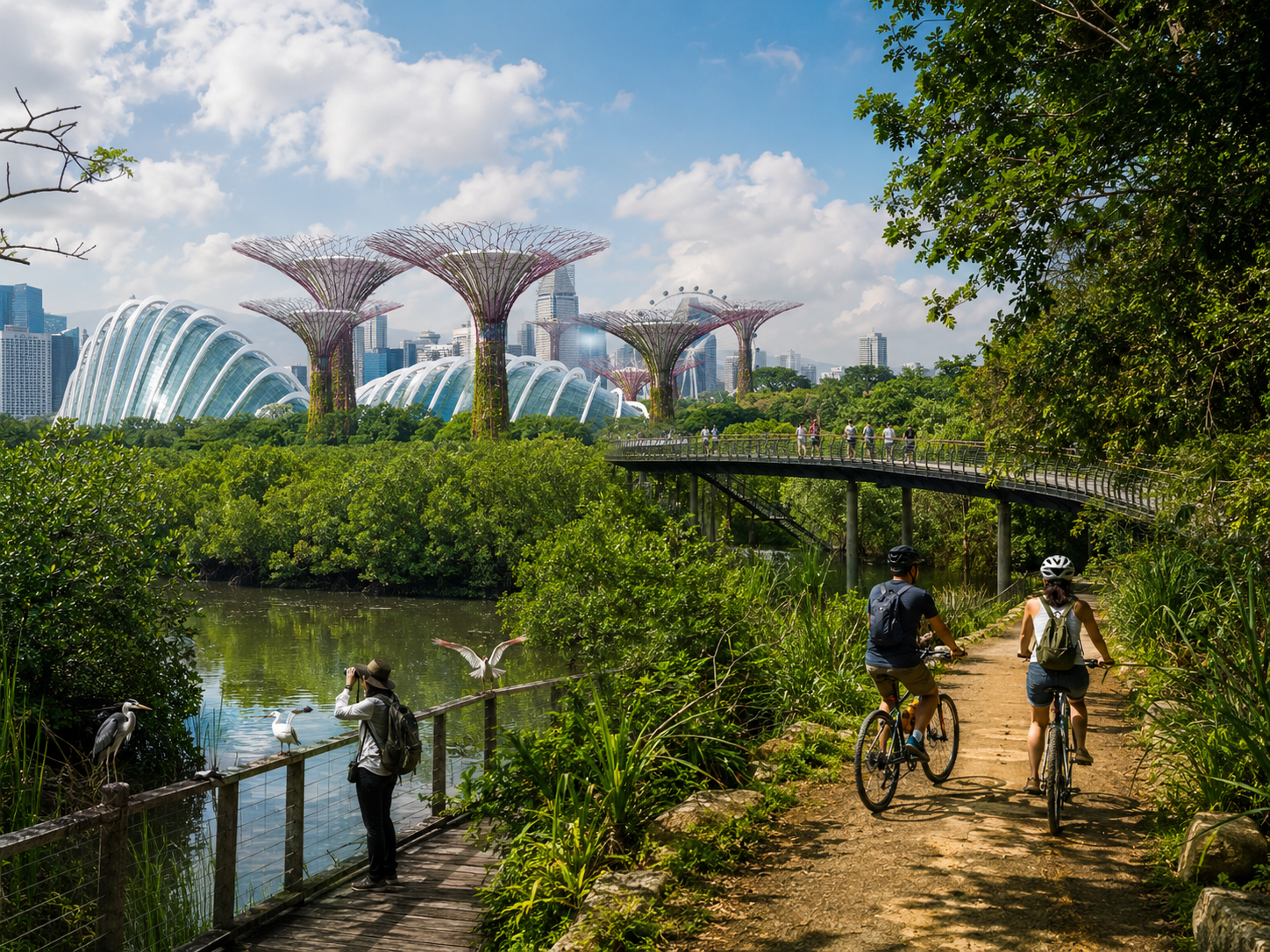
Gardens by the Bay remains one of Singapore’s most iconic attractions, but beyond the Supertrees and cooled conservatories, it also offers a strong example of environmental design. The attraction uses horticultural technology, water management systems, and climate-controlled spaces to educate visitors about plant diversity and conservation.
What Makes It Worth Visiting in 2026
For eco-conscious tourists, Gardens by the Bay is more than a photo stop. It shows how a dense city can build green public spaces that are educational, accessible, and economically valuable. Visitors can explore the Flower Dome, Cloud Forest, and outdoor gardens while learning how urban landscapes can support biodiversity.
Pulau Ubin and Chek Jawa: Singapore’s Rural Ecotourism Escape
Pulau Ubin offers a very different side of Singapore. Instead of polished city boulevards, visitors find rustic trails, mangroves, kampong-style scenery, and coastal ecosystems. Chek Jawa Wetlands is especially important because it brings together several habitats in one area, including mangroves, seagrass lagoons, and coastal forest.
Travelers should visit responsibly by staying on marked paths, avoiding wildlife disturbance, and limiting single-use plastics. The attraction is a reminder that sustainable tourism is not only about advanced technology; it is also about protecting fragile natural spaces from overuse.
Sungei Buloh Wetland Reserve: A Living Classroom for Biodiversity
Sungei Buloh Wetland Reserve is one of the best places in Singapore for birdwatching and nature education. Migratory birds, monitor lizards, mudskippers, and mangrove species make it a valuable stop for visitors who want a quieter, more ecological experience.
A Real-World Travel Shift
In recent years, more travelers have sought slower, nature-based itineraries instead of packed shopping schedules. Sungei Buloh fits this shift well. It encourages observation, patience, and respect for natural rhythms—qualities that are central to responsible travel.
Rail Corridor and Southern Ridges: Green Mobility in Action
Singapore’s Rail Corridor and Southern Ridges show how old infrastructure and urban edges can become recreational green routes. These areas allow travelers to walk through different neighborhoods, forested paths, and elevated bridges without relying heavily on cars.
For visitors in 2026, the appeal is practical: a greener itinerary can also be affordable, healthy, and immersive. By using public transport and walking routes, tourists reduce emissions while seeing more of local Singapore.