
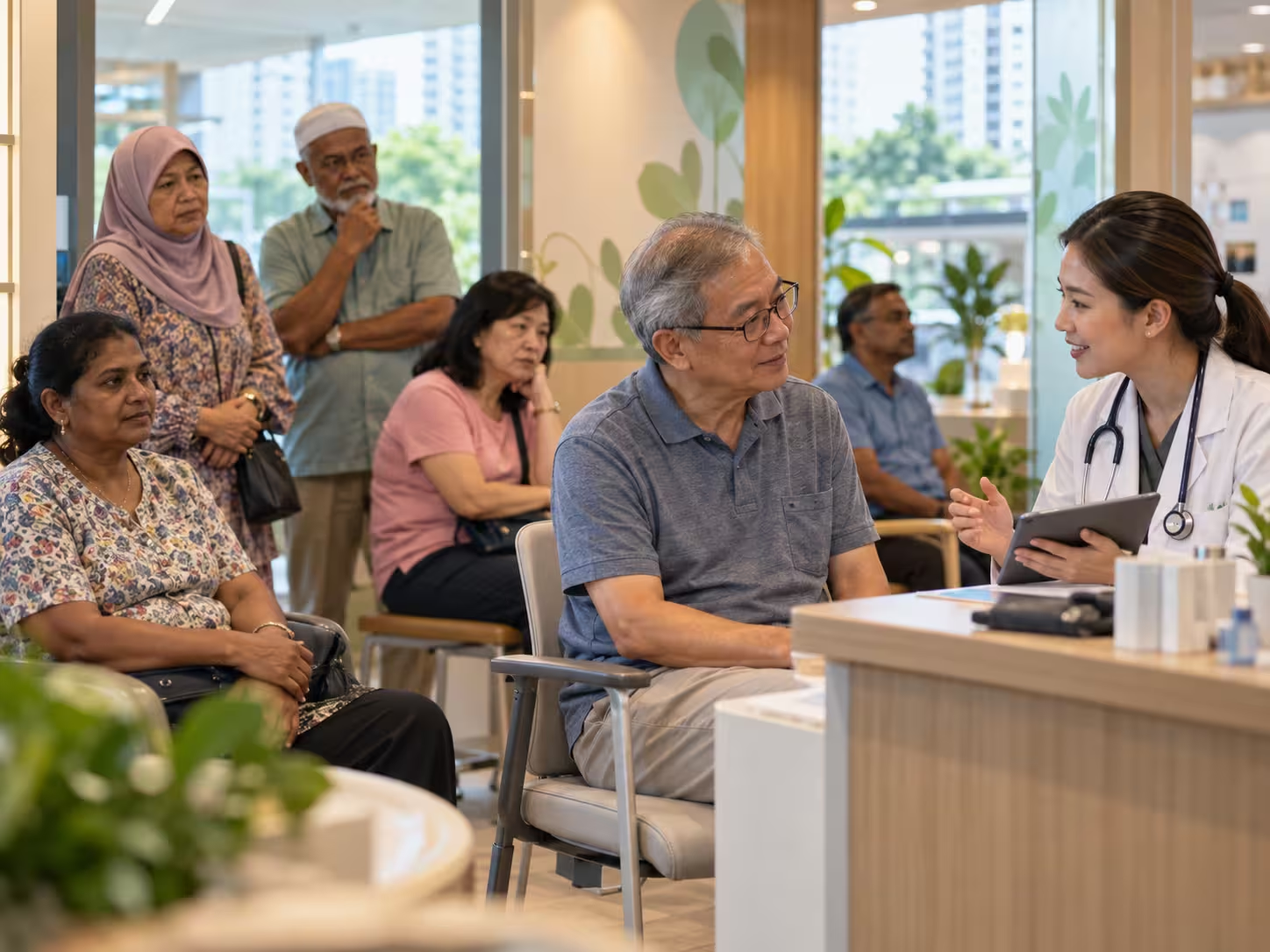
The Promise and the Gap
Singapore’s Healthier SG initiative, launched in July 2023, was designed as a transformative shift from reactive episodic care to proactive, relationship-based primary care. The programme encourages residents aged 40 and above to enrol with a chosen family doctor under the “One Resident, One Family Doctor” model, with more than 1.4 million residents enrolled at over 1,100 primary care clinics by April 2026. Yet beneath these impressive enrolment figures lies a troubling reality: ethnic disparities persist at every stage of engagement, from awareness to actual screening completion.
The Data Behind the Disparity
A landmark study published in the International Journal for Equity in Health in September 2026 analysed data from 3,899 Singapore residents aged 40 and above, revealing stark patterns. Half of all respondents (50.5%) were completely unaware of Healthier SG, while only 36.1% had enrolled or completed at least one screening. More concerning, the study found that Indian respondents showed lower enrolment rates even after socio-economic adjustment, while Malay respondents demonstrated higher odds of awareness without subsequent enrolment — a pattern suggesting that knowledge alone does not translate into action.
The research, which applied Andersen’s Behavioural Model of Health Services Utilisation, identified that older age, higher education, retirement status, and higher housing levels were all associated with greater odds of enrolment and screening. These findings expose a fundamental flaw in voluntary empanelment models: without deliberate equity-focused implementation, they risk reproducing existing social inequalities rather than eliminating them.
Cultural Barriers Beyond Cost
While Singapore’s healthcare financing system — comprising subsidies, MediSave, and MediShield Life — has achieved one of the highest Universal Health Coverage scores globally, with a rating above 80 according to the WHO UHC report, financial accessibility alone has proven insufficient. The persistence of ethnic disparities despite universal eligibility and subsidised preventive services suggests that cultural, linguistic, and trust-related barriers play equally significant roles.
Community leaders within the Malay/Muslim community have pointed to the lack of Malay and Tamil language interpreter services in healthcare settings as a persistent obstacle. Despite Malay and Tamil being two of Singapore’s four official languages, the availability of interpretation services remains inconsistent, creating communication gaps that disproportionately affect elderly patients from minority communities.
Targeted Outreach as a Path Forward
The Singapore government has begun recognising these gaps. The M³+ initiative, established in March 2023, designated community health as its fifth focus area, with the explicit aim of empowering the Malay/Muslim community to take charge of their health. Through partnerships with the Health Promotion Board and Ministry of Health, M³+@Towns coordinates outreach efforts specifically targeting Malay/Muslim seniors for Healthier SG enrolment.
The Jaga Kesihatan, Jaga Ummah network, which grew from just five mosques in 2017 to over 190 partners by 2026, represents a community-based approach that meets residents where they are — both physically and culturally. Such initiatives demonstrate that equitable engagement requires not merely the elimination of cost barriers but also targeted outreach, streamlined enrolment processes, and culturally responsive communication strategies.
For policymakers, the lesson is clear: universal programmes require targeted implementation. As Singapore transitions to super-aged status with 21% of its population aged 65 and above, the cost of inaction will only grow. Longitudinal research is now needed to assess whether these early engagement gaps translate into longer-term health disparities — and whether community-driven interventions can meaningfully close them.