A Small Market With an International Mindset
Singapore does not have the domestic audience size of China, India, Japan, or Indonesia. However, this limitation has encouraged its animation companies to think internationally from the beginning of every project.
Rather than producing content exclusively for local television, many Singapore studios develop characters, visual styles, and story concepts that can travel across borders. English-language production capabilities, reliable digital infrastructure, strong intellectual property protection, and access to Southeast Asian markets have helped the city-state position itself as a regional creative hub.
The result is an animation ecosystem that often evaluates a project not only as a television series, but also as a long-term intellectual property asset.
Local Studios Are Building Exportable Brands
One Animation provides a prominent example through Oddbods, a dialogue-light comedy series featuring colorful characters and physical humor. The limited use of spoken language makes the program easier to distribute internationally because fewer localization changes are required.
The franchise demonstrates an important commercial principle: Singaporean animation can compete globally when its concept is culturally accessible, visually recognizable, and flexible across multiple platforms.
Studios such as Omens Studios and Tiny Island Productions have followed similarly international strategies. Their productions have reached audiences through broadcasters, streaming services, educational platforms, and digital video channels.
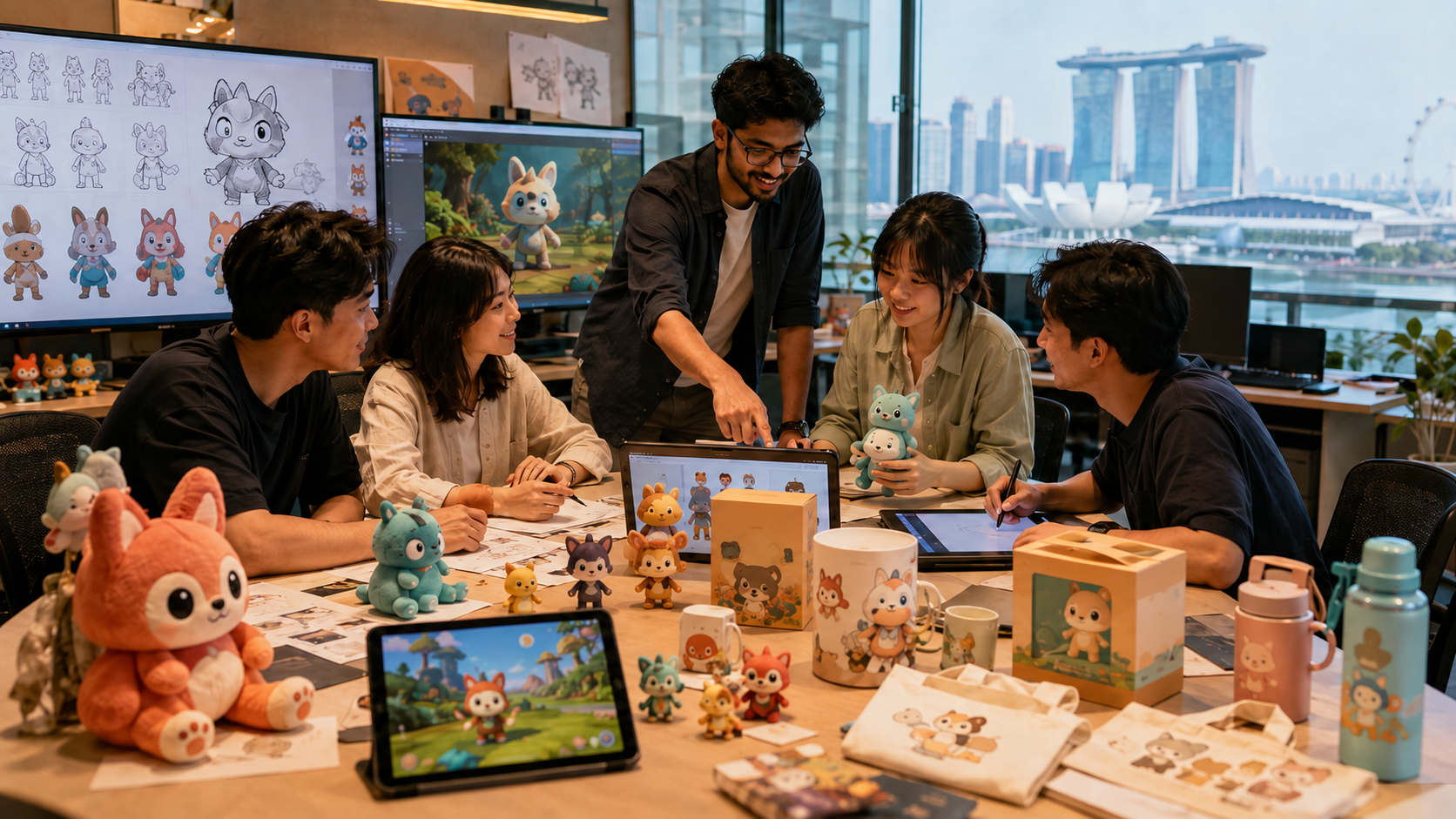
These companies are not simply selling completed episodes. They are creating properties that can generate licensing, publishing, advertising, merchandise, and interactive-media opportunities.
Government Support Strengthens Industry Development
Singapore’s animation sector benefits from a broader national strategy to develop media and digital industries. The Infocomm Media Development Authority supports industry capabilities, talent development, international market access, and content production.
Information about Singapore’s media development initiatives is available through the official IMDA Media Industry portal.
Public support can reduce some of the financial risks faced by animation producers, especially during development and international expansion. However, funding alone does not guarantee commercial success. Studios must still demonstrate audience demand, distribution potential, production discipline, and ownership of valuable intellectual property.
Technology Is Changing the Production Pipeline
Singapore studios are increasingly adopting real-time animation, virtual production, cloud-based collaboration, artificial intelligence-assisted workflows, and more efficient rendering systems.
These technologies can shorten production schedules and enable smaller creative teams to manage larger projects. Cloud collaboration also allows Singaporean producers to work with artists, writers, and technical specialists in neighboring countries while maintaining centralized creative control.
Artificial intelligence presents both opportunities and concerns. It may assist with repetitive production tasks, but studios must protect original artwork, employment standards, confidential materials, and ownership rights.
Southeast Asia Offers a Strategic Growth Market
Singapore’s location provides direct access to one of the world’s most culturally diverse regions. Southeast Asia contains young, mobile-first audiences with increasing demand for localized entertainment.
Singaporean studios can act as bridges between international investors and regional creators. They understand global production standards while remaining connected to Asian storytelling traditions and consumer behavior.
The strongest opportunities may emerge from projects that combine universal themes with authentic Southeast Asian environments, myths, family relationships, humor, and social experiences.
Singapore’s animation industry is unlikely to compete through production volume alone. Its advantage lies in creative development, intellectual property management, technological efficiency, and international partnerships. Studios that successfully combine these strengths can transform locally developed ideas into global entertainment businesses.