A Theatre Scene Built on Contrasts
Singapore’s theatre landscape in 2026 is best understood through contrast. Large-scale international productions can share the cultural calendar with intimate local plays, experimental works and performances rooted in Asian history. English-language drama exists alongside productions shaped by Mandarin, Malay, Tamil and other linguistic traditions.
This variety gives theatre in Singapore a character that differs from older stage capitals. The city does not depend on one dominant district or one theatrical tradition. Instead, its identity is created by the interaction between major institutions, independent companies, festivals, educational programmes and audiences with international backgrounds.
For visitors, this means a theatre trip can offer much more than an evening of entertainment. A production may open a window into questions of migration, family, language, housing, social expectations or Singapore’s changing place in Asia.
Landmark Venues Remain Essential to the Experience
At the centre of the performing arts ecosystem is Esplanade – Theatres on the Bay. Its distinctive architecture has become part of Singapore’s visual identity, but its importance extends beyond its appearance. The complex provides space for theatre, music, dance, festivals and multidisciplinary work.
Audiences planning a cultural visit should consult the official Esplanade programme and venue website for current listings and performance information. Because theatre schedules can change throughout the year, checking the official source is more reliable than depending only on older travel guides.
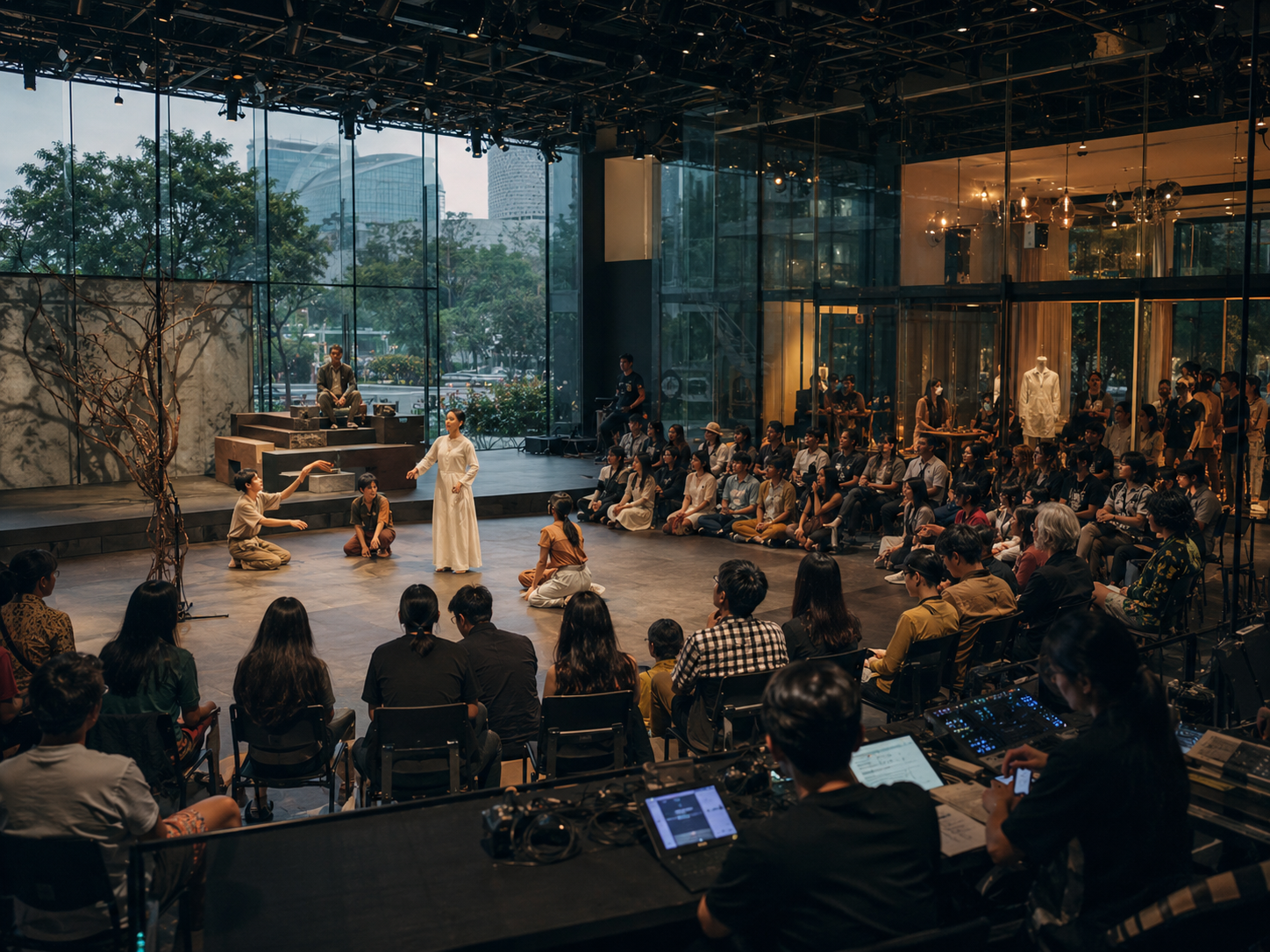
Yet the story of Singapore theatre goes far beyond one landmark building. Smaller performance spaces often provide the environment in which new writing and unconventional ideas can develop. These venues allow directors, actors and playwrights to work with subjects that may require a more intimate relationship between performer and audience.
Why Local Storytelling Has Greater Cultural Value
One of the strongest reasons to follow Singapore theatre is the opportunity to encounter stories that may not receive the same depth in conventional tourism coverage.
The Stage as a Mirror of Everyday Singapore
Local theatre can explore the pressures beneath Singapore’s polished international image. Family relationships, generational differences, education, work, identity and cultural memory can become dramatic material. The result is a form of storytelling that helps audiences look beyond architecture and attractions.
This is especially relevant in 2026, when audiences increasingly expect cultural experiences to feel specific rather than interchangeable. A production connected to its city, language or community can offer greater impact than entertainment designed to look the same in every market.
International Influences Meet Asian Perspectives
Singapore’s geographical and cultural position allows it to function as a meeting point. International artists can encounter Southeast Asian perspectives, while homegrown theatre-makers can present their work within a global arts environment.
Major festivals and touring productions contribute to this exchange, but the most interesting results often appear when international theatrical methods are adapted to local concerns. Contemporary design, multimedia, movement and unconventional staging can be used to tell stories grounded in Singaporean or regional experience.
For audiences, this creates an important question: not simply “What is playing?” but “What can this performance reveal about the city?”
What Theatre-Goers Should Watch in 2026
The most valuable way to approach Singapore theatre in 2026 is to look across different scales of production. Major venues provide technical ambition and international reach. Independent stages often offer proximity, risk and new voices. Festivals create opportunities for cross-border collaboration.
Together, these elements show why Singapore’s theatre scene deserves attention as a cultural ecosystem rather than a collection of isolated shows. The stage becomes a place where a modern city examines its past, tests new ideas and negotiates its changing identity.