The clatter of plates and the shout of orders are giving way to silent scans and app notifications across Singapore’s hawker centres. By 2026, digital ordering has moved from novelty to necessity, driven by a nationwide push to modernise the heartland dining experience.
The NEA-Led Digital Shift
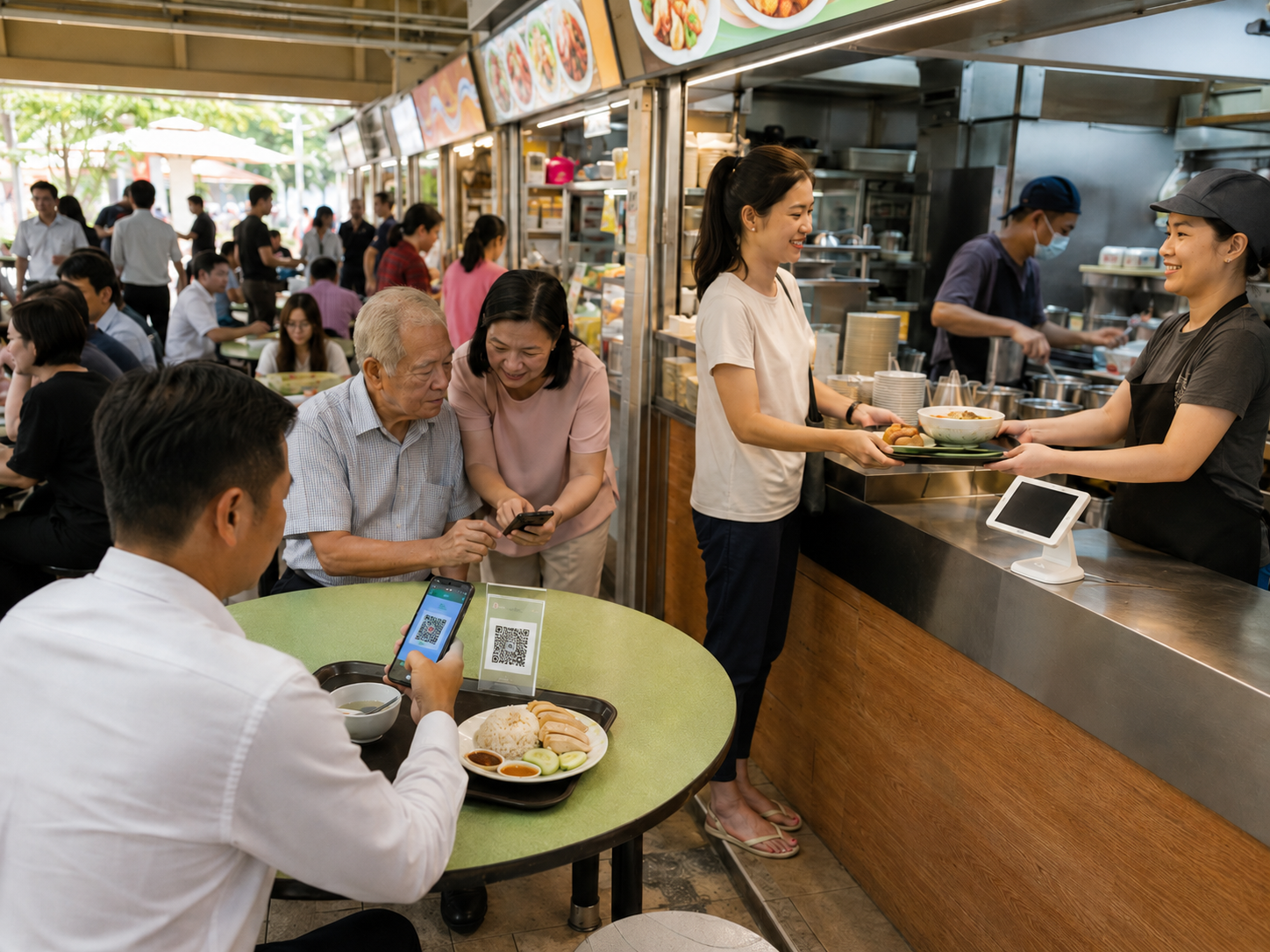
According to the National Environment Agency’s Hawker Centre Digitalisation Progress Report 2026, more than 85% of cooked food stalls now accept digital orders via QR codes or integrated food apps. The report highlights a 62% jump in cashless transactions year-on-year, with the unified SGQR code playing a central role. This single QR merges PayLah!, GrabPay, and bank apps, drastically cutting the time diners spend fumbling for cash. The NEA’s “Digital Hawker Centre Programme” co-funds stallholder onboarding and provides free connectivity, making the barrier to entry almost zero.
Real-World Impact at Maxwell Food Centre
Take Maxwell Food Centre, home to the legendary Tian Tian Chicken Rice. Stall assistant Mr. Lim shared that after installing the GrabMerchant QR ordering tablet, the queue moved 30% faster during the lunch peak. “Older customers still prefer face-to-face, but the office crowd just scans, pays, and waits for the buzzer. We’ve seen a 20% rise in daily transactions,” he said. The system automatically syncs with the kitchen display, reducing order errors and freeing staff to focus on food quality. Similar stories echo from Tiong Bahru Market, where the Ah Seng Braised Duck stall reported a 25% uplift in average spending because the digital menu prompts add-on items like braised eggs or rice upgrades.
Unified Platforms and Gamified Loyalty
Beyond standalone QR codes, multi-vendor platforms such as WhyQ and FairPrice Group’s KopiTech are aggregating hawker menus into a single marketplace. Diners can pre-order from multiple stalls, earn cross-stall loyalty points, and collect meals from a designated pickup zone. In 2026, KopiTech expanded its “Hawker Bonus” feature, where every fifth digital purchase unlocks a S$2 cashback voucher, nudging repeat visits. Data from the platform shows that stalls participating in digital loyalty programmes retain 40% more repeat customers than offline-only neighbours. This gamified approach works remarkably well in a culture that loves a good deal.
Kitchen Efficiency and Waste Reduction
The less visible but powerful benefit is inventory management. Several cloud-linked point-of-sale (POS) systems now feed real-time sales data to stallholders, predicting how many chickens to poach or how much laksa broth to prepare. This reduces end-of-day food waste, a pain point that the NEA report quantifies as a 15% reduction in organic waste among digitally-enabled stalls compared to those still relying on pen and paper. Automation is subtle but transformative: a noodle stall in Bedok Interchange Hawker Centre trimmed ingredient costs by 18% within three months of adopting a smart POS.
A Culturally Sensitive Transition
The digital push is careful not to alienate the elderly. NEA’s 2026 roadmap includes roaming “Digital Ambassadors” who assist senior patrons and stallholders, while keeping cash acceptance mandatory. This hybrid model protects inclusivity while unlocking efficiency. The result is a hawker ecosystem that feels distinctly Singaporean: high-tech yet warm, data-smart but never soulless. As QR scans outnumber cash exchanges, the hawker centre has quietly become a living lab for how tradition and technology can share a table.