The Rise of Ramen as a Mainstream Staple
A decade ago, a bowl of tonkotsu ramen was a special occasion meal in Singapore, often costing upwards of $25 at a downtown mall. By 2026, ramen has become so embedded in the local food landscape that hawker stalls and coffee shops now serve their own versions for under $10. This democratisation of Japanese noodle soup reflects a broader pattern: Japanese cuisine no longer occupies only the premium tier of Singapore’s dining scene—it has trickled into everyday eating habits.
According to a 2026 market update from the Japan External Trade Organization (JETRO Singapore), the number of Japanese-affiliated restaurants and casual eateries in Singapore grew by 12 percent year-on-year, with ramen shops leading the expansion outside the central business district. Neighbourhood malls in Jurong, Tampines, and Woodlands now host multiple ramen brands, many operated by local franchisees who have adapted broth recipes to suit Singaporean palates—less salty, slightly sweeter, and often spicier.
Hawker Stall Adaptations and Local Competition
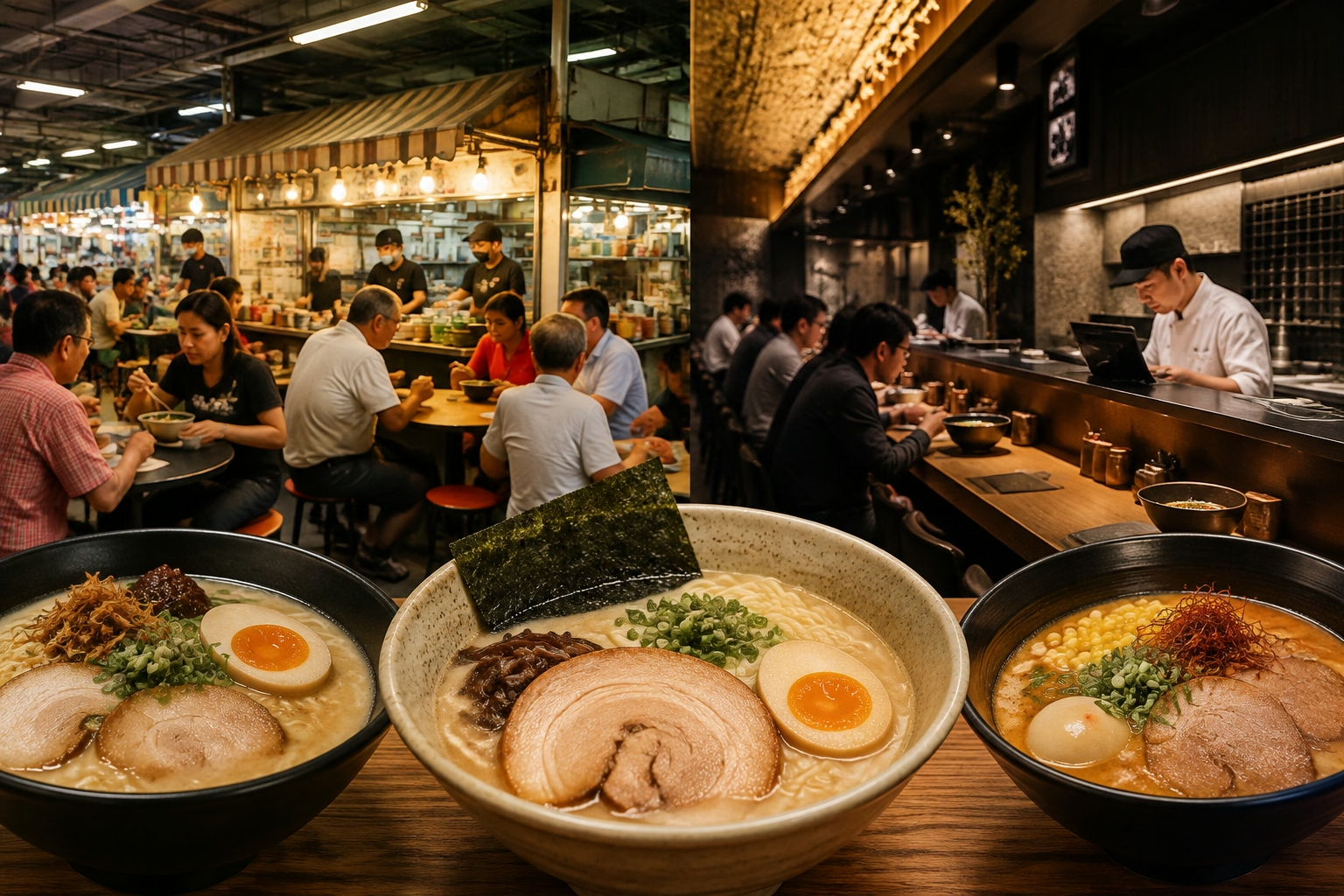
The most visible sign of ramen’s influence is its appearance in hawker centres. Stalls such as “Ah Ma Ramen” and “Kopitiam Tonkotsu” blend Japanese technique with local ingredients. Instead of imported pork bones from Kagoshima, some hawkers use locally sourced pork and add fried shallots or sambal on the side. This hybrid approach lowers costs and shortens cooking time, allowing a bowl of ramen to be sold for the same price as fishball noodles.
Local noodle operators have responded by borrowing elements from ramen. Several prawn noodle and laksa stalls now offer ajitama (marinated soft-boiled eggs) and chashu-style sliced pork as add-ons. This cross-pollination shows that the Japanese ramen wave does not simply replace local dishes—it pushes them to innovate.
Consumer Spending and Delivery Trends
The ramen boom has also shaped delivery and takeaway habits. Japanese ramen brands in Singapore now use specialised packaging that separates noodles from broth, maintaining texture during transport. Food delivery platforms report that ramen orders grew by 18 percent in the first quarter of 2026, making it one of the top three Japanese dishes ordered online, alongside sushi and donburi.
At the premium end, omakase-style ramen counters with limited seating and seasonal broths have emerged in Tanjong Pagar and Bugis. These venues charge between $38 and $68 per bowl, targeting diners who treat ramen as a tasting experience rather than fast food. This bifurcation—cheap hawker ramen versus high-end artisan ramen—mirrors Singapore’s broader food market, where Japanese cuisine spans every price segment.