Singapore’s bakery culture has moved far beyond mass-produced white loaves. In 2026, a quiet but powerful shift is underway: premium sourdough and artisan bread have become status symbols, daily staples, and social media magnets all at once. Independent micro bakeries are leading this transformation, using long fermentation, stone-milled flour, and regionally inspired grains to justify price points that would have seemed impossible a decade ago.
The Rise of Micro Bakeries and Slow Fermentation
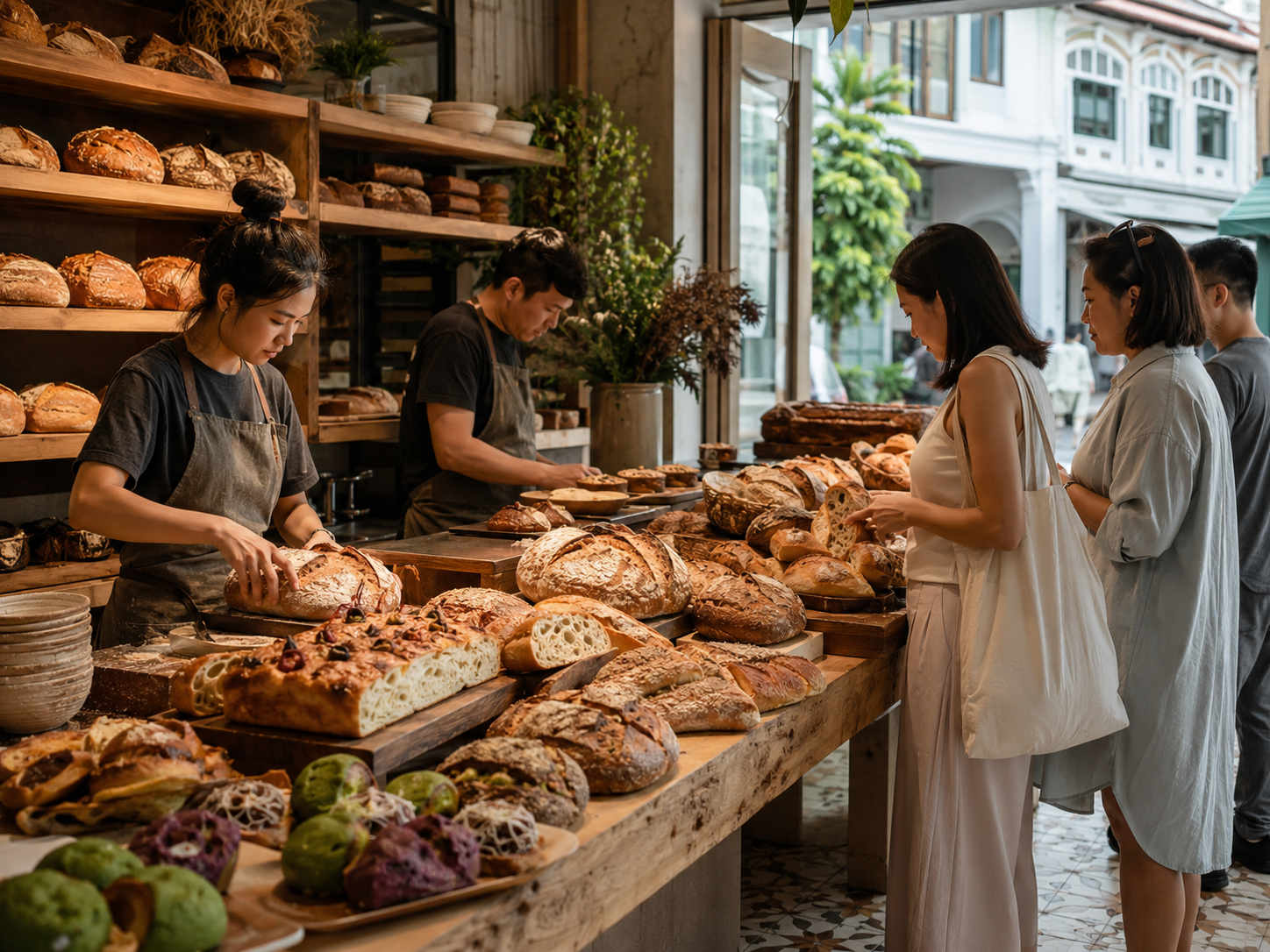
The new wave of Singaporean bakeries is small, focused, and obsessive. Rather than offering fifty products, shops such as Baker’s Bench Bakery and Mother Dough focus on a tight menu of sourdough loaves, focaccia, and country breads. Long fermentation times—often 24 to 48 hours—develop deeper flavour and better digestibility. This process requires skilled bakers and careful temperature control in Singapore’s humid climate, which makes the final product more expensive but also more distinctive.
Why Consumers Pay a Premium
Singaporean consumers increasingly treat bread as an experience rather than a commodity. They ask about flour origin, hydration levels, and fermentation schedules. This education has been driven by Instagram and TikTok, where bakers share crumb shots and time-lapse videos of dough rising. A sourdough loaf priced at SGD 12 to SGD 18 is now common, and it sells out quickly. The premium is not only about taste; it is about trust, craft, and a visible connection between baker and product.
Local Ingredients and the “Singaporean Loaf”
Another interesting development is the use of Southeast Asian ingredients in artisan bread. Bakers are experimenting with purple sweet potato, coconut sugar, pandan, and local honey. These flavours give Singapore’s artisan bread a distinct identity, separating it from generic European-style loaves. At the same time, some bakeries have started working with regional flour mills to reduce reliance on imported flour, a move that appeals to sustainability-minded customers.
Data Points and Market Outlook
According to Statista’s Bread & Bakery Products market outlook for Singapore, accessed in January 2026, the segment is expected to maintain steady growth as premiumization drives higher average spending per item (Statista Singapore Bread & Bakery Products Outlook). This trend is visible in neighbourhoods such as Tiong Bahru, Jalan Besar, and Katong, where new micro bakeries continue to open despite rising rents. Their survival depends on a loyal customer base that values quality over convenience.
Digital Communities Fuel Demand
Online communities have become an essential part of the premium bakery ecosystem. Telegram groups, Instagram broadcast channels, and local food forums alert customers when a new batch is released. Some bakeries use pre-order systems that sell out within minutes. This digital layer adds urgency and exclusivity, making bread-buying feel like a cultural event. In 2026, a bakery’s online presence is just as important as its oven.
As the city’s artisan bread scene matures, the line between bakery and specialty food brand continues to blur.