
The Policy That Put Shorts in the Boardroom
In August 2026, board members of the Singapore Green Building Council (SGBC) did something that would have been unthinkable in a corporate boardroom just five years earlier: they showed up to a meeting in short-sleeved polo shirts and shorts. It was not a casual Friday stunt. It was a deliberate, policy-driven statement that professional credibility no longer requires a blazer.
The meeting followed the launch of the Go 25 Climate Appropriate Attire Guide (Office Edition) on 30 July 2026, a landmark document developed by SGBC in collaboration with the Singapore Fashion Council. The guide emerged from the broader Go 25 national movement, launched in May 2025, which encourages organisations to set indoor cooling at 25°C—a temperature calibration designed to slash energy consumption without sacrificing occupant comfort. Since its inception, more than 200 private organisations and nearly all public sector premises have pledged participation, covering over 17 million square metres of gross floor area.
Why Fabric Choice Became a Corporate Priority
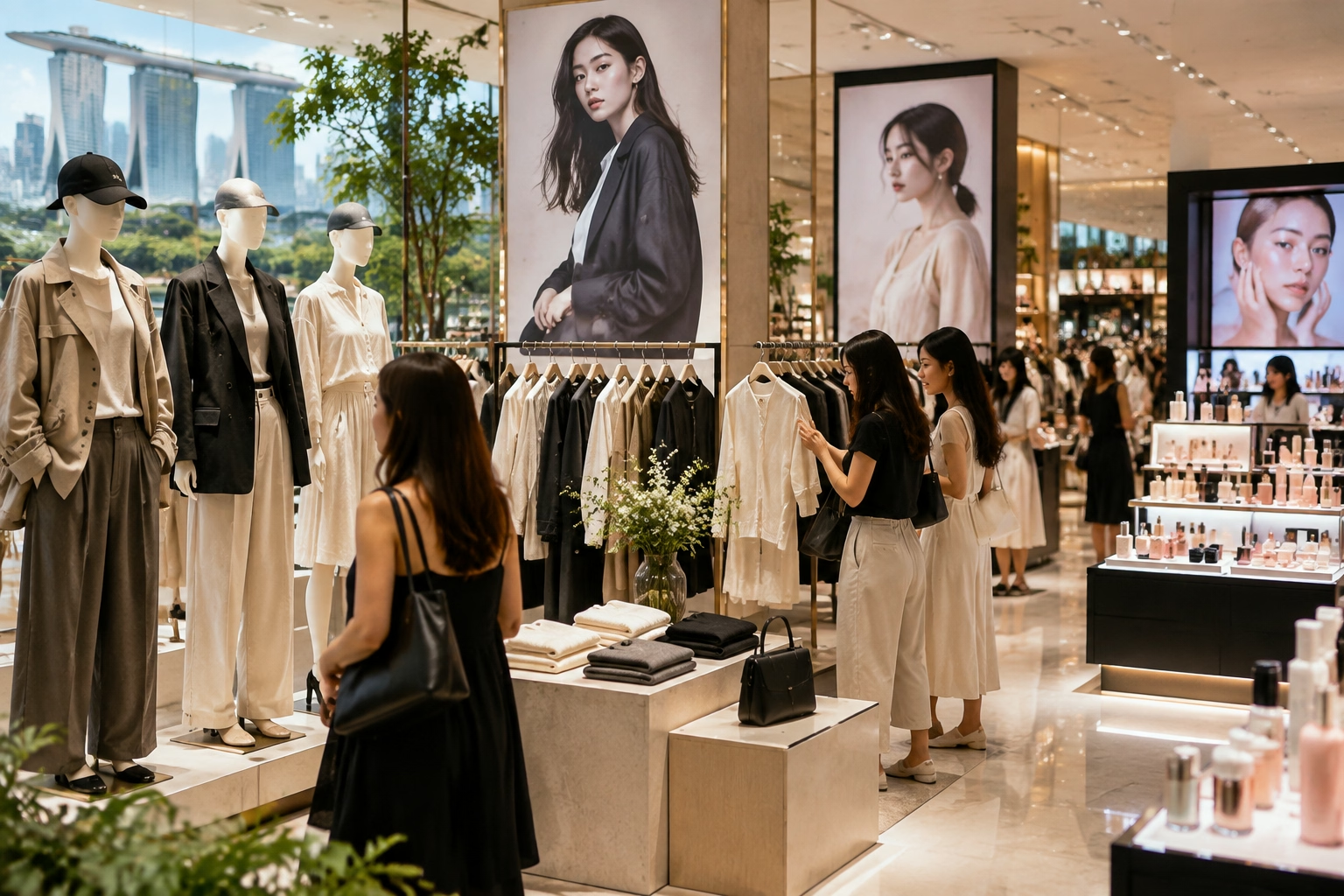
The attire guide is not a style manual in the traditional sense. It is an energy policy document disguised as fashion advice. The logic is straightforward: if office temperatures rise from the conventional 22°C to 25°C, employees must wear lighter, more breathable clothing to remain comfortable and productive. The guide recommends avoiding heavy, dense fabrics, non-breathable linings, and dark colours that absorb heat. Instead, it points workers toward lightweight cotton, linen, and Tencel blends, along with relaxed yet polished silhouettes that preserve a professional appearance while reducing the need for aggressive air-conditioning.
The environmental arithmetic is compelling. Buildings account for over 20% of Singapore’s carbon emissions, with air-conditioning as a key contributor. The SGBC board’s decision to wear shorts was not merely symbolic—it was an operational demonstration that comfort and climate responsibility can coexist within a single corporate culture.
The Real-World Test Case: City Developments Limited
The most instructive example of this shift comes from City Developments Limited (CDL), a major property developer whose representatives sit on the SGBC board. CDL had already begun implementing business-casual dress practices alongside hybrid cooling fans that maintain room temperatures at 25°C. An internal survey revealed that 85% of employees still felt comfortable under these conditions. More significantly, the company reported a reduction in cooling load of approximately 20%, translating to annual savings of over 14,000 kilogrammes of carbon dioxide equivalent (kgCO₂e).
This is not sustainability rhetoric. It is measurable operational data that validates the attire guide’s core premise: what employees wear directly influences how much energy a building consumes.
The Leadership Signal: Legitimising Comfort
SGBC president Allen Ang has been explicit about the cultural dimension of this shift. “Professionalism is not determined by whether you wear a suit and tie,” he stated, arguing that professional image depends on behaviour, work quality, and respect for others—not on the presence of a blazer. For companies hesitant to relax dress codes for fear of eroding professional standards, Ang recommends a phased approach: designate specific days for lighter business attire, grant employees greater flexibility, and have management lead by example.
The Go 25 movement has effectively transformed what was once a personal style choice into a collective climate action. When a board of directors wears shorts to a formal meeting, it signals that the old equation—formality equals credibility—has been permanently rebalanced.