The Polarisation Paradox Reshaping Singapore’s Shoe Retail Landscape
Singapore’s footwear market is not merely growing—it is fracturing. According to Euromonitor International’s February 2026 report, the retail volume of footwear grew by 2% to 22.53 million units in 2025, yet this headline figure masks a profound structural shift. The market is experiencing what analysts term “polarisation,” where budget and premium segments are outpacing the mid-market, driven by contrasting consumer behaviours across income groups.
This fragmentation has created an unexpected opportunity for local brands. While global giants like Nike and adidas maintain their dominance—holding 13% and 12% market share respectively—the real story lies beneath the surface. Singaporean consumers are increasingly seeking footwear that reflects personal style, lifestyle values, and a sense of individuality. The strategy report from StrategyHelix projects the market will reach USD 1,363.7 million by 2031, expanding at a CAGR of 5.2%, with localisation and identity-led consumption emerging as defining features.
The Homegrown Advantage: Agility, Storytelling, and Cultural Relevance
Local brands are leveraging their inherent advantages to capture consumer imagination. Sunnystep, a Singaporean footwear label founded by Mao Ting, has expanded to 17 outlets across Singapore, Malaysia, and Indonesia—a remarkable trajectory for a brand born from personal adversity. The founder’s journey from chronic spinal pain to designing comfortable, supportive footwear resonates with consumers seeking authenticity and purpose-driven products.
This narrative-driven approach is not isolated. Brands like Anothersole have built their identity around social impact, donating 10% of profits to organisations including World Vision Singapore and Mercy Relief, while incorporating recycled PET yarn from consumer waste into their products. In a market where consumers are “highly trend-conscious” and seek footwear that reflects “lifestyle values,” these authentic stories become powerful competitive differentiators.
The Data Behind the Shift: Why Consumers Are Choosing Local
Euromonitor’s 2026 analysis highlights that challenger brands are gaining traction through pop-up experiences and social engagement, bypassing traditional retail gatekeepers. The report notes that “immersive experiences and digital innovation reinforce physical retail appeal,” with brands like On blending flagship concepts with community engagement.
The economic backdrop supports this shift. With retail value sales reaching SGD4.8 billion in 2025 and 5% growth driven by rising disposable incomes and technological innovation, Singaporean consumers have both the means and the inclination to explore beyond established global brands. The polarisation trend means that while price-conscious consumers fuel budget footwear growth, a significant segment is willing to pay premiums for products that offer genuine differentiation—whether through comfort technology, sustainability credentials, or cultural resonance.
What the Future Holds: Personalisation as the New Battleground
As the market evolves toward 2031, the competitive imperative will shift from broad availability to sharper positioning. StrategyHelix emphasises that “products and campaigns that combine global appeal with local relevance are likely to resonate more strongly and build deeper brand loyalty”. This insight suggests that local brands need not compete on scale but on specificity—understanding Singapore’s multicultural consumer landscape and tailoring offerings accordingly.
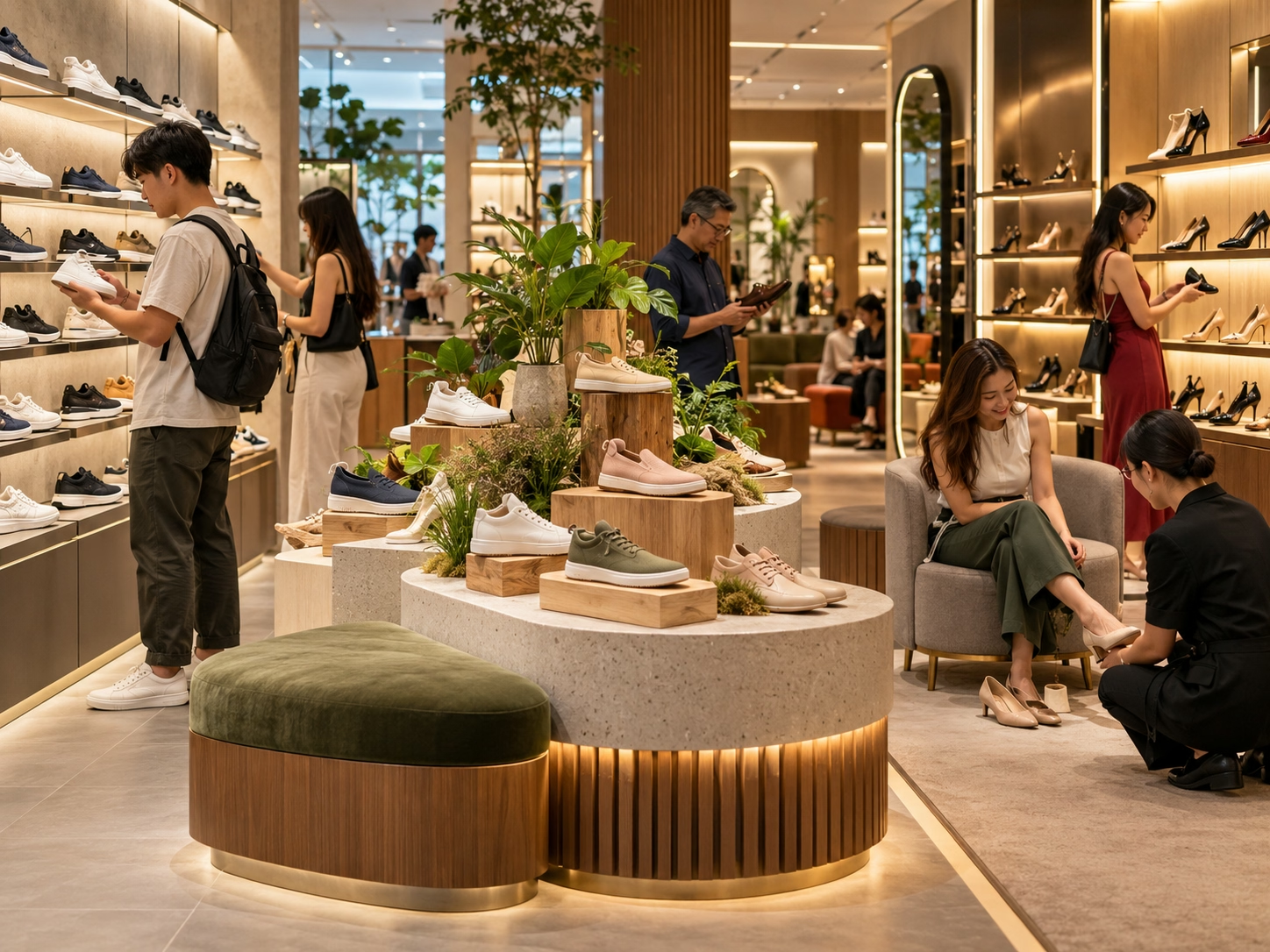
The rise of experiential retail, with interactive try-ons and tailored consultations, further levels the playing field. Local brands, unencumbered by rigid global playbooks, can pivot faster and experiment more freely. In a market where differentiation increasingly depends on how effectively a brand turns footwear into a customised and experience-led proposition, the agility of homegrown players becomes their greatest asset.