The cost crisis that opened the dance floor at 9 a.m.
Singapore’s traditional nightlife operators have spent years grappling with a familiar squeeze: rising rents, manpower shortages, and a post-pandemic consumer base that no longer views a S$100 night out as a default leisure option. The Singapore Nightlife Business Association has described the industry not as dying, but as being in transition—and that transition has a surprisingly early start time.
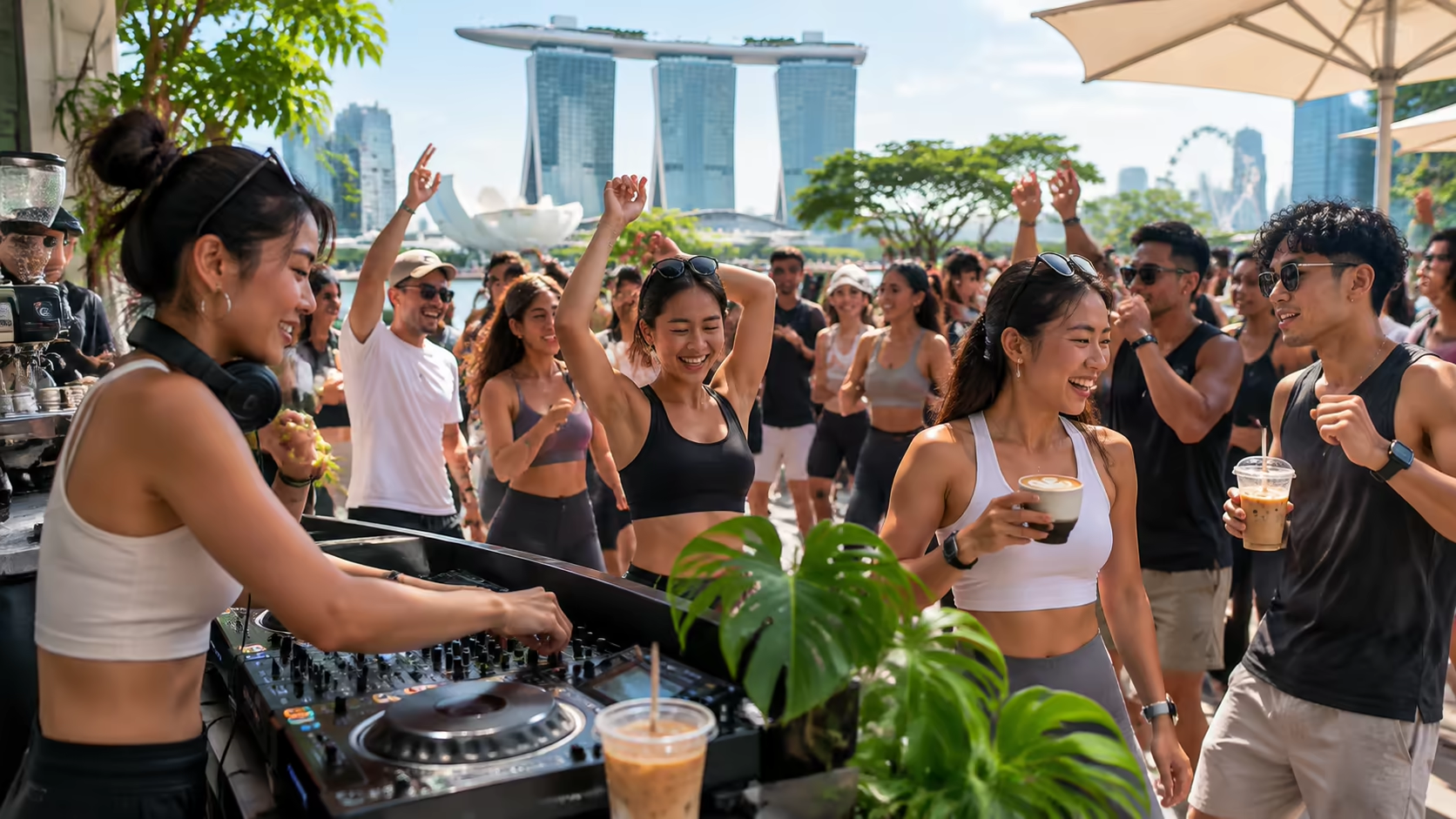
At The Breakfast Club Rave, revellers now gather as early as 9 a.m., not for a pre-game, but for the main event. Fuelled by specialty coffee rather than cocktails, the format drew over 150 people at its first morning event and has since expanded into fitness-integrated editions at venues such as SALT Fitness in Gillman Barracks. Organiser Tricia Fok frames the shift around clarity and connection: participants want to enjoy the music with “more awareness” and form “clearer, better, more meaningful connections” than the alcohol-fuelled night scene typically allows.
A lower price point, a higher frequency
The economic logic of daytime clubbing is difficult to ignore. Beans&Beats, a collective founded in 2024, prices its ticketed coffee-clubbing events at roughly S$20—about S$20 cheaper than a typical nightclub entry—while serving specialty coffee and featuring local and regional DJs. Co-founder Ethan Lee notes that the appeal is not merely affordability but scheduling: the events sit in a time slot that “doesn’t impact your sleep schedule,” removing the hidden costs of late-night transport and next-day recovery.
This cost structure changes the unit economics of a party. Without a bar reliant on high-margin alcohol sales, operators diversify revenue through brand partnerships, bean sales, and ticket bundles that include a drink. Beans&Beats has demonstrated that the model can scale: its largest event, a takeover at Funan Mall with three stages and 17 DJs, drew 5,000 attendees. For a sector where operating revenue for pubs, nightclubs, and karaoke lounges stood at just S$284.7 million in 2022—down from a peak of S$674.7 million in 2015—the daytime format offers a parallel revenue stream rather than a cannibalisation of the night.
Real estate and the “third space” opportunity
The daytime model also unlocks underutilised real estate. Cafes, rooftops, gyms, and even barbershops become temporary dance floors during hours when their core business is idle or complementary. This asset-light approach lowers overheads and allows operators to test neighbourhoods without committing to a permanent nightclub lease. The concept aligns with broader shifts in Singapore’s leisure districts, where precincts such as Clarke Quay are diversifying beyond late-night drinking into day-to-day lifestyle uses.
The People’s Association incorporated “sober clubbing” into the Woodlands Waterfront Countdown 2026, describing it as a “globally trending wellness movement” with DJ performances, mocktails, and coffee—an institutional endorsement that daytime and alcohol-free formats have moved from niche to civic programming.