Singapore has long shed its image as a sterile concrete jungle. In 2026, the island-state stands as a living laboratory for architectural innovation, where the boundaries between nature, technology, and urban living are blurred. For the modern traveler, visiting Singapore is no longer just about checking off landmarks; it is about witnessing a blueprint for the future of humanity.
The Rise of Biophilic Urbanism
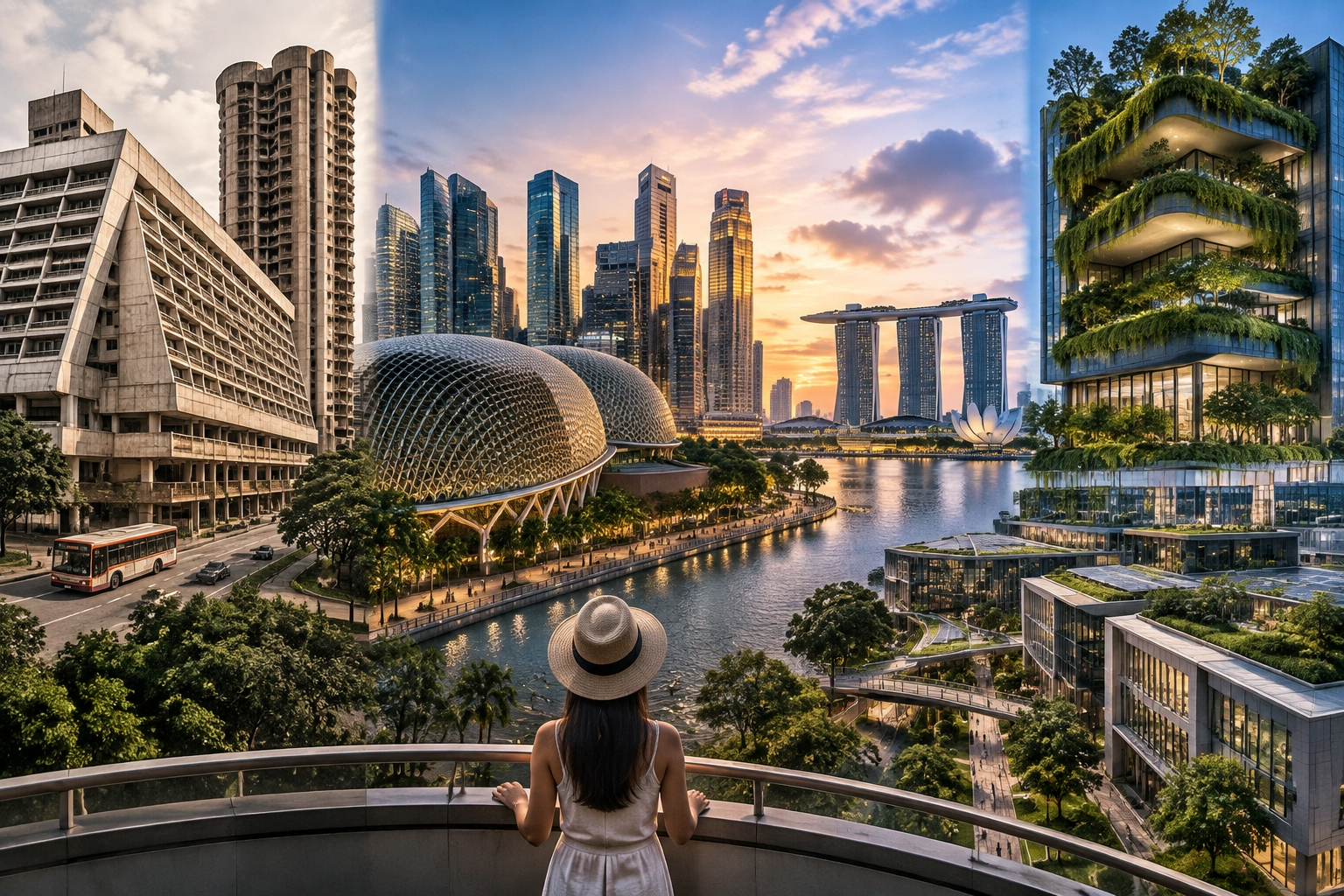
The most striking shift in Singapore’s recent architectural trajectory is the aggressive integration of nature into high-density environments. This goes beyond planting trees at ground level. The city’s skyline is now defined by vertical gardens and sky terraces that function as ecological corridors.
A prime example of this philosophy is the CapitaSpring skyscraper. Standing at 280 meters, this building is not merely an office tower but a vertical ecosystem. It features a “Green Oasis” spiraling through its core, which is open to the public. Visitors can walk through a lush tropical forest suspended hundreds of feet in the air, observing how high-rise buildings can actively combat the urban heat island effect rather than contribute to it.
Engineering the Super-Trees
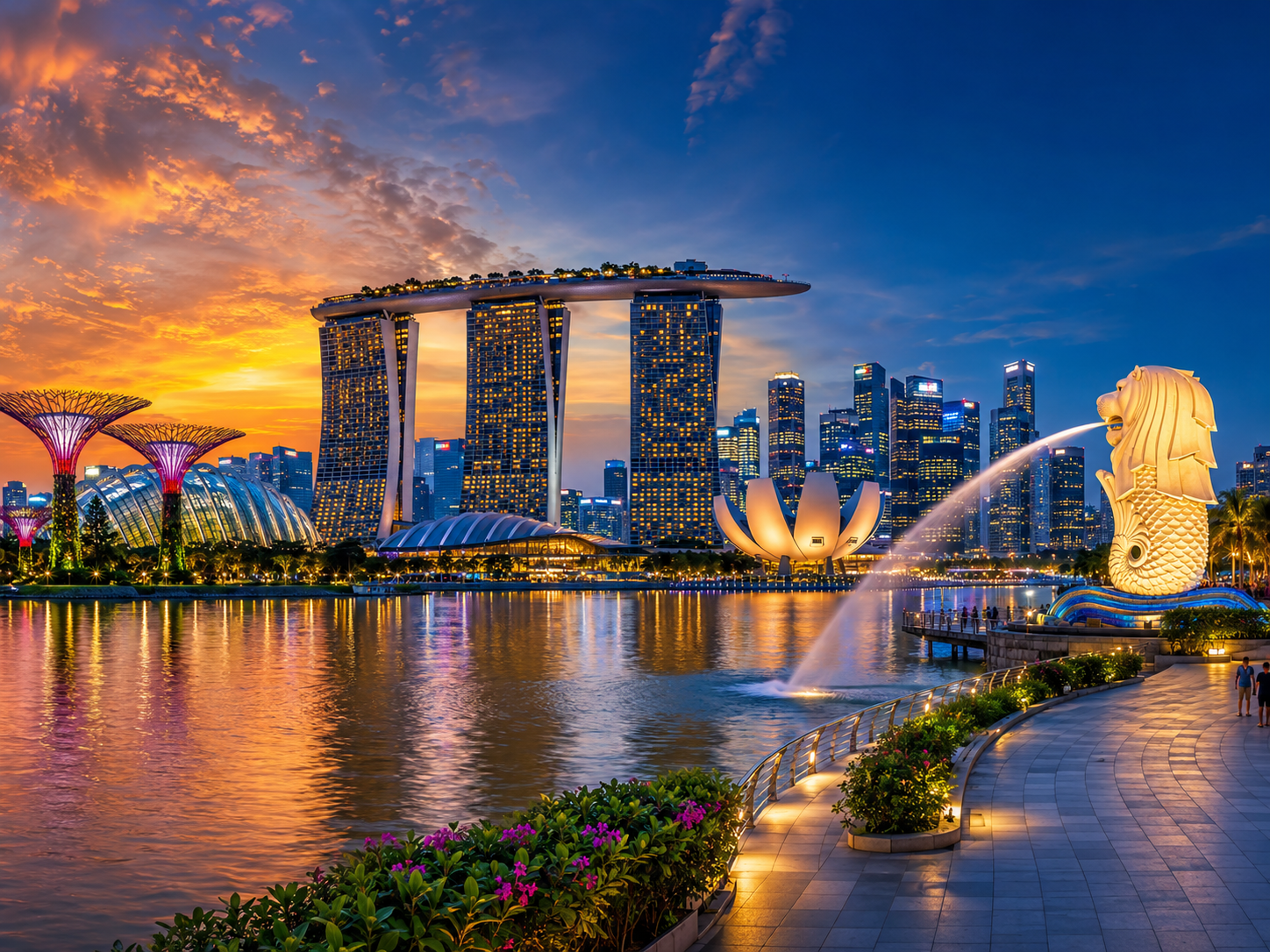
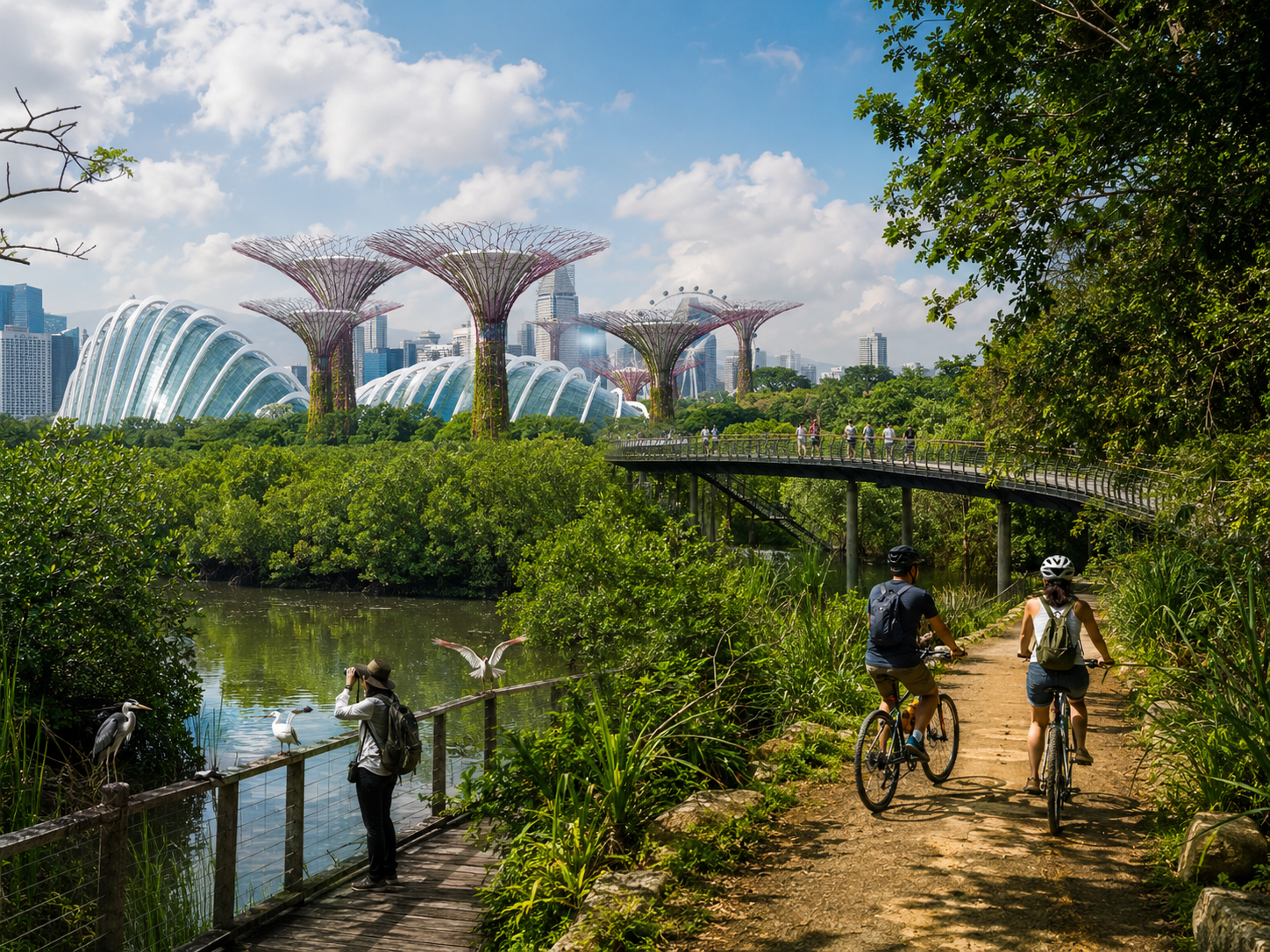
No discussion of Singapore’s modern architecture is complete without the iconic Supertree Grove at Gardens by the Bay. While often viewed as a tourist photo-op, these structures are engineering marvels. They function as vertical gardens, rainwater harvesters, and solar energy generators. The nightly light shows are not just entertainment; they are powered by the sustainable systems embedded within the structures themselves.
According to data from Singapore’s Urban Redevelopment Authority (URA) , the city has mandated that 80% of all new buildings must achieve the highest Green Mark Platinum certification by 2030. This regulatory push has turned the city into a magnet for architects looking to experiment with low-carbon materials and passive cooling designs. You can review the latest guidelines and urban design strategies on the official URA website (ura.gov.sg) to understand how policy drives this aesthetic.
The Marina Bay Effect
The Marina Bay Sands complex remains the poster child for Singapore’s architectural tourism. However, its significance has evolved. In 2026, it represents a masterclass in “integrated resort” design, where retail, hospitality, and public space coexist seamlessly. The SkyPark, which straddles three towers, is a structural anomaly that defies standard engineering logic, creating a “floating” public space that offers a 360-degree view of the city’s planned growth.
Experiential Architecture
Tourists are increasingly looking for immersive experiences rather than passive viewing. The architectural tours in Singapore have adapted accordingly. You can now take guided walks that focus on the “smell and sound” of buildings, particularly in the Marina One complex. Here, the “heart” of the building is a massive rainforest courtyard that creates a unique microclimate, lowering the ambient temperature by several degrees compared to the surrounding streets.
This shift towards sensory architecture provides a deeper layer to tourism. It transforms a simple sightseeing trip into an educational exploration of sustainability, technology, and livability. Singapore’s buildings are no longer static; they are breathing, evolving entities that tell the story of a nation determined to survive and thrive in the Anthropocene.