The Metamorphosis of a Marketing Hub
Singapore’s creative advertising landscape is undergoing a fundamental transformation. No longer content with traditional 30-second spots and static billboards, agencies and brands across the city-state are increasingly turning to entertainment-driven strategies that blur the line between advertising and content. This shift isn’t merely cosmetic—it represents a structural realignment of how brands connect with audiences in one of Asia’s most digitally saturated markets.
The numbers tell a compelling story. Singapore’s advertising market was estimated at USD 345 million in 2025 and is projected to reach USD 462 million by 2032, growing at a CAGR of 4.3% from 2026 to 2032. Meanwhile, the online advertising segment alone was valued at USD 1,265 million in 2025, with forecasts suggesting it will climb to USD 1,813 million by 2032. These figures underscore a market that is not just expanding but evolving—toward formats that prioritise engagement over interruption.
The Merlion Gets a Personality
Perhaps no campaign better illustrates this evolution than the Singapore Tourism Board’s collaboration with Scoot on the third edition of the Singapore Superfans campaign. Launched in March 2026, the initiative recast the Merlion—long relegated to the role of passive photo prop—as a self-aware, slightly mischievous protagonist urging travellers to explore beyond the obvious.
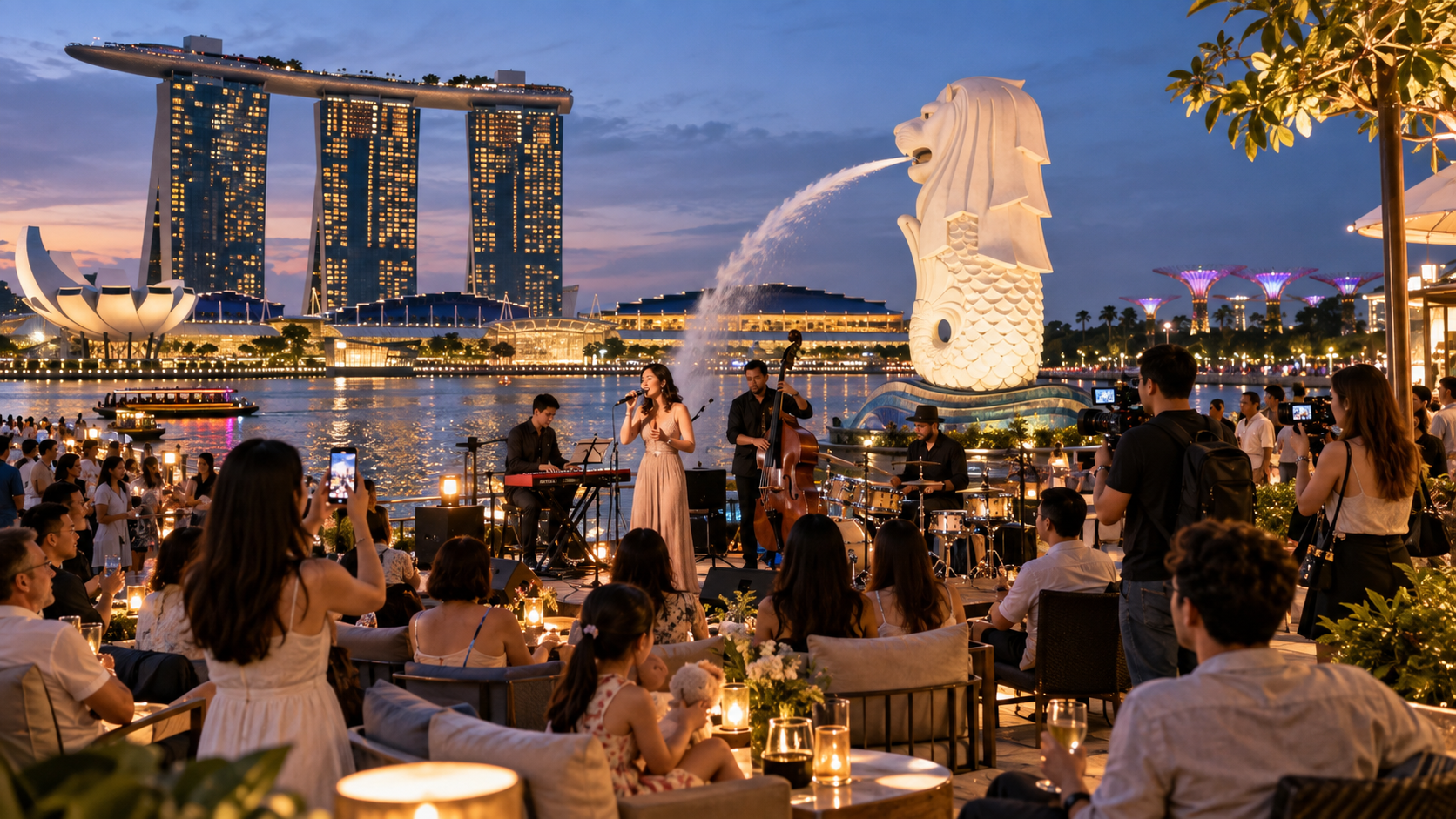
The campaign’s launch film, directed by Singaporean filmmaker Peggy Goh with music by Bumblebeat, presents the Merlion as a rock star “breaking character” to belt a ballad about its weariness of selfie-seeking tourists. It’s a bold creative move that transforms a national symbol into an entertainment property, complete with a narrative arc and emotional depth.
What makes this approach particularly instructive is its integration of entertainment mechanics. The campaign extends across Instagram, Red Note, and TikTok through the #MerlionMadeMeDoIt challenge, inviting audiences to co-create content and propose alternative photo spots. Top entries win trips worth up to SG$3,500, and Scoot reinforces the call-to-action with a limited-time flight sale. The result is a campaign that doesn’t just advertise a destination—it creates an ongoing entertainment narrative that audiences can participate in.
Why Entertainment Works in Singapore’s Market
The effectiveness of entertainment-led advertising in Singapore is supported by compelling consumer data. According to AnyMind Group’s “Singapore Digital Landscape 2025” report, 62% of Singaporeans are more likely to engage with sponsored influencer content, while 49% respond positively to influencer-led short videos and 45% to interactive ads. These figures suggest a population that has developed sophisticated ad-avoidance behaviours and now rewards brands that entertain rather than interrupt.
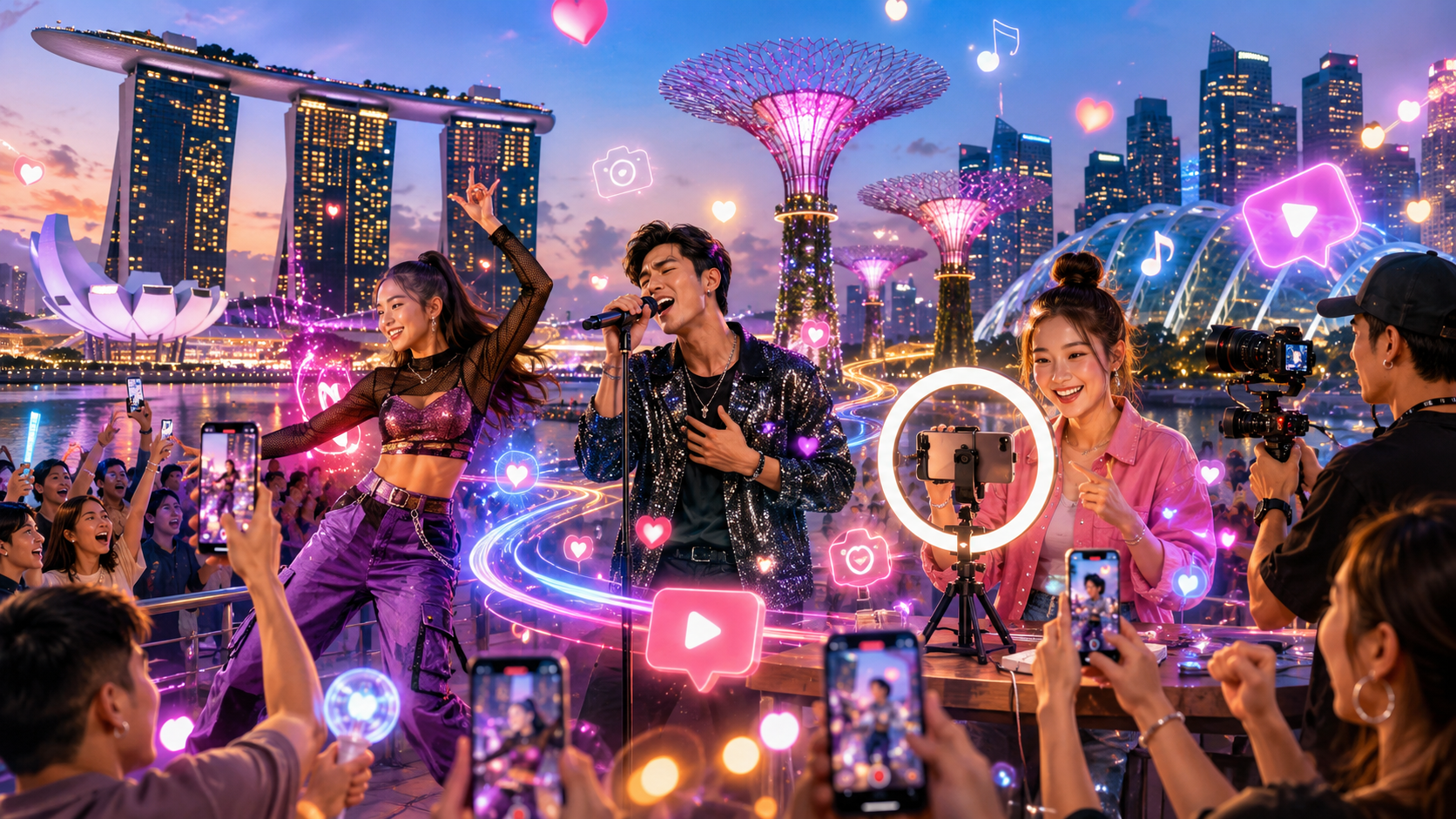
The influencer marketing ecosystem in Singapore reflects this appetite for entertainment. The city-state’s influencer marketing spend is estimated at SGD 180 million in 2026, supporting over 35,000 active creators across all tiers. Entertainment and fashion & beauty stand out as the dominant influencer verticals, giving brands a deep pool of creative talent to collaborate with.
Structural Shifts in Agency Practice
The entertainment-first approach is reshaping how creative agencies in Singapore operate. Havas Red’s 2026 Red Sky Predictions report highlights that creator-led storytelling and intentional influence from niche voices will challenge legacy media dominance across the Asia-Pacific region. This isn’t simply a matter of adding influencer partnerships to media plans—it requires agencies to develop capabilities in narrative construction, talent management, and content production that extend well beyond traditional advertising competencies.
The Singapore Tourism Board’s three-year partnership with Universal Music Singapore, signed in May 2026, exemplifies this structural shift. The MoU leverages UMSG’s network of international artistes to create integrated marketing campaigns and exclusive fan activations, with STB explicitly framing the collaboration as a way to craft “memorable moments” rather than conventional advertisements.
The Road Ahead
As Singapore’s creative advertising industry continues to evolve, the entertainment-as-strategy paradigm is likely to deepen rather than diminish. The market’s growth trajectory, combined with consumer preferences for engaging, participatory content, creates strong incentives for brands to invest in storytelling that entertains first and sells second. The challenge for agencies and brands alike will be maintaining creative integrity while delivering measurable business outcomes—a balance that Singapore’s most innovative campaigns are proving is achievable.