From Cupboard Keepsakes to Runway-Ready Pieces
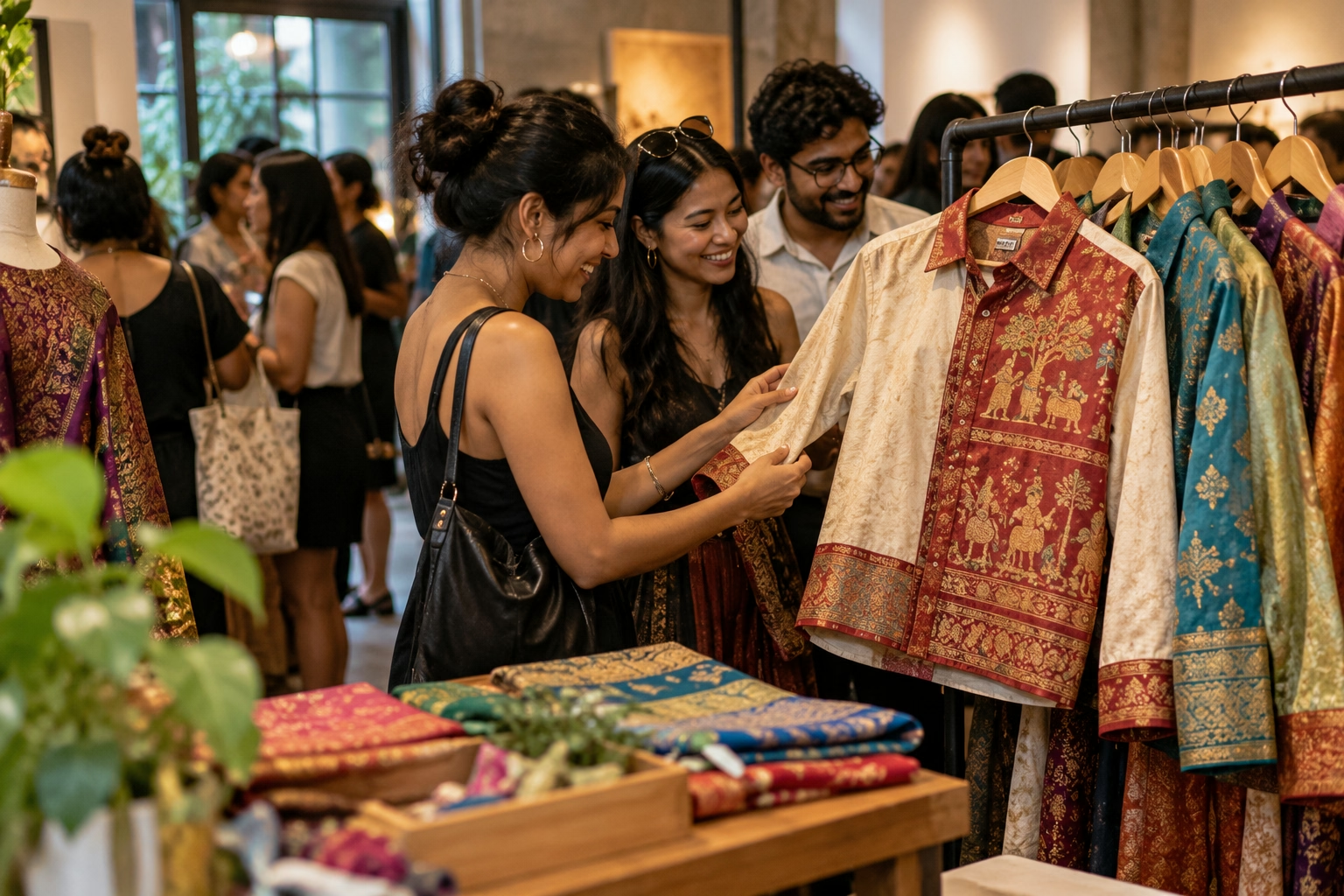
A quiet revolution is unfolding in Singapore’s fashion scene, and it begins in the cupboards of Indian households. Unworn saris—often kept for decades after a single wedding or festival appearance—are being reimagined as contemporary shirts, kimonos, and tailored separates by a new wave of circular fashion brands. The movement gained visible momentum in July 2026, when homegrown label The Dori launched its debut collection of 45 shirts crafted entirely from donated saris. The event drew nearly twice the expected crowd, with two-thirds of the collection sold on the first day.
The Design Logic Behind a Sari Shirt
What distinguishes these pieces from generic upcycling is the design discipline applied to the fabric’s existing architecture. The pallu—the decorative end panel of a sari, often carrying intricate embroidery, zari work, or hand-painted motifs—becomes the focal point of each garment. Borders are repurposed as cuffs, plackets, or back yokes, while the main body of the sari supplies the shirt’s primary fabric. The result is a garment that carries the sari’s original craftsmanship forward without erasing it. Each The Dori shirt comes with a tag documenting the fabric type, the Indian state of origin, and the specific motifs it carries—turning the shirt into a wearable provenance record.
A Market Signal, Not a Charity Project
The commercial reception tells a story that sustainability narratives alone cannot. Consumers are not buying these pieces out of pity for textile waste; they are paying a premium for one-of-a-kind design. The Dori’s co-founders—Rishabh Sharma, Laavanya Kejriwal, and Ajinkya Kulkarni, all aged 27—sourced saris from Singapore’s Indian diaspora and spent about nine months developing the collection. The Niram Collective, another entrant in the space, reported selling more than 150 upcycled pieces since its October 2025 launch. These figures suggest that ethnic-wear upcycling is crossing from niche experiment into a recognisable consumer category.
The Waste Context That Makes It Urgent
Singapore generated 231,000 tonnes of textile and leather waste in 2025, of which only 6,000 tonnes—3 per cent—were recycled, according to National Environment Agency data. Most of the remainder was incinerated. The sari upcycling niche does not solve this systemic problem at scale, but it demonstrates a replicable model: instead of treating heritage textiles as waste, designers can extract value from their craftsmanship and redirect them into garments with a second life. As Singapore’s circular fashion ecosystem matures, the sari shirt may become a template for how cultural specificity and waste reduction can operate in the same garment.