A 120-Hectare Blank Canvas Next Door
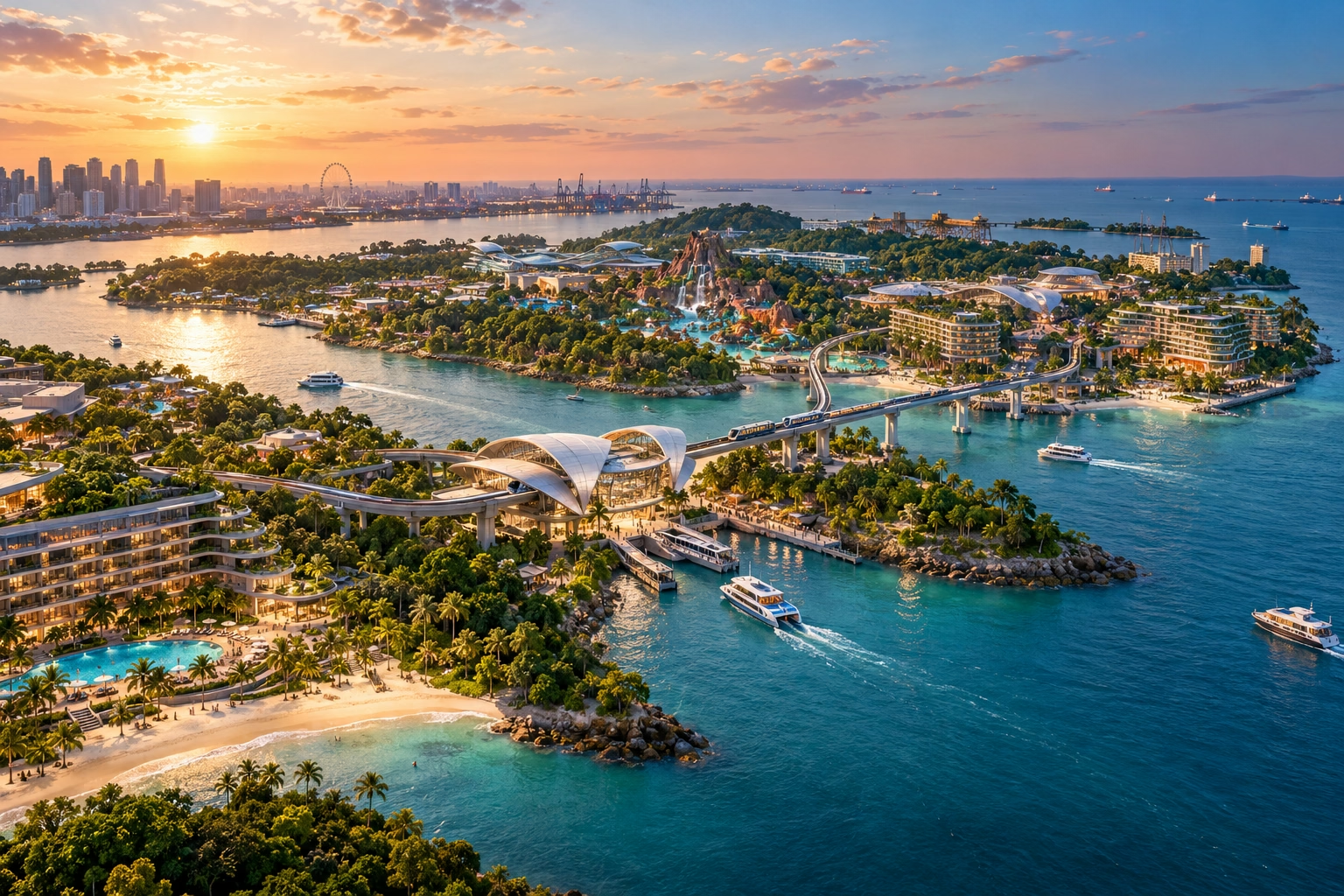
Sentosa has spent five decades building a reputation as Singapore’s island playground. The next chapter is not about adding another attraction to the existing 500-hectare footprint. It is about redrawing the map altogether. The Greater Sentosa Master Plan (GSMP), unveiled by the Sentosa Development Corporation (SDC) in July 2026, formally brings Pulau Brani—a 120-hectare island separated from Sentosa by a narrow channel—into the leisure ecosystem. The integration is the single most consequential land-use decision for Singapore tourism since the original Sentosa redevelopment in the 1970s.
What Brani Unlocks for Hotels and Attractions
Brani West has been identified as one of the largest attraction development sites under the master plan, with SDC already engaging potential partners. The island’s industrial past is being reimagined as a greenfield opportunity for next-generation themed experiences, boutique hotels, and nature-adjacent hospitality. Unlike Sentosa’s built-up core, Brani offers the rare combination of scale and a blank regulatory slate. SDC has signalled that developments will roll out progressively, with the first projects coming on stream from the early 2030s.
The Visitor-Volume Ambition
The numbers behind the plan are deliberately ambitious. Between April 2024 and March 2025, Sentosa welcomed 16.9 million visitors. Under the GSMP, the long-term target is to double that figure. That is not a projection based on organic growth; it is a supply-side bet that integrating Brani will create enough new reasons to visit—and enough new accommodation to convert day-trippers into overnight guests.
Connectivity as the Glue
Brani cannot succeed as a standalone destination. The plan hinges on a new transport hub, tentatively called Island Heart, which will link mainland Singapore to both Sentosa and Brani through a tram-based people-mover system replacing the existing Sentosa Express monorail. Water taxis are also being explored. Without seamless inter-island movement, Brani remains a separate island; with it, Greater Sentosa becomes a single, walkable-to-transit destination.
The Real-World Test: Phasing and Patience
The transformation will not happen overnight. SDC has been explicit that the GSMP is a two-decade project, with the 2030s serving as the first delivery window. That timeline aligns with Changi Airport’s Terminal 5 expansion in the mid-2030s, which will materially increase Singapore’s aviation capacity. The risk is not ambition; it is sequencing. If transport infrastructure lags behind attraction openings, the Brani bet underdelivers. If the two move in lockstep, Greater Sentosa could reset the benchmark for integrated island destinations in Asia.