The End of an Era in Singapore’s Food Delivery Landscape
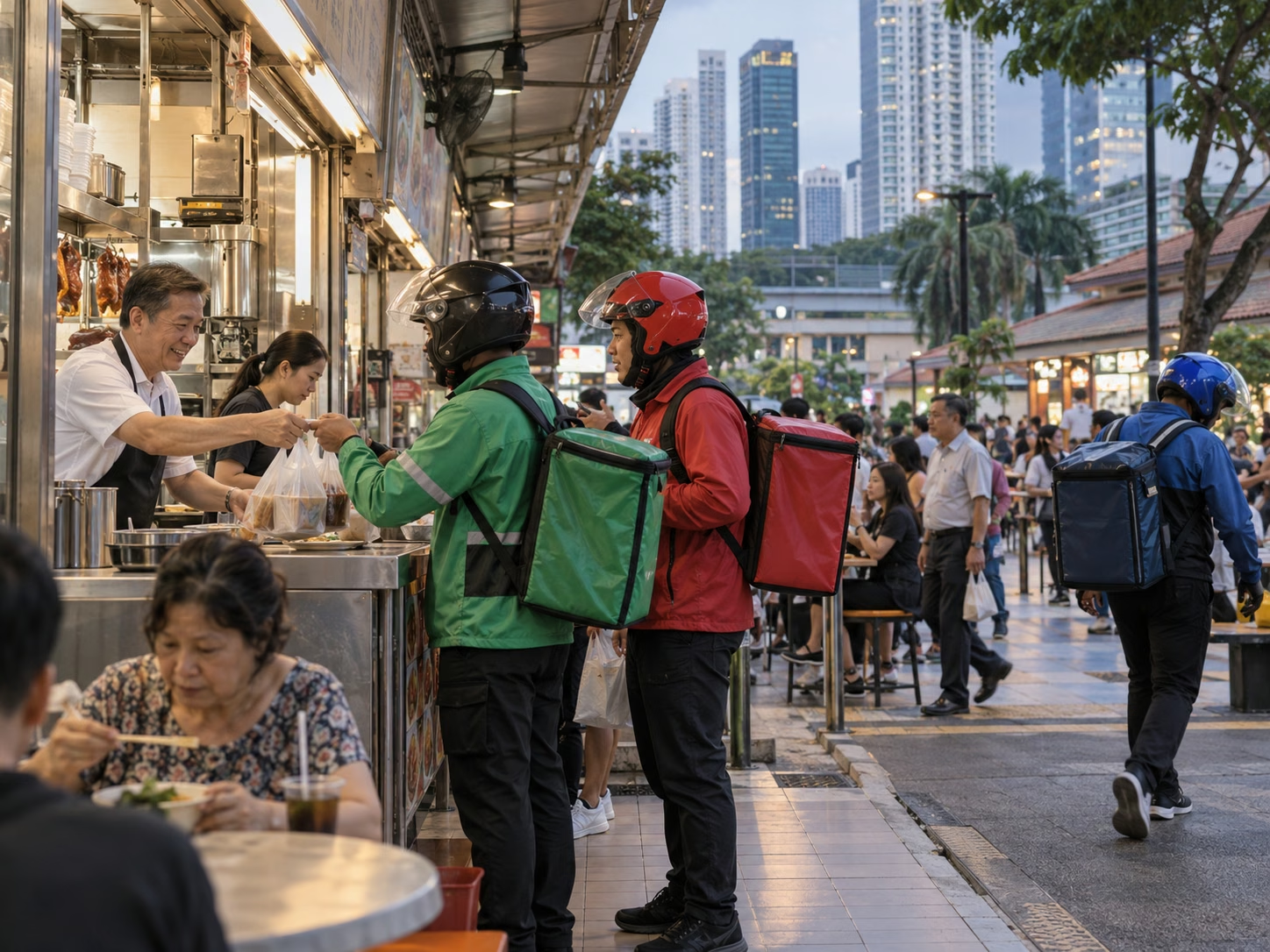
When Deliveroo ceased operations in Singapore on March 4, 2026, it marked the conclusion of an 11-year chapter that fundamentally altered how the city-state approaches meal consumption. The platform’s withdrawal was not a sudden collapse but a gradual erosion—its market share had dwindled from 24% in 2020 to a mere 7% by 2025, according to a February 2026 report by Momentum Works. With just a 7 per cent share of Singapore’s food delivery market, compared with Grab’s 69 per cent and foodpanda’s 24 per cent, analysts at DBS Bank concluded that Deliveroo’s business here was simply unsustainable.
The Numbers Behind the Consolidation
Singapore’s food delivery sector generated gross merchandise value of $2.9 billion in 2025, a 13% increase from the previous year. Yet this growth masked a brutal reality: the market could no longer sustain three competing platforms. As DBS analyst Sachin Mittal observed, “The local market can support only two players of comparable scale. There is no reason for us to have three”.
The structural disadvantage facing Deliveroo was compounded by its single-line business model. Unlike Grab, which benefits from diversified revenue streams including fintech and ride-hailing, Deliveroo operated without the cushion of an integrated ecosystem. Its Singapore revenue had shrunk from more than $98 million in 2021 to $55.5 million in 2024, underscoring the challenges of operating at subscale in a highly penetrated market.
What the Duopoly Means for Consumers and Merchants
In the immediate aftermath of Deliveroo’s exit, both Grab and Foodpanda launched aggressive promotional campaigns to capture the departing platform’s former users. These included deep discounts, waived onboarding costs, and enhanced membership perks. However, industry analysts caution that these incentives are unlikely to persist. “Consolidation typically allows platforms to unwind subsidies once market share stabilises,” noted Anuran Dhar, practice head for foodservice at GlobalData Plc.
Over time, operators may raise delivery fees, boost merchant commissions, or increase charges for search visibility as alternatives narrow. Mid-tier and small restaurants face the greatest pressure, since their margins leave little room to absorb steeper commissions. Some of these costs are likely to be passed on to consumers through higher menu prices or surcharges.
The Regulatory Response
The Competition and Consumer Commission of Singapore (CCS) has been closely monitoring the market following Deliveroo’s exit, particularly for anti-competitive concerns including the conduct and pricing behaviour of the remaining players. This regulatory scrutiny reflects broader anxieties about market concentration in a sector that has become essential infrastructure for Singapore’s food economy.