Singapore’s reputation as a global financial and technology hub often overshadows another side of the city: its increasingly sophisticated cultural landscape. For travelers in 2026, exploring Singapore through art offers a deeper way to understand the country’s history, multicultural identity, and relationship with the wider Southeast Asian region.
The experience extends far beyond a single museum visit. Historic government buildings have been converted into major art institutions, former industrial areas now host contemporary exhibitions, and performing arts venues bring together theater, music, dance, and experimental productions.
National Gallery Singapore and the Story of Southeast Asian Modern Art
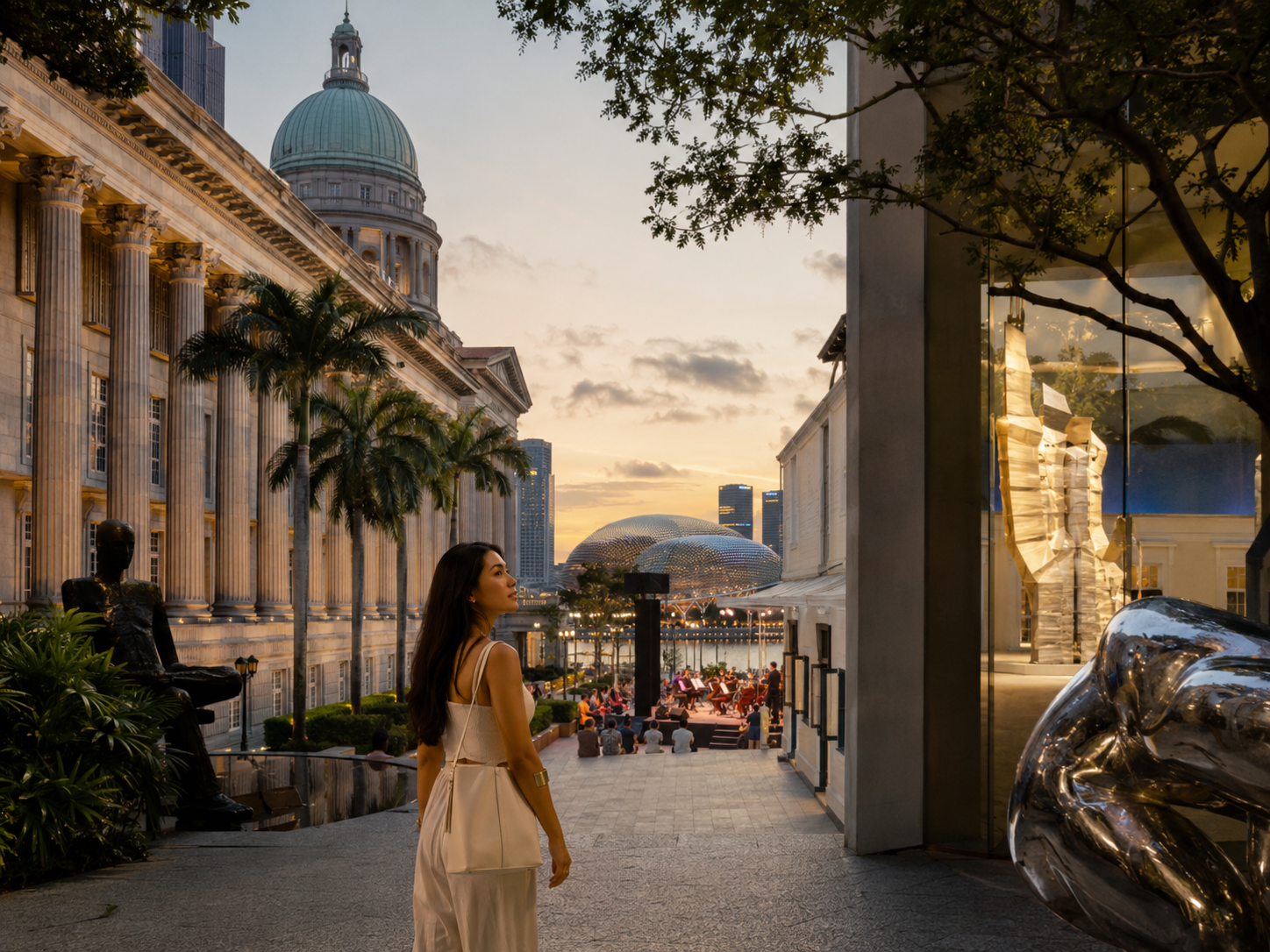
A strong art itinerary can begin at National Gallery Singapore, located in the restored former Supreme Court and City Hall buildings. The institution is central to understanding modern art from Singapore and Southeast Asia.
Its importance lies not only in the artworks displayed but also in the historical setting. Visitors move through spaces connected to Singapore’s political past while encountering paintings and visual narratives shaped by colonialism, independence, modernization, and regional identity.
Travelers planning a 2026 visit should check current exhibitions, opening hours, and visitor information through the official National Gallery Singapore website.
The museum is particularly valuable for international visitors because it places Singaporean artists within a broader Southeast Asian context rather than presenting the country’s cultural development in isolation.
Contemporary Art in an Industrial Setting
Singapore Art Museum and Tanjong Pagar Distripark
Singapore Art Museum provides a different perspective. Its focus on contemporary practice introduces visitors to artists working with installations, moving images, social themes, technology, and experimental formats.
The museum’s presence at Tanjong Pagar Distripark also reflects a wider global trend: industrial and commercial spaces are increasingly being transformed into cultural destinations. This creates a less conventional museum experience than visitors may expect from Singapore’s polished city center.
The surrounding area can appeal to travelers who want to spend more time with contemporary art rather than rushing between famous landmarks.
Independent Galleries and Gillman Barracks
Gillman Barracks adds another dimension to Singapore’s visual arts ecosystem. The former military site became known as a cluster for galleries and creative activity.
Unlike a large public museum, gallery visits can feel more immediate. Exhibitions may focus on emerging artists, regional collectors, experimental practices, or commercially represented names. This makes the area useful for travelers interested in how art moves between creative production, curatorial ideas, and the market.
Because individual gallery schedules can change, visitors should confirm what is open before traveling across the city specifically for an exhibition.
Cultural Performances at Esplanade
Visual art is only part of Singapore’s cultural identity. Esplanade – Theatres on the Bay remains one of the city’s most recognizable destinations for performing arts.
Its programming can include theater, dance, classical music, contemporary performance, and events connected to Singapore’s major ethnic traditions. For a visitor, seeing a live production can reveal cultural perspectives that a museum label cannot fully communicate.
How to Build a Better Singapore Art Itinerary in 2026
The strongest approach is to combine institutions rather than treating them as interchangeable attractions. National Gallery Singapore provides historical depth, contemporary museums introduce present-day artistic debates, gallery districts reveal the art market, and performance venues bring culture to life through sound and movement.
In 2026, Singapore’s appeal as an art destination rests on this contrast. The city can be efficient and futuristic, yet its cultural spaces are increasingly devoted to complex questions about memory, identity, migration, technology, and Southeast Asia’s changing place in the world.