Navigating a metropolis as expensive as Singapore might seem daunting for a thrifty traveler, but the city-state’s public transport infrastructure is a paradox: it is globally renowned for its efficiency yet remains remarkably affordable. For backpackers, the Mass Rapid Transit (MRT) and the extensive bus network are not just conveniences; they are the ultimate budget equalizers.
The Economics of the EZ-Link Card
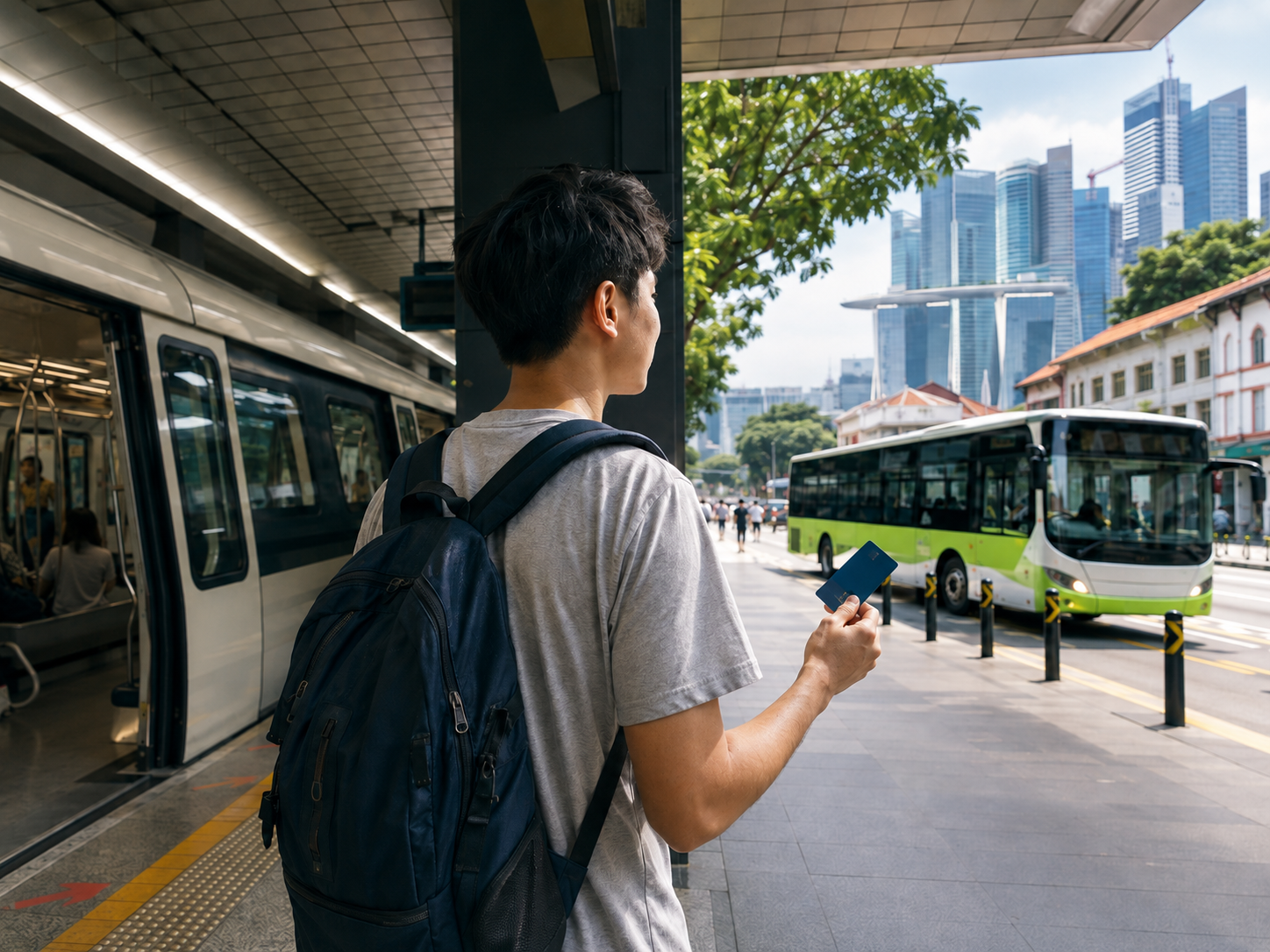
The first step to financial survival in the Lion City is acquiring an EZ-Link card or a NETS FlashPay card. Available at any MRT station or convenience store like 7-Eleven, these contactless cards offer significant savings compared to purchasing single-trip tickets. For context, a single-trip ticket incurs a deposit surcharge that is refundable but requires a trip to a ticketing machine—a waste of precious travel time.
More importantly, the fare structure for stored-value cards is lower than the standard ticket price. According to the Land Transport Authority (LTA) , commuters using EZ-Link cards pay the actual distance-based fare, whereas single-trip tickets are priced higher to account for the operational cost of the ticketing system. You can check the latest fare structures and regulations on the official LTA website (https://www.lta.gov.sg/content/ltagov/en/getting_around/public_transport/rail_network.html).
MRT vs. Bus: A Strategic Approach
While the MRT is faster for crossing the island from east to west, the bus system is indispensable for reaching specific neighborhoods and offers better views of the cityscape. For a backpacker, the bus is often the cheaper option for short distances due to the distance-based fare calculation. For instance, traveling from Bugis to Little India—a distance of less than 3 kilometers—may cost less on a bus than on the train, though the train is faster.
To maximize savings, leverage the “Distance Fares” rule. You can transfer between different bus services and the MRT within a 45-minute window without incurring a new base fare. The system calculates the total distance traveled, meaning you only pay for the distance you cover, not the number of times you board.
The Tourist Pass Debate
Many first-timers gravitate toward the Singapore Tourist Pass (STP), which offers unlimited travel for one, two, or three days. However, from a strict backpacking perspective, this is often a financial trap. Unless you plan on taking more than 6-7 long train rides a day, the STP is rarely cost-effective. A standard day of sightseeing—visiting Marina Bay, Chinatown, and Orchard Road—usually costs between $4 and $6 in transport using a standard EZ-Link card.
The “Walk the Grid” Strategy
To cut costs further, understand that downtown Singapore is highly walkable. Areas like Bugis, City Hall, and Clarke Quay are connected by underground linkways and air-conditioned malls. Instead of taking the MRT one stop, walk through the underground passages. This saves money, provides air-conditioning, and lets you experience the “City in a Garden” concept up close without sweating.
A Real-World Backpacker Scenario
Imagine you are staying at a hostel in Chinatown. You wake up and walk to the Buddha Tooth Relic Temple (free). You walk through the connecting underpass to Telok Ayer for lunch at Amoy Street Food Centre. You then take a bus to Bugis for shopping; the fare is approximately $1.09. You walk from Bugis to Haji Lane and Arab Street. In the evening, you take the MRT back to Chinatown for about $1.20. Your total transport cost for the day is under $3. This is the beauty of the Singapore system: it scales to your budget, allowing you to spend less on transit and more on food and experiences.