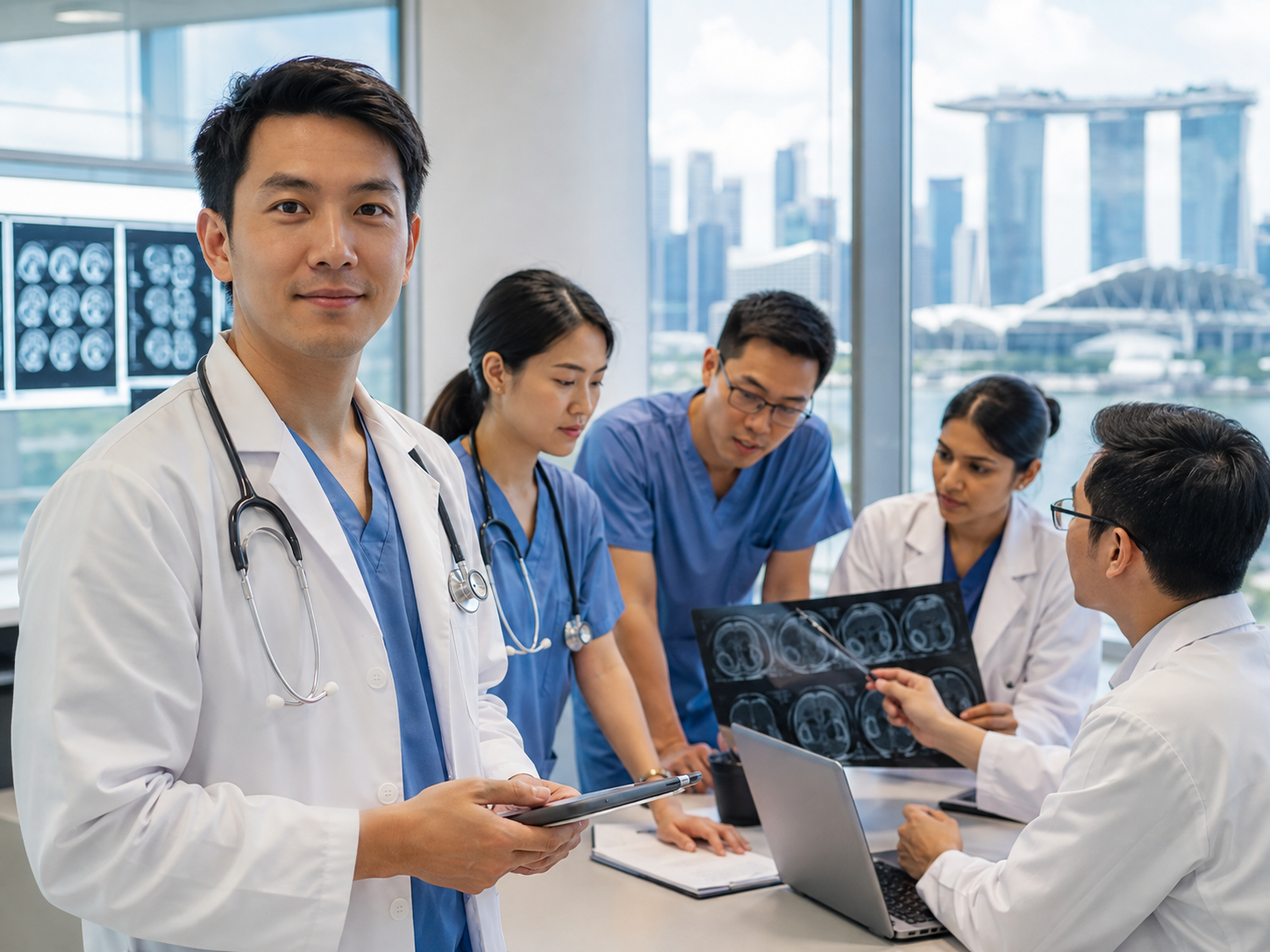
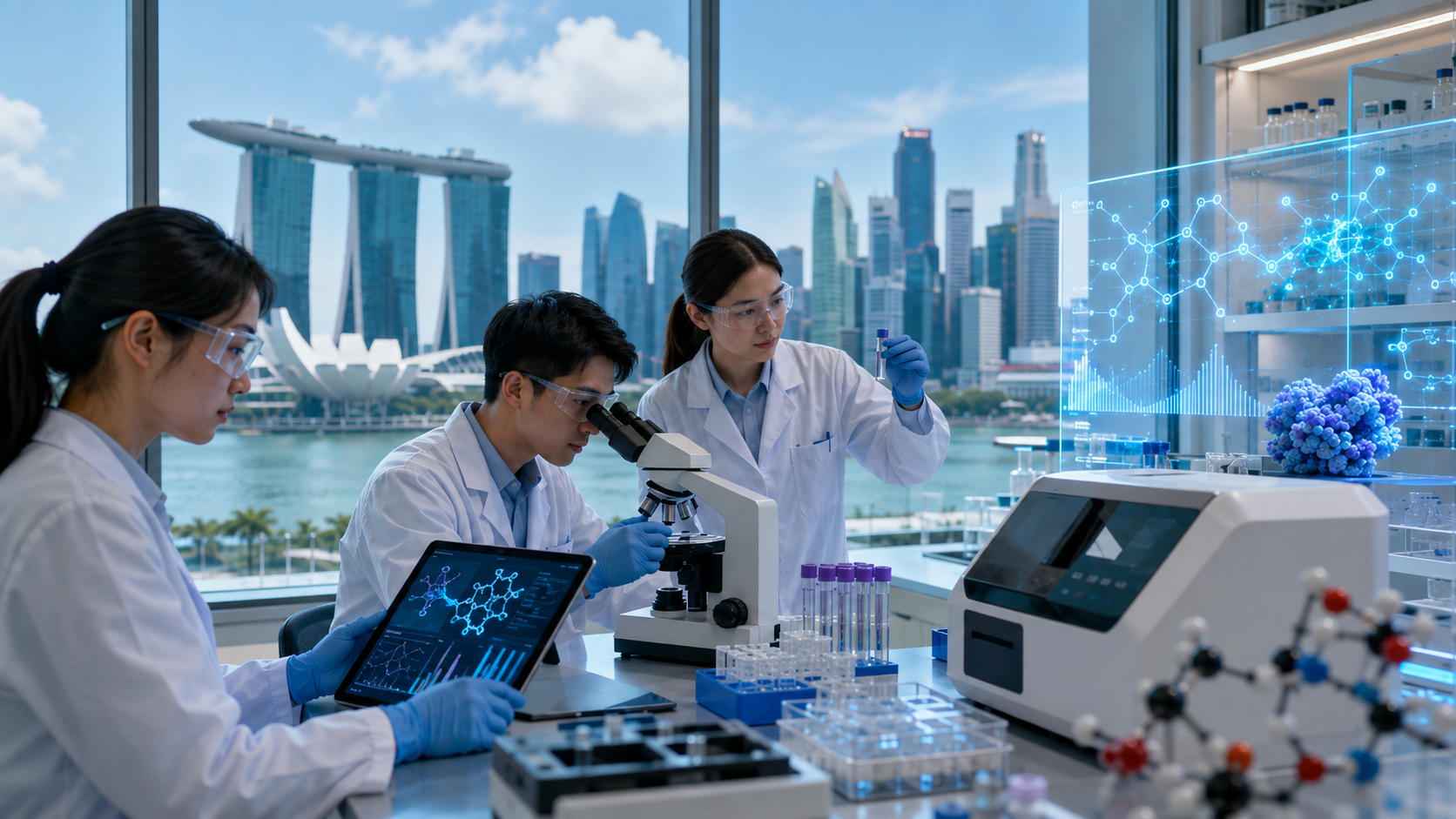
Singapore has spent more than two decades transforming itself from a pharmaceutical production base into one of Asia’s most integrated biotechnology ecosystems. The country now combines laboratory research, clinical expertise, regulatory capability, venture financing, and large-scale manufacturing within a compact geographic area.
This model has become increasingly important as global healthcare companies search for locations that can support an entire product journey—from early scientific discovery to clinical testing and commercial production.
Biopolis as the Center of Scientific Collaboration
A major pillar of Singapore’s biotechnology strategy is Biopolis, a research complex designed to bring public research institutes, universities, hospitals, and private companies closer together. Scientists working in fields such as immunology, genomics, neuroscience, infectious disease, and molecular engineering can collaborate without the institutional barriers commonly found in larger markets.
The Agency for Science, Technology and Research, or A*STAR, supports much of this ecosystem through biomedical research institutes and partnerships with industry. Its work helps convert academic discoveries into technologies that pharmaceutical and biotechnology companies can evaluate for clinical or commercial use.
An official overview of Singapore’s biomedical sector is available through the Singapore Economic Development Board, which describes the country’s capabilities across pharmaceuticals, biotechnology, medical technology, and healthcare services.
From Laboratory Findings to Patient Care
Singapore’s advantage is not based only on scientific publications. Its research institutions increasingly focus on translational medicine—the process of turning laboratory findings into diagnostic tools, medicines, and treatment strategies.
Public hospitals contribute clinical data, patient samples, and specialist knowledge. Universities provide fundamental research, while private companies supply capital, manufacturing experience, and access to international markets.
This structure is particularly valuable in oncology, infectious diseases, metabolic disorders, and precision medicine. Singapore’s multiethnic population also creates opportunities to study biological differences that may not be well represented in research conducted primarily in Europe or North America.
Advanced Biomanufacturing Strengthens the Ecosystem
Global pharmaceutical companies have operated manufacturing facilities in Singapore for years. The industry is now moving toward more complex products, including biologic medicines, vaccines, cell-based therapies, and messenger RNA technologies.
These products require highly controlled production environments, specialized talent, reliable cold-chain logistics, and strict quality systems. Singapore’s infrastructure and regulatory reputation make it a strong candidate for regional manufacturing projects that serve Asian and international markets.
The expansion of advanced manufacturing also creates demand for process engineers, quality-control specialists, data scientists, biochemists, and regulatory professionals.
A Real-World Test: Turning Pandemic Lessons Into Long-Term Capacity
The COVID-19 pandemic demonstrated why countries need flexible research and production capabilities. Singapore’s laboratories contributed to diagnostic development and infectious-disease research, while the government worked to strengthen access to vaccines and critical medical supplies.
The long-term challenge is to ensure that infrastructure built during a crisis remains useful afterward. Facilities designed for vaccines or mRNA products may also support cancer immunotherapies, personalized medicines, and treatments for rare diseases.
What Singapore Must Address After 2026
Singapore still faces significant obstacles. Research costs are high, the domestic patient population is relatively small, and biotechnology companies often need access to larger regional markets to grow.
Competition is also increasing as China, South Korea, Japan, India, and emerging Southeast Asian hubs expand their own life-science sectors.
Singapore’s next phase will depend on whether it can produce more locally developed therapies, attract experienced biotechnology entrepreneurs, and improve the path from public research to global commercialization. Its greatest opportunity is not simply to host multinational companies, but to become the place where Asian medical discoveries are developed, tested, manufactured, and distributed worldwide.